





Why stadiums make us emotional: The psychology of sports fandom

A cricket fan sits nervously in front of the television as the final over begins. A football supporter leaps from their seat when a goal is scored. An entire stadium erupts in celebration after a last-minute victory, while thousands of others leave in silence following a heartbreaking defeat.
For many people, sport is far more than entertainment.
Across the world, millions of fans invest extraordinary amounts of time, emotion, and loyalty into teams they have never played for and athletes they have never met. Victories can feel deeply personal, while losses can ruin an entire day, or even longer.
Why does this happen?
Sports psychologists argue that fandom is about much more than games. At its core, sport satisfies fundamental human needs for identity, belonging, connection, and shared experience.
More than a game
To an outsider, the emotional intensity of sports fandom can seem irrational.
Why would someone cry because a team loses a match? Why would people travel across countries to watch a game? Why do supporters continue backing teams through decades of disappointment?
Researchers suggest that the answer lies in how humans define themselves.
People naturally seek groups that help shape their identity. These groups can be based on nationality, religion, profession, culture, family, or shared interests.
Sports teams often become one of the strongest forms of group identity.
When supporters say “we won” or “we lost,” they are not simply speaking figuratively. Psychologists note that fans often incorporate a team’s successes and failures into their own sense of self.
Supporting a club or national team creates a feeling of belonging to something larger than oneself.
The power of belonging
Humans are social creatures.
Research in psychology consistently shows that people have a fundamental need to belong. Communities provide emotional support, shared experiences, and a sense of purpose.
Sport offers a powerful way to create these connections.
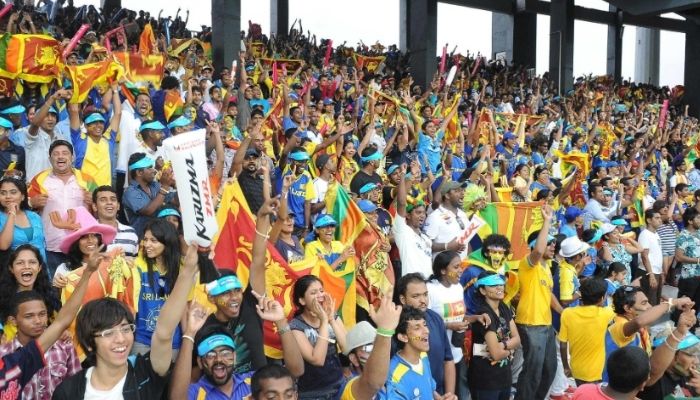
A supporter attending a match may be surrounded by thousands of strangers, yet all are united by a common goal. They wear the same colours, sing the same songs, and experience the same emotional highs and lows.
This shared identity creates bonds that can feel surprisingly strong.
Researchers have found that sports communities often provide social benefits similar to those found in cultural, religious, or community groups. For some individuals, fandom becomes an important part of their social life and personal identity.
Why rivalries become so intense
If belonging explains loyalty, it also helps explain rivalry.
Throughout history, human beings have divided themselves into groups. Once people identify strongly with one group, they often become more aware of differences with others.
In sports, this tendency can create fierce rivalries.
Whether it is football clubs from neighbouring cities, international cricket teams, or historic sporting opponents, rivalries often extend far beyond the game itself.
Psychologists describe this as “in-group” and “out-group” behaviour. People tend to favour members of their own group while viewing rival groups more critically.
Most rivalries remain friendly and contribute to the excitement of sport. However, researchers warn that extreme identification can sometimes contribute to hostility, aggression, or discrimination.
The challenge is maintaining passion without allowing competition to become conflict.

National identity and sporting pride
Few things unite people quite like international sport.
Events such as the FIFA World Cup, the Olympic Games, and international cricket tournaments often generate powerful expressions of national pride.
For many countries, sporting achievements become symbols of collective identity.
A victory by a national team can create moments of unity that transcend political, social, and economic differences.
Sri Lankan cricket offers a clear example. Historic victories have often produced nationwide celebrations involving people from diverse backgrounds. For a brief moment, millions of individuals feel connected through a shared experience.
Researchers argue that sport serves as a modern form of collective storytelling. National teams become symbols through which countries express ambition, resilience, and pride.
The emotional roller coaster of victory and defeat
One of the most fascinating aspects of sports fandom is the intensity of emotional responses.
Scientific studies suggest that victories can trigger the release of dopamine, a neurotransmitter associated with pleasure and reward. Fans may experience excitement, joy, and even euphoria when their team succeeds.
Defeats, however, can produce disappointment, frustration, sadness, and anger.
Researchers have found that highly committed supporters often experience emotional responses similar to those associated with personal achievements or setbacks.
This helps explain why fans remember certain matches for decades. Sporting moments become emotionally significant memories tied to personal experiences, friendships, and stages of life.
A championship victory is rarely remembered simply as a scoreline. It becomes connected to where people were, who they were with, and how they felt.

The science of the crowd
There is also something unique about experiencing sport as part of a crowd.
Studies suggest that large groups can amplify emotions through a process known as emotional contagion. People unconsciously mirror the emotions and behaviours of those around them.
In a stadium filled with thousands of supporters, excitement spreads rapidly.
A cheer from one section triggers another. Anticipation builds collectively. A dramatic moment can produce an emotional response far greater than what an individual might experience alone.
This phenomenon helps explain why watching a match in a packed stadium often feels fundamentally different from watching it at home.
The crowd becomes part of the experience.
For many supporters, these shared moments create memories that last a lifetime.
Why sport matters
Critics sometimes dismiss sport as trivial entertainment. Yet researchers increasingly argue that sport plays an important social and psychological role.
It provides opportunities for connection, community, identity, and emotional expression. It creates stories that bring people together and moments that become part of collective memory.
Of course, sport can also have negative aspects when loyalty turns into hostility or when competition becomes unhealthy. But at its best, fandom offers something deeply human.
It reminds people that they are part of something larger than themselves.
Perhaps that is why stadiums can feel so emotional.
The cheers, tears, celebrations, and heartbreak are rarely just about a game.
They are about belonging.
And few things matter more to human beings than that.
Sources
- American Psychological Association (APA)
- British Psychological Society (BPS)
- FIFA Social Impact and Research Reports
- Journal of Sport and Social Issues
- Psychology Today – Sports Psychology Features
- International Journal of Sport and Exercise Psychology
Related News

How CIMA Builds Practical Business and Problem Solving Skills for the Real…
For students considering what to study after school or alongside a university degree, one question matters more than ever: will the qualification…
Read More
CIMA Beyond Accounting: Why Business Skills Matter for the Next Generation
For many Sri Lankan students, completing school brings one major question: what qualification should come next? A bachelor’s degree remains an important…
Read More
Gateway College and Wilderness School Australia Launch Teacher Exchange Programme
Students of Wilderness School were most welcoming to the teachers of Gateway Gateway College is pleased to announce the establishment of a…
Read More
Oxford College of Business Celebrates 1,550 Graduates at Landmark 2026 Graduation Ceremony
Oxford College of Business (OCB) celebrated the academic achievements of 1,550 graduands at its 2026 Graduation Ceremony, bringing together students, academics, international…
Read More
Imperial Announces CIMA Certificate Intake with 50% Off Class Fees
Imperial College of Business Studies (ICBS) will commence its latest CIMA Certificate Level intake on 19 September 2026, with weekday and weekend…
Read MoreCourses
-

The future of higher education tech: why industry needs purpose-built solutions
For years, Institutions and education agencies have been forced to rely on a patchwork of horizontal SaaS solutions – general tools that… -

MBA in Project Management & Artificial Intelligence – Oxford College of Business
In an era defined by rapid technological change, organizations increasingly demand leaders who not only understand traditional project management, but can also… -
Scholarships for 2025 Postgraduate Diploma in Education for SLEAS and SLTES Officers
The Ministry of Education, Higher Education and Vocational Education has announced the granting of full scholarships for the one-year weekend Postgraduate Diploma… -
Shape Your Future with a BSc in Business Management (HRM) at Horizon Campus
Human Resource Management is more than a career. It’s about growing people, building organizational culture, and leading with purpose. Every impactful journey… -

ESOFT UNI Signs MoU with Box Gill Institute, Australia
ESOFt UNI recently hosted a formal Memorandum of Understanding (MoU) signing ceremony with Box Hill Institute, Australia, signaling a significant step in… -

Ace Your University Interview in Sri Lanka: A Guide with Examples
Getting into a Sri Lankan sate or non-state university is not just about the scores. For some universities' programmes, your personality, communication… -
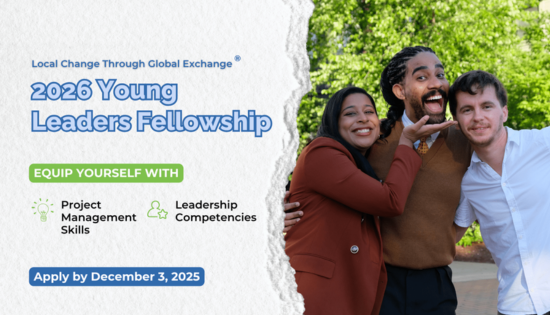
MCW Global Young Leaders Fellowship 2026
MCW Global (Miracle Corners of the World) runs a Young Leaders Fellowship, a year-long leadership program for young people (18–26) around the… -
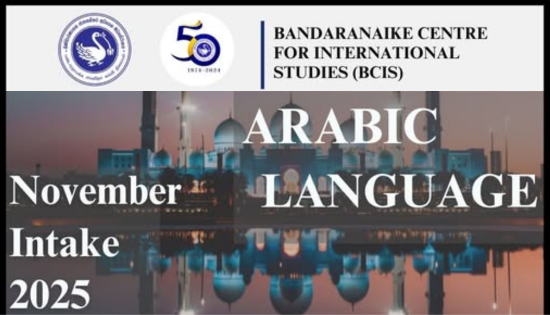
Enhance Your Arabic Skills with the Intermediate Language Course at BCIS
BCIS invites learners to join its Intermediate Arabic Language Course this November and further develop both linguistic skills and cultural understanding. Designed… -

Achieve Your American Dream : NCHS Spring Intake Webinar
NCHS is paving the way for Sri Lankan students to achieve their American Dream. As Sri Lanka’s leading pathway provider to the… -

National Diploma in Teaching course : Notice
A Gazette notice has been released recently, concerning the enrollment of aspiring teachers into National Colleges of Education for the three-year pre-service… -
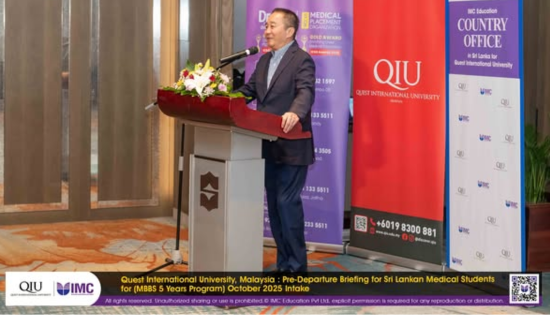
IMC Education Features Largest Student Recruitment for QIU’s October 2025 Intake
Quest International University (QIU), Malaysia recently hosted a pre-departure briefing and high tea at the Shangri-La Hotel in Colombo for its incoming… -

Global University Employability Ranking according to Times Higher Education
Attending college or university offers more than just career preparation, though selecting the right school and program can significantly enhance your job… -

Diploma in Occupational Safety & Health (DOSH) – CIPM
The Chartered Institute of Personnel Management (CIPM) is proud to announce the launch of its Diploma in Occupational Safety & Health (DOSH),… -
Small Grant Scheme for Australia Awards Alumni Sri Lanka
Australia Awards alumni are warmly invited to apply for a grant up to AUD 5,000 to support an innovative project that aim… -

PIM Launches Special Programme for Newly Promoted SriLankan Airlines Managers
The Postgraduate Institute of Management (PIM) has launched a dedicated Newly Promoted Manager Programme designed to strengthen the leadership and management capabilities…
Newswire
-
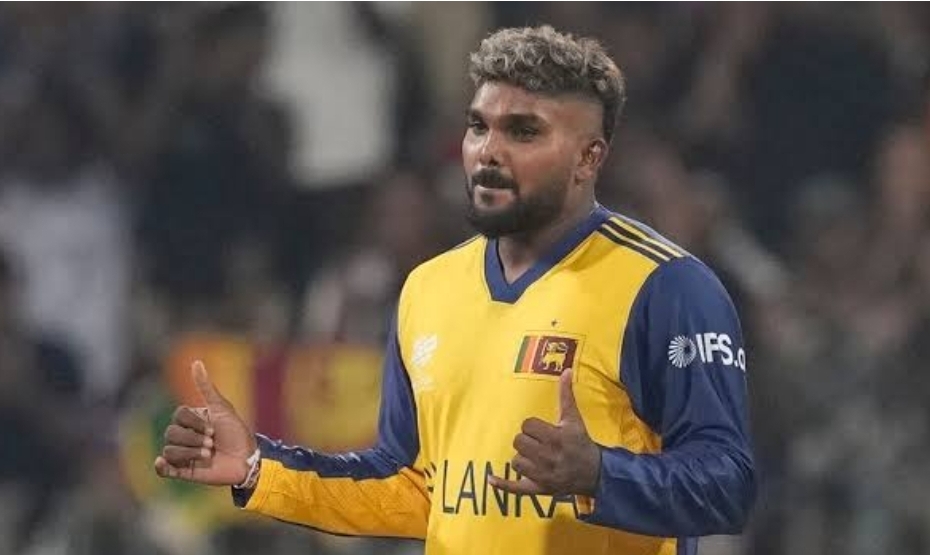
Wanindu Hasaranga to return home from England series
ON: September 23, 2026 -

Vehicle revenue licence issuance temporarily suspended in 8 provinces
ON: September 23, 2026 -

Archchuna calls for end to racist comments targeting Tamil-Canadian Netflix star
ON: September 23, 2026 -
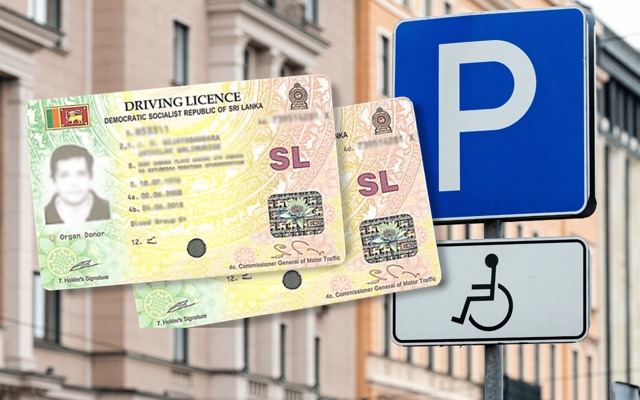
Parliamentary Committee proposes to streamline driving licences for disabled
ON: September 23, 2026 -

Heavy rains over 100mm expected across several provinces
ON: September 23, 2026