





Why ancient philosophy is making a comeback in the digital age
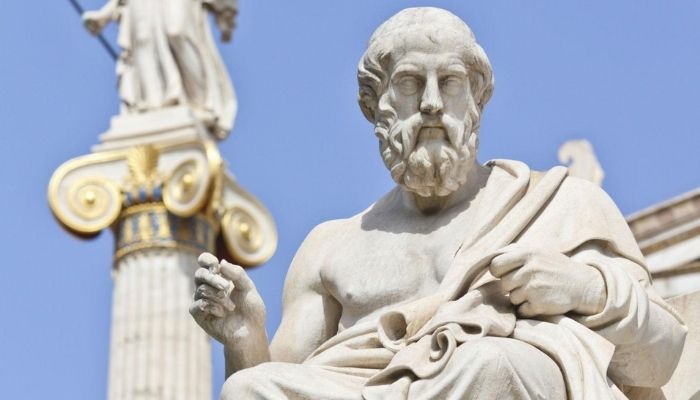
In an age defined by artificial intelligence, social media algorithms, and constant digital connectivity, it may seem surprising that some of the fastest-growing ideas among young professionals, entrepreneurs, and students are more than two thousand years old.
Books written by Stoic philosophers, ancient Buddhist teachings, and classical texts from Greece, Rome, China, and India are finding new audiences around the world. Titles such as Meditations by Marcus Aurelius regularly appear on bestseller lists, while online communities dedicated to philosophy attract millions of followers. Podcasts discussing Stoicism, existentialism, and mindfulness have become increasingly popular, and quotations from long-dead philosophers circulate widely across social media platforms.
At first glance, this renewed interest in ancient philosophy appears paradoxical. Why would people living in one of the most technologically advanced periods in human history turn to ideas developed centuries ago?
Researchers and psychologists suggest that the answer may lie in the challenges of modern life itself.
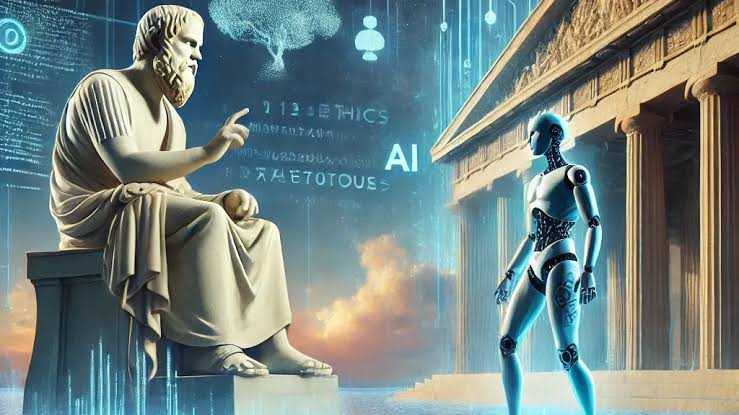
A world overflowing with information
Never before have human beings had access to so much information. News updates arrive every minute, social media feeds refresh endlessly, and digital platforms constantly compete for attention.
While technology has created extraordinary opportunities for communication and learning, researchers have also linked excessive digital exposure to stress, anxiety, decision fatigue, and feelings of uncertainty.
Psychologists describe modern life as an environment of cognitive overload. People are expected to process enormous amounts of information while navigating complex personal, professional, and social pressures.
In this environment, many individuals are searching for frameworks that help them understand how to respond to uncertainty, disappointment, success, and change.
Ancient philosophy offers exactly that.
Rather than focusing on technological solutions, philosophers often asked timeless questions: What makes a good life? How should people respond to suffering? What can truly be controlled? What gives life meaning?
These questions remain just as relevant today as they were thousands of years ago.

The rise of Stoicism
Among the various philosophical traditions experiencing renewed popularity, Stoicism has arguably attracted the greatest attention.
Developed in ancient Greece and later expanded in Rome, Stoicism teaches that people should focus their energy on things within their control while accepting those that lie beyond it.
The Roman emperor Marcus Aurelius, one of the most famous Stoic thinkers, argued that external events themselves are not necessarily the source of suffering. Instead, suffering often arises from how individuals interpret and react to those events.
This idea resonates strongly in contemporary society, where people frequently encounter uncertainty regarding careers, finances, relationships, and global events.
Many modern self-development authors, business leaders, and athletes have adopted Stoic principles to improve resilience and emotional stability.
Researchers have also noted similarities between Stoic thinking and modern Cognitive Behavioural Therapy (CBT), one of the most widely used psychological treatments today.
CBT encourages individuals to examine thought patterns, challenge unhelpful beliefs, and develop healthier responses to difficult situations. Several scholars argue that Stoic philosophy anticipated aspects of these psychological approaches centuries before modern psychology emerged.
Eastern philosophy and mindfulness
The renewed interest in ancient wisdom is not limited to Western traditions.
Buddhist philosophy, Taoism, and other Eastern schools of thought have also gained significant influence globally.
One reason is the growing interest in mindfulness practices. Originally rooted in Buddhist traditions, mindfulness encourages individuals to focus attention on the present moment rather than becoming trapped in worries about the future or regrets about the past.
Scientific studies have linked mindfulness practices to reduced stress, improved emotional regulation, and greater psychological wellbeing.
This has led schools, workplaces, healthcare systems, and universities across the world to incorporate mindfulness-based programmes into their support services.
However, scholars caution that mindfulness is often simplified in popular culture. Traditional Buddhist philosophy encompasses a much broader system of ethics, self-awareness, and personal development than the relaxation techniques commonly promoted online.
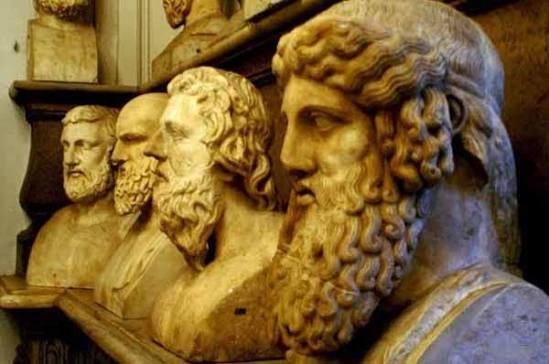
More than motivational quotes
One criticism of the modern philosophy trend is that many philosophical ideas are reduced to short inspirational quotations on social media.
Experts argue that philosophy is often far more demanding than popular presentations suggest.
Philosophy is not simply about finding comforting advice. It involves questioning assumptions, analysing arguments, confronting uncertainty, and examining deeply held beliefs.
The philosopher Socrates famously argued that “the unexamined life is not worth living.” His statement reflects philosophy’s broader purpose: encouraging individuals to think critically about themselves and the world around them.
In an era increasingly shaped by artificial intelligence, biotechnology, and rapid social change, these critical thinking skills may be more important than ever.
Why philosophy still matters
Modern society often emphasises technical skills, productivity, and measurable outcomes. Yet many of the challenges facing humanity involve ethical questions rather than technical ones.
Artificial intelligence raises questions about responsibility and human identity. Climate change forces societies to consider obligations to future generations. Social media creates debates about truth, privacy, and freedom of expression.
These are fundamentally philosophical questions.
Researchers argue that philosophy helps individuals navigate complexity by encouraging reflection, ethical reasoning, and intellectual humility.
Perhaps this explains why ancient philosophy continues to attract modern audiences. While technology changes rapidly, the fundamental challenges of being human remain remarkably consistent.
People still seek meaning. They still face uncertainty. They still struggle with loss, ambition, fear, and hope.
The tools may have changed, but the questions remain the same.
And that is why ideas developed thousands of years ago continue to find relevance in the digital age.
Sources
- Stanford Encyclopedia of Philosophy
- American Philosophical Association
- Greater Good Science Center, University of California, Berkeley
- Oxford Handbook of Stoicism
- Journal of Cognitive Psychotherapy
- Harvard Business Review articles on Stoicism and leadership
Related News

How CIMA Builds Practical Business and Problem Solving Skills for the Real…
For students considering what to study after school or alongside a university degree, one question matters more than ever: will the qualification…
Read More
CIMA Beyond Accounting: Why Business Skills Matter for the Next Generation
For many Sri Lankan students, completing school brings one major question: what qualification should come next? A bachelor’s degree remains an important…
Read More
Gateway College and Wilderness School Australia Launch Teacher Exchange Programme
Students of Wilderness School were most welcoming to the teachers of Gateway Gateway College is pleased to announce the establishment of a…
Read More
Oxford College of Business Celebrates 1,550 Graduates at Landmark 2026 Graduation Ceremony
Oxford College of Business (OCB) celebrated the academic achievements of 1,550 graduands at its 2026 Graduation Ceremony, bringing together students, academics, international…
Read More
Imperial Announces CIMA Certificate Intake with 50% Off Class Fees
Imperial College of Business Studies (ICBS) will commence its latest CIMA Certificate Level intake on 19 September 2026, with weekday and weekend…
Read MoreCourses
-

The future of higher education tech: why industry needs purpose-built solutions
For years, Institutions and education agencies have been forced to rely on a patchwork of horizontal SaaS solutions – general tools that… -

MBA in Project Management & Artificial Intelligence – Oxford College of Business
In an era defined by rapid technological change, organizations increasingly demand leaders who not only understand traditional project management, but can also… -

Scholarships for 2025 Postgraduate Diploma in Education for SLEAS and SLTES Officers
The Ministry of Education, Higher Education and Vocational Education has announced the granting of full scholarships for the one-year weekend Postgraduate Diploma… -

Shape Your Future with a BSc in Business Management (HRM) at Horizon Campus
Human Resource Management is more than a career. It’s about growing people, building organizational culture, and leading with purpose. Every impactful journey… -

ESOFT UNI Signs MoU with Box Gill Institute, Australia
ESOFt UNI recently hosted a formal Memorandum of Understanding (MoU) signing ceremony with Box Hill Institute, Australia, signaling a significant step in… -

Ace Your University Interview in Sri Lanka: A Guide with Examples
Getting into a Sri Lankan sate or non-state university is not just about the scores. For some universities' programmes, your personality, communication… -
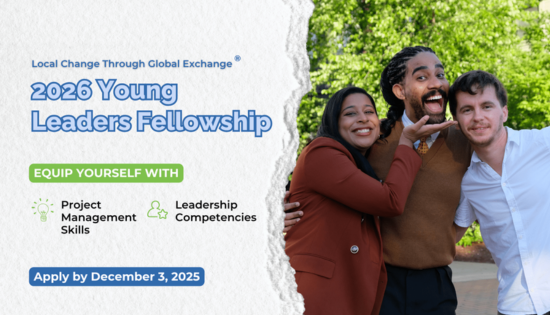
MCW Global Young Leaders Fellowship 2026
MCW Global (Miracle Corners of the World) runs a Young Leaders Fellowship, a year-long leadership program for young people (18–26) around the… -
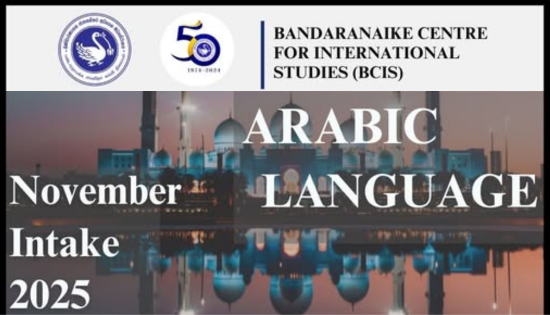
Enhance Your Arabic Skills with the Intermediate Language Course at BCIS
BCIS invites learners to join its Intermediate Arabic Language Course this November and further develop both linguistic skills and cultural understanding. Designed… -

Achieve Your American Dream : NCHS Spring Intake Webinar
NCHS is paving the way for Sri Lankan students to achieve their American Dream. As Sri Lanka’s leading pathway provider to the… -

National Diploma in Teaching course : Notice
A Gazette notice has been released recently, concerning the enrollment of aspiring teachers into National Colleges of Education for the three-year pre-service… -
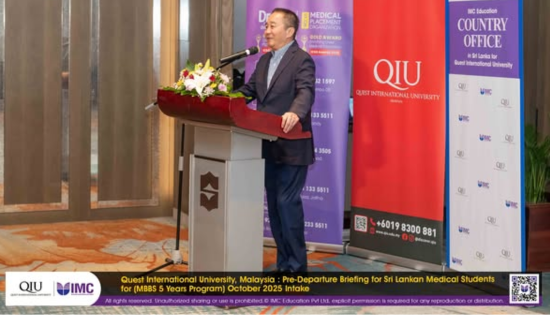
IMC Education Features Largest Student Recruitment for QIU’s October 2025 Intake
Quest International University (QIU), Malaysia recently hosted a pre-departure briefing and high tea at the Shangri-La Hotel in Colombo for its incoming… -

Global University Employability Ranking according to Times Higher Education
Attending college or university offers more than just career preparation, though selecting the right school and program can significantly enhance your job… -

Diploma in Occupational Safety & Health (DOSH) – CIPM
The Chartered Institute of Personnel Management (CIPM) is proud to announce the launch of its Diploma in Occupational Safety & Health (DOSH),… -
Small Grant Scheme for Australia Awards Alumni Sri Lanka
Australia Awards alumni are warmly invited to apply for a grant up to AUD 5,000 to support an innovative project that aim… -

PIM Launches Special Programme for Newly Promoted SriLankan Airlines Managers
The Postgraduate Institute of Management (PIM) has launched a dedicated Newly Promoted Manager Programme designed to strengthen the leadership and management capabilities…
Newswire
-

Wanindu Hasaranga to return home from England series
ON: September 23, 2026 -

Vehicle revenue licence issuance temporarily suspended in 8 provinces
ON: September 23, 2026 -

Archchuna calls for end to racist comments targeting Tamil-Canadian Netflix star
ON: September 23, 2026 -

Parliamentary Committee proposes to streamline driving licences for disabled
ON: September 23, 2026 -

Heavy rains over 100mm expected across several provinces
ON: September 23, 2026