
What comes next after A/L results?
A guide to education and careers

The release of G.C.E. Advanced Level (A/L) results marks a decisive moment for thousands of students across the country. While entry into a state university remains a key aspiration, students can also evaluate a wider range of other pathways, as labour market demands continue to shift toward technology, specialised skills, and global employability.
The question many students now face is not only where they qualify to enter, but which pathway aligns best with future opportunities.
Expanding beyond traditional degree choices
Historically, professions such as medicine, engineering, law, and accounting have dominated student preferences. However, universities have introduced newer programmes aligned with global and technological trends.
Emerging fields in state universities include:
- Artificial Intelligence and Data Science, offered within computing and IT faculties at several universities
- Bioinformatics and Biotechnology, combining life sciences with computing
- Business Analytics and Financial Mathematics, supporting data-driven industries
- Logistics and Supply Chain Management, linked to global trade and ports
- Creative and media-related studies, including film and digital production
Academic sources note that while these fields show strong global demand, employment outcomes depend on skill development, internships, and further qualifications rather than the degree alone.

Understanding Z-score limitations and alternative routes
Admission to state universities is determined by Z-scores, leaving a significant number of qualified students without placement each year. Education analysts highlight that alternative public-sector pathways remain underutilised.
Government technical programmes include:
- National Diploma in Technology (NDT) at the Institute of Technology, University of Moratuwa
- National Diploma in Engineering Sciences (NDES) at IET Katunayake
- Higher National Diploma in Engineering (HNDE) under SLIATE
These programmes are recognised for their practical training components. However, they are classified as diplomas and may require further study for progression to degree-level qualifications or professional recognition.

Role of private and semi-government institutions
Private institutions have expanded access to higher education, particularly in fields not widely available in the state sector.
Institutions such as SLIIT, NSBM, IIT, KDU, and CINEC offer programmes in:
- Cybersecurity
- Cloud computing
- Data science
- Engineering technologies
- Information systems
The University Grants Commission (UGC) advises students to verify recognition status and accreditation before enrolling. Education experts also note that outcomes depend heavily on individual performance, skills development, and industry exposure.
Flexible and work-study pathways
For students seeking cost-effective or flexible options, several alternatives exist:
- Open University of Sri Lanka (OUSL) offers degree programmes with part-time study options
- SLIATE Higher National Diplomas (HNDs) provide free education in IT, business, and accounting
- University of Vocational Technology (UNIVOTEC) enables progression from NVQ qualifications to degree-level study
These pathways are often recommended for students who wish to enter the workforce early while continuing their education.

Professional qualification routes
Professional bodies offer structured qualifications that can lead directly to employment.
- Accounting pathways: AAT leading to CA Sri Lanka, ACCA, or CIMA
- IT certifications and external degrees, including BIT programmes
- Management and marketing qualifications such as CIM, SLIM, and CIPM
Industry professionals note that these qualifications are valued for their practical orientation, though completion requires sustained commitment and examination success.
Maritime and specialised international careers
The maritime sector continues to offer international career opportunities.
Programmes in Marine Engineering and Nautical Science, offered by institutions such as Ocean University and CINEC, prepare students for roles in the global shipping industry. These careers can provide foreign currency earnings, but also involve extended periods at sea and demanding working conditions.
Financial support options
To address financial barriers, several schemes are available:
- Interest-Free Student Loan Scheme (IFSLS), which provides government-backed loans for approved degree programmes
- Bank loans from state banks often have repayment grace periods
Financial advisors recommend that students assess repayment obligations carefully and align them with realistic employment expectations.
Key considerations for students
Education experts recommend that students evaluate options based on:
- Demand in both local and international job markets
- Opportunities for skill development and practical experience
- Accreditation and recognition of qualifications
- Personal interest and long-term career goals
- Financial feasibility and return on investment
In a nutshell…
A/L results remain an important academic milestone, but they represent only the starting point of a student’s career journey. With a wider range of educational pathways now available, informed decision-making has become increasingly important.
Experts stress that success depends not only on the choice of institution or degree but on continuous skill development, adaptability, and awareness of changing global trends.
Related News
Young Innovators to Take Centre Stage at BigSpark Robotics Competition & STEAM Activity Day 2026
BigSpark by Gateway is set to bring together young innovators, budding scientists and technology enthusiasts for its annual Robotics Competition & STEAM…
Read MorePM pledges equal opportunities and enhanced school infrastructure at Habarana Maha Vidyalaya event
Prime Minister and Minister of Education, Higher Education and Vocational Education, Dr. Harini Amarasuriya said on 10 October that the Government is…
Read MoreRichmond College hosts inaugural Kannangara Oration to mark 150th Anniversary
The inaugural Dr. C. W. W. Kannangara Memorial Oration will take place tomorrow, Oct. 13, at 9:00am at Richmond College's Darrell Hall…
Read MoreYoung Sri Lankan authors in Bahrain launch debut short story collection “Api Hayai – Katha Godai
The Embassy of Sri Lanka in the Kingdom of Bahrain, in collaboration with the Sri Lanka Club of Bahrain and the Sinhala…
Read More
PM outlines new five-year strategy to revamp IT education infrastructure
Prime Minister Harini Amarasuriya told Parliament that the Government has proposed a five-year project to upgrade computer facilities at secondary schools and…
Read MoreCourses
-

The future of higher education tech: why industry needs purpose-built solutions
For years, Institutions and education agencies have been forced to rely on a patchwork of horizontal SaaS solutions – general tools that… -

MBA in Project Management & Artificial Intelligence – Oxford College of Business
In an era defined by rapid technological change, organizations increasingly demand leaders who not only understand traditional project management, but can also… -

Scholarships for 2025 Postgraduate Diploma in Education for SLEAS and SLTES Officers
The Ministry of Education, Higher Education and Vocational Education has announced the granting of full scholarships for the one-year weekend Postgraduate Diploma… -

Shape Your Future with a BSc in Business Management (HRM) at Horizon Campus
Human Resource Management is more than a career. It’s about growing people, building organizational culture, and leading with purpose. Every impactful journey… -
ESOFT UNI Signs MoU with Box Gill Institute, Australia
ESOFt UNI recently hosted a formal Memorandum of Understanding (MoU) signing ceremony with Box Hill Institute, Australia, signaling a significant step in… -

Ace Your University Interview in Sri Lanka: A Guide with Examples
Getting into a Sri Lankan sate or non-state university is not just about the scores. For some universities' programmes, your personality, communication… -
MCW Global Young Leaders Fellowship 2026
MCW Global (Miracle Corners of the World) runs a Young Leaders Fellowship, a year-long leadership program for young people (18–26) around the… -
Enhance Your Arabic Skills with the Intermediate Language Course at BCIS
BCIS invites learners to join its Intermediate Arabic Language Course this November and further develop both linguistic skills and cultural understanding. Designed… -

Achieve Your American Dream : NCHS Spring Intake Webinar
NCHS is paving the way for Sri Lankan students to achieve their American Dream. As Sri Lanka’s leading pathway provider to the… -
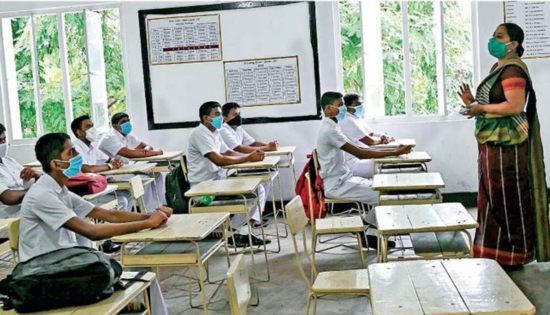
National Diploma in Teaching course : Notice
A Gazette notice has been released recently, concerning the enrollment of aspiring teachers into National Colleges of Education for the three-year pre-service… -
IMC Education Features Largest Student Recruitment for QIU’s October 2025 Intake
Quest International University (QIU), Malaysia recently hosted a pre-departure briefing and high tea at the Shangri-La Hotel in Colombo for its incoming… -

Global University Employability Ranking according to Times Higher Education
Attending college or university offers more than just career preparation, though selecting the right school and program can significantly enhance your job… -

Diploma in Occupational Safety & Health (DOSH) – CIPM
The Chartered Institute of Personnel Management (CIPM) is proud to announce the launch of its Diploma in Occupational Safety & Health (DOSH),… -
Small Grant Scheme for Australia Awards Alumni Sri Lanka
Australia Awards alumni are warmly invited to apply for a grant up to AUD 5,000 to support an innovative project that aim… -
PIM Launches Special Programme for Newly Promoted SriLankan Airlines Managers
The Postgraduate Institute of Management (PIM) has launched a dedicated Newly Promoted Manager Programme designed to strengthen the leadership and management capabilities…
Newswire
-

Rs. 6,000 school stationery allowance for 1.5 million students in 2027
ON: October 13, 2026 -

No bail for Namal : Further remanded
ON: October 13, 2026 -

IMF forecasts Sri Lanka’s economic growth at 3.7% in 2027
ON: October 13, 2026