





Eight arms, nine brains: The hidden intelligence of octopuses
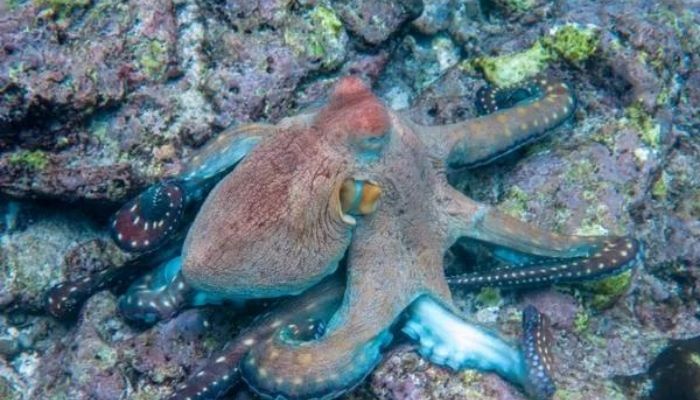
An octopus glides silently across the ocean floor before stopping in front of what appears to be an impossible obstacle, a tightly sealed jar containing a crab. Within minutes, it twists the lid open, reaches inside with one of its eight arms, and enjoys its meal.
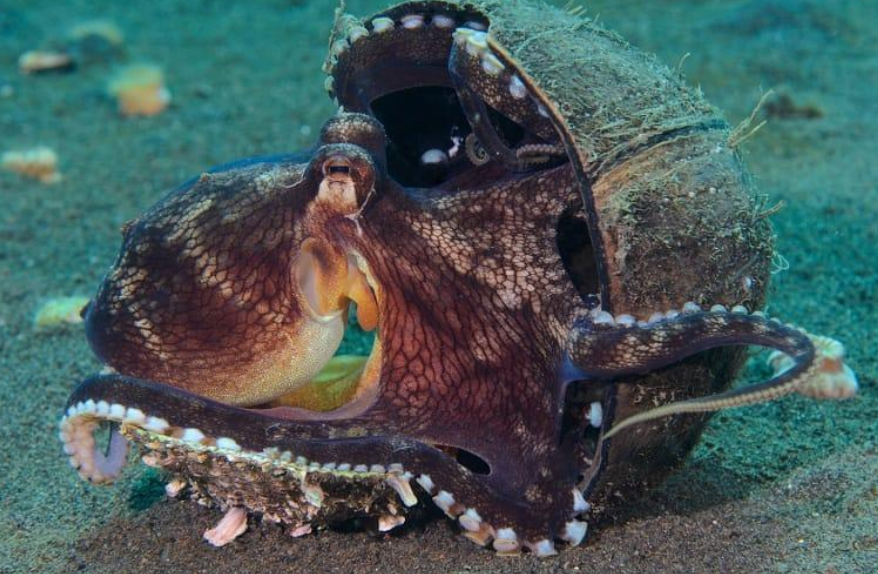
In another part of the world, an octopus gathers coconut shells from the seabed, carries them over long distances, and later assembles them into a protective shelter.
These behaviours may sound like scenes from a science fiction film, but they are well-documented observations that continue to astonish marine biologists.
For decades, scientists have regarded octopuses as some of the most intelligent animals on Earth. Despite sharing a common ancestor with humans more than 500 million years ago, these remarkable creatures have evolved sophisticated problem-solving abilities, impressive memories, extraordinary camouflage skills, and behaviours once believed to be unique to mammals and birds.
Their intelligence has become one of the greatest mysteries in modern biology.
An intelligence that evolved independently
Humans often associate intelligence with animals that are closely related to us, such as chimpanzees, dolphins, elephants, and dogs.
Octopuses challenge that assumption.
Unlike mammals, octopuses belong to a completely different branch of the animal kingdom known as cephalopods, which also includes squid and cuttlefish.
Scientists believe the ancestors of mammals and octopuses diverged more than half a billion years ago. This means octopus intelligence evolved independently from vertebrate intelligence.
Researchers describe this as an example of convergent evolution, where similar abilities emerge in unrelated species because they solve similar survival challenges.
In other words, nature appears to have discovered more than one way to build a highly intelligent animal.
Masters of problem-solving
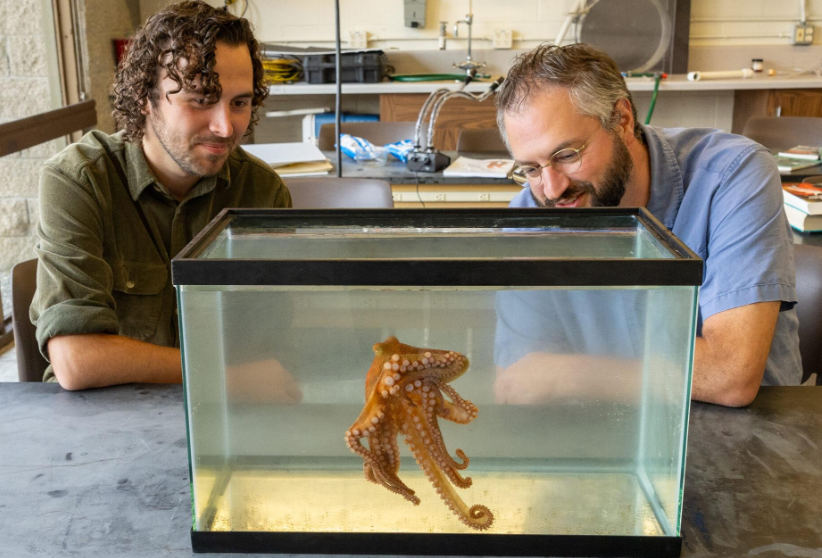
One of the clearest signs of intelligence is the ability to solve unfamiliar problems.
Laboratory experiments and observations in the wild have repeatedly demonstrated that octopuses excel at this.
Researchers have documented octopuses opening screw-top jars, navigating complex mazes, recognising patterns, manipulating objects, and escaping from aquariums through surprisingly small openings.
In one famous case, an octopus regularly left its tank at night, crossed the laboratory floor to another aquarium, ate fish, and quietly returned to its own tank before researchers arrived the next morning.
Stories like these may sound exaggerated, but similar incidents have been reported by aquariums around the world.
Scientists believe octopuses learn through observation and experimentation rather than simple instinct.
When confronted with a new challenge, they often explore different solutions until they discover one that works.
A brain unlike any other
Part of what makes octopus intelligence so fascinating is that its nervous system is unlike that of almost any other animal.
An octopus has approximately 500 million neurons, a number comparable to that of a dog.
However, only about one-third of those neurons are located in the central brain.
The remaining neurons are distributed throughout the animal’s eight arms.
Each arm can perform complex movements, explore objects, taste surfaces, and even make certain decisions independently without waiting for instructions from the brain.
Scientists sometimes describe the octopus as an animal with “nine brains”, one central brain and eight highly sophisticated neural networks controlling each arm.
Although this description is not anatomically precise, it highlights how unusual the octopus nervous system truly is.
Researchers continue investigating how these distributed networks communicate and coordinate behaviour.
Remarkable memory and learning
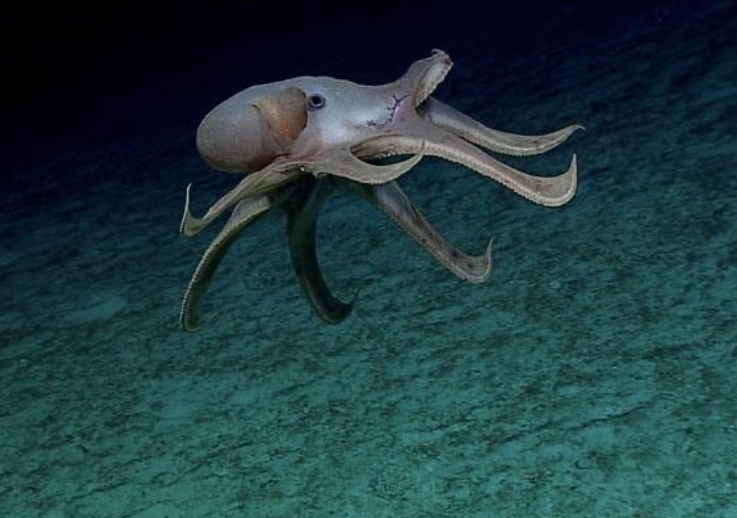
Experiments suggest octopuses possess both short-term and long-term memory.
They can remember solutions to puzzles, recognise familiar environments, and distinguish between individual people.
Some aquariums have reported octopuses responding differently to different caretakers, appearing to show preferences based on previous interactions.
Laboratory studies have demonstrated that octopuses can learn through repeated experience and retain that knowledge over extended periods.
Such abilities are considered important indicators of advanced cognition.
The masters of disguise
Perhaps no animal demonstrates camouflage more dramatically than the octopus.
Within fractions of a second, many species can change both colour and skin texture to match rocks, coral, sand, or seaweed.
Specialised skin cells called chromatophores expand and contract under nervous system control, allowing octopuses to produce astonishing visual transformations.
Some species can even imitate other marine animals.
The mimic octopus, for example, has been observed resembling lionfish, sea snakes, and flatfish to discourage predators.
Researchers believe camouflage involves far more than automatic colour changes.
The animal must continuously analyse its surroundings and adjust its appearance with extraordinary precision.
This requires highly advanced sensory processing and rapid decision-making.
Solitary yet intelligent
Many highly intelligent animals, including dolphins, elephants, and primates, live in complex social groups.
Octopuses are different.
Most species spend much of their lives alone.
This has puzzled scientists because social interaction is often considered a major driver of intelligence.
Some researchers suggest that octopus intelligence evolved not because of social complexity but because of environmental challenges.
Without protective shells, octopuses rely on learning, exploration, flexibility, and innovation to survive among numerous predators.
Instead of strength or speed, they evolved intelligence.
What octopuses teach us about evolution
Perhaps the greatest lesson from octopus research is that intelligence is not limited to one evolutionary path.
For many years, scientists viewed human intelligence as the inevitable outcome of evolutionary progress.
The octopus tells a different story.
It demonstrates that advanced cognition can emerge independently in entirely different branches of life using radically different biological structures.
Some researchers even describe the octopus as the closest thing humans have to studying an “alien intelligence” on Earth.
Not because it came from another planet, but because its mind evolved along such a different evolutionary journey.
More questions than answers
Despite decades of research, scientists continue to uncover new mysteries about octopus behaviour.
How conscious are they?
Do they experience emotions?
Can they plan for the future?
What limits their intelligence?
These questions remain largely unanswered.
As marine biologists continue exploring the oceans, the octopus serves as a reminder that some of the planet’s most extraordinary minds may exist far from cities and classrooms—hidden beneath the waves.
In understanding them, researchers are also gaining a deeper understanding of intelligence itself.
After all, if evolution produced remarkable minds twice on the same planet, perhaps intelligence is far more diverse than humans once imagined.
Sources
- National Geographic – Octopus intelligence and behaviour
- Smithsonian Magazine – Research on cephalopod cognition
- Nature – Studies on octopus neuroscience and behaviour
- Current Biology – Cephalopod cognition research
- Marine Biological Laboratory (MBL), Woods Hole
- Monterey Bay Aquarium – Octopus biology and behaviour
- Scientific American – The evolution of intelligence
Related News

Mrs. Nimala Perera; A Treasure Trove and the Heart of St. Joseph’s College, Colombo 10.
By : Guruji Ravindhiran Maruthai Mrs. Nimala Perera, a renowned educator of the hallowed educational institutionSt. Joseph’s College, Colombo 10, Sri Lanka,celebrates…
Read More
Online admission cards released for 2026 A/L Biosystems Technology Practical Exams
Candidates appearing for the 2026 G.C.E. Advanced Level Biosystems Technology practical examinations can download their admission cards from the official Department of…
Read MoreGovt to renew MoU with Asia Pacific Body to elevate vocational training
The Cabinet of Ministers has approved a proposal to renew the Memorandum of Understanding (MoU) between Sri Lanka’s Tertiary and Vocational Education…
Read MorePM inaugurates ‘Sittam 2026’ Art Exhibition under ‘Kolomtota Abhinandana’ initiative
In parallel with the National Literary and Arts Festival, Prime Minister Dr. Harini Amarasuriya opened the 'Sittam 2026' art exhibition on October…
Read MoreKorean Association pledges medical aid and special needs youth programme for Sri Lanka
The Korean Volunteer Association for Distinguished Service to the State is organizing an 11-day programme for next year aimed at identifying and…
Read MoreCourses
-

The future of higher education tech: why industry needs purpose-built solutions
For years, Institutions and education agencies have been forced to rely on a patchwork of horizontal SaaS solutions – general tools that… -

MBA in Project Management & Artificial Intelligence – Oxford College of Business
In an era defined by rapid technological change, organizations increasingly demand leaders who not only understand traditional project management, but can also… -

Scholarships for 2025 Postgraduate Diploma in Education for SLEAS and SLTES Officers
The Ministry of Education, Higher Education and Vocational Education has announced the granting of full scholarships for the one-year weekend Postgraduate Diploma… -
Shape Your Future with a BSc in Business Management (HRM) at Horizon Campus
Human Resource Management is more than a career. It’s about growing people, building organizational culture, and leading with purpose. Every impactful journey… -
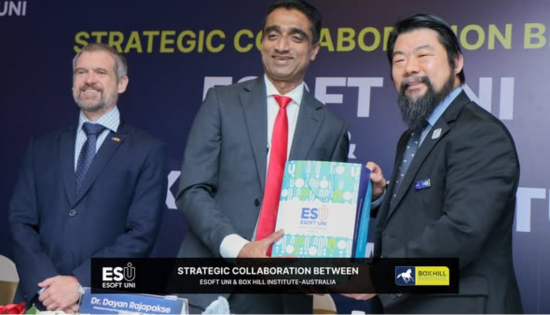
ESOFT UNI Signs MoU with Box Gill Institute, Australia
ESOFt UNI recently hosted a formal Memorandum of Understanding (MoU) signing ceremony with Box Hill Institute, Australia, signaling a significant step in… -

Ace Your University Interview in Sri Lanka: A Guide with Examples
Getting into a Sri Lankan sate or non-state university is not just about the scores. For some universities' programmes, your personality, communication… -

MCW Global Young Leaders Fellowship 2026
MCW Global (Miracle Corners of the World) runs a Young Leaders Fellowship, a year-long leadership program for young people (18–26) around the… -
Enhance Your Arabic Skills with the Intermediate Language Course at BCIS
BCIS invites learners to join its Intermediate Arabic Language Course this November and further develop both linguistic skills and cultural understanding. Designed… -

Achieve Your American Dream : NCHS Spring Intake Webinar
NCHS is paving the way for Sri Lankan students to achieve their American Dream. As Sri Lanka’s leading pathway provider to the… -
National Diploma in Teaching course : Notice
A Gazette notice has been released recently, concerning the enrollment of aspiring teachers into National Colleges of Education for the three-year pre-service… -

IMC Education Features Largest Student Recruitment for QIU’s October 2025 Intake
Quest International University (QIU), Malaysia recently hosted a pre-departure briefing and high tea at the Shangri-La Hotel in Colombo for its incoming… -

Global University Employability Ranking according to Times Higher Education
Attending college or university offers more than just career preparation, though selecting the right school and program can significantly enhance your job… -

Diploma in Occupational Safety & Health (DOSH) – CIPM
The Chartered Institute of Personnel Management (CIPM) is proud to announce the launch of its Diploma in Occupational Safety & Health (DOSH),… -

Small Grant Scheme for Australia Awards Alumni Sri Lanka
Australia Awards alumni are warmly invited to apply for a grant up to AUD 5,000 to support an innovative project that aim… -

PIM Launches Special Programme for Newly Promoted SriLankan Airlines Managers
The Postgraduate Institute of Management (PIM) has launched a dedicated Newly Promoted Manager Programme designed to strengthen the leadership and management capabilities…
Newswire
-
Sri Lanka Customs reaches 2026 revenue target of Rs. 2,208 Bn by Oct.13
ON: October 14, 2026 -
St. Joseph’s College Honours Mrs Nimala Perera’s Five Decades of Service
ON: October 14, 2026 -

Taxpayers reminded to submit income tax returns by November 30
ON: October 14, 2026 -

Sri Lanka joins first BIMSTEC Home Ministers’ Meeting in India
ON: October 14, 2026 -
PM hails Sri Lanka’s $9 Bn export performance in first half of 2026
ON: October 14, 2026