Mirrors and the illusion of reversal
Why reflections flip left and right, but not up and down?
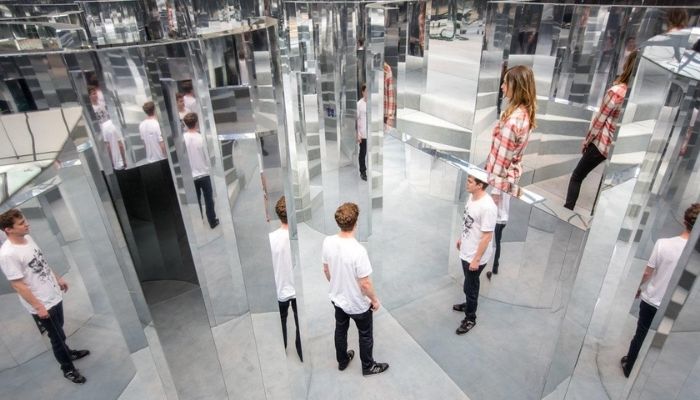
Every morning, millions of people stand in front of a mirror without giving it much thought.
We adjust our hair, straighten a tie, or practise a smile. Yet if someone raises their right hand, the reflection appears to raise its left. Curiously, when they lift their head, the reflection’s head also moves upward. If they crouch down, the reflection crouches too.
So why does a mirror seem to reverse left and right but not up and down?
It is one of the most common scientific questions, and one of the most misunderstood.
Surprisingly, mirrors do not actually reverse left and right at all.
The real explanation lies not in the mirror, but in the way the human brain interprets reflections.
What a mirror really does
A mirror performs a remarkably simple task.
It reflects light.
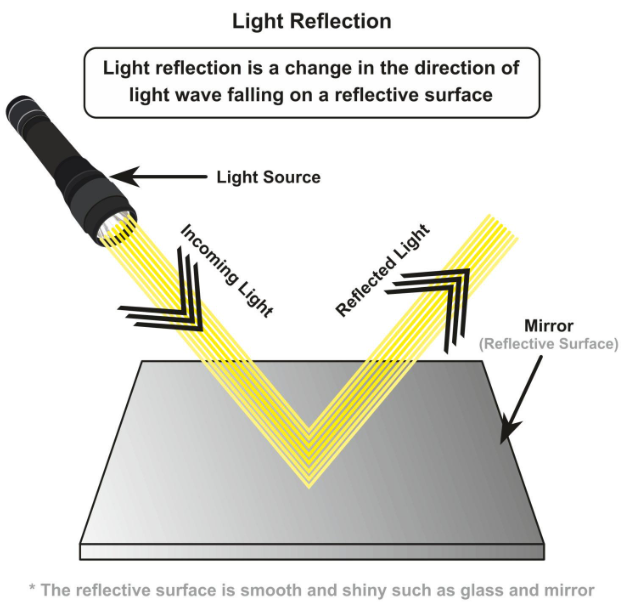
When light bounces off an object, it strikes the mirror and reflects back at the same angle into our eyes. This allows us to see a virtual image that appears to exist behind the mirror.
Importantly, the mirror does not swap left with right or up with down.
Instead, it reverses only one direction: front to back.
Imagine standing directly in front of a mirror.
Your nose is closest to the mirror.
Your ears are farther away.
Your back is farther still.
The mirror reverses this front-to-back relationship, making it appear as though another version of you is standing behind the glass, facing you.
Everything else remains exactly where it is.
Your right hand remains on the right side of your reflected body.
Your left hand remains on the left.
The mirror has not switched them.
So why does it look reversed?
If mirrors do not reverse left and right, why does everyone think they do?
The answer lies in how humans imagine themselves changing places with their reflection.
Suppose you are facing another person.
When they raise their right hand, it appears on the left side from your point of view.
This is because they are facing you.
Without realising it, your brain treats the mirror image as though it were another person standing opposite you.
To imagine becoming that reflected person, you mentally rotate yourself around a vertical axis.
During this imagined rotation, your right side ends up opposite your original position, creating the impression that left and right have been exchanged.
In reality, the mirror never performed that rotation.
Your brain did.
Why up and down stay the same
This raises another question.
If our brains mentally rotate us, why don’t mirrors also reverse up and down?
The answer is simple.
People almost never imagine flipping themselves upside down when facing another person.
Instead, they imagine turning around while remaining upright.
Because the imagined rotation occurs horizontally rather than vertically, left and right appear reversed while up and down remain unchanged.
If humans naturally imagined performing somersaults instead of turning around, mirrors might seem to reverse up and down instead.
The perceived reversal depends on the observer, not the mirror.
A lesson in perspective
The mirror illusion demonstrates how strongly perception depends on perspective.
Scientists often distinguish between what actually happens in the physical world and how the brain interprets it.
The eyes simply detect reflected light.
The brain then constructs an explanation of what those signals mean.
Most of the time, this interpretation is remarkably accurate.
Occasionally, however, the brain relies on assumptions that create optical illusions or misunderstandings.
The mirror reversal is one such example.
Rather than faithfully reproducing reality, the brain builds a mental model that helps us navigate the world efficiently.

Mirrors in mathematics and physics
Mirrors have fascinated scientists for centuries.
In geometry, mirrors demonstrate the principle of reflection, where the angle at which light strikes a surface equals the angle at which it reflects away.
This simple rule explains why mirrors produce clear images and why curved mirrors can magnify or distort reflections.
Physicists also use mirrors in telescopes, microscopes, lasers, satellites, and fibre-optic communication systems.
Without our understanding of reflection, many modern technologies would not exist.
A simple household mirror is therefore based on the same physical principles used to explore distant galaxies.
Mirrors and the human mind
Mirrors also play an important role in psychology.
Around 18 months of age, most children begin recognising themselves in a mirror, a milestone known as self-recognition.
Psychologists often use the “mirror test” to study self-awareness in both humans and animals.
Chimpanzees, dolphins, elephants, and magpies have all demonstrated varying degrees of mirror self-recognition, suggesting advanced cognitive abilities.
Researchers continue debating what mirror recognition reveals about consciousness, intelligence, and the evolution of the mind.

More than a reflection
Although mirrors appear ordinary, they reveal something extraordinary about human perception.
The glass itself performs only a simple physical task: reflecting light.
The apparent left-right reversal exists because our brains unconsciously imagine ourselves exchanging places with our reflections.
In other words, the mirror does not fool us.
Our own interpretation does.
Perhaps that is why this question has fascinated scientists, philosophers, and teachers for generations.
It reminds us that seeing is not always the same as understanding.
Sometimes the greatest mysteries are hiding in the objects we use every single day.
Sources
- Encyclopaedia Britannica – Reflection and mirrors
- American Physical Society – Optics and reflection
- The Royal Institution – The science of mirrors
- Physics Today – Understanding reflection and perception
- Scientific American – Mirror perception and optical illusions
- MIT OpenCourseWare – Introduction to Optics
- American Psychological Association – Research on perception and self-recognition
Related News
Mrs. Nimala Perera; A Treasure Trove and the Heart of St. Joseph’s College, Colombo 10.
By : Guruji Ravindhiran Maruthai Mrs. Nimala Perera, a renowned educator of the hallowed educational institutionSt. Joseph’s College, Colombo 10, Sri Lanka,celebrates…
Read More
Online admission cards released for 2026 A/L Biosystems Technology Practical Exams
Candidates appearing for the 2026 G.C.E. Advanced Level Biosystems Technology practical examinations can download their admission cards from the official Department of…
Read MoreGovt to renew MoU with Asia Pacific Body to elevate vocational training
The Cabinet of Ministers has approved a proposal to renew the Memorandum of Understanding (MoU) between Sri Lanka’s Tertiary and Vocational Education…
Read MorePM inaugurates ‘Sittam 2026’ Art Exhibition under ‘Kolomtota Abhinandana’ initiative
In parallel with the National Literary and Arts Festival, Prime Minister Dr. Harini Amarasuriya opened the 'Sittam 2026' art exhibition on October…
Read MoreKorean Association pledges medical aid and special needs youth programme for Sri Lanka
The Korean Volunteer Association for Distinguished Service to the State is organizing an 11-day programme for next year aimed at identifying and…
Read MoreCourses
-

The future of higher education tech: why industry needs purpose-built solutions
For years, Institutions and education agencies have been forced to rely on a patchwork of horizontal SaaS solutions – general tools that… -
MBA in Project Management & Artificial Intelligence – Oxford College of Business
In an era defined by rapid technological change, organizations increasingly demand leaders who not only understand traditional project management, but can also… -
Scholarships for 2025 Postgraduate Diploma in Education for SLEAS and SLTES Officers
The Ministry of Education, Higher Education and Vocational Education has announced the granting of full scholarships for the one-year weekend Postgraduate Diploma… -
Shape Your Future with a BSc in Business Management (HRM) at Horizon Campus
Human Resource Management is more than a career. It’s about growing people, building organizational culture, and leading with purpose. Every impactful journey… -
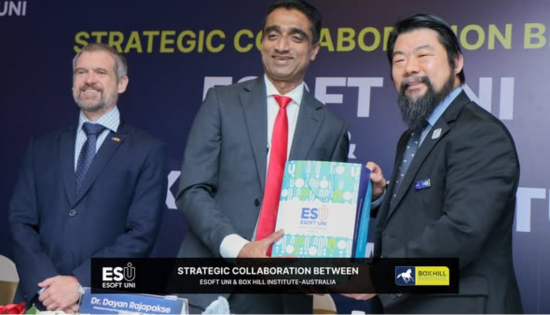
ESOFT UNI Signs MoU with Box Gill Institute, Australia
ESOFt UNI recently hosted a formal Memorandum of Understanding (MoU) signing ceremony with Box Hill Institute, Australia, signaling a significant step in… -
Ace Your University Interview in Sri Lanka: A Guide with Examples
Getting into a Sri Lankan sate or non-state university is not just about the scores. For some universities' programmes, your personality, communication… -
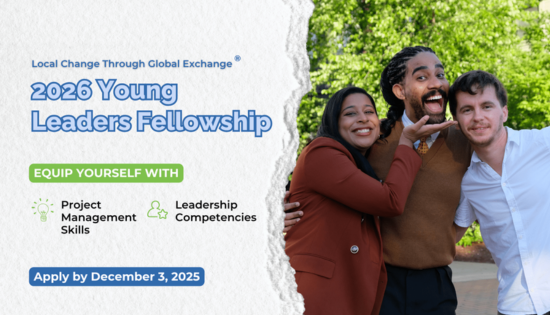
MCW Global Young Leaders Fellowship 2026
MCW Global (Miracle Corners of the World) runs a Young Leaders Fellowship, a year-long leadership program for young people (18–26) around the… -
Enhance Your Arabic Skills with the Intermediate Language Course at BCIS
BCIS invites learners to join its Intermediate Arabic Language Course this November and further develop both linguistic skills and cultural understanding. Designed… -
Achieve Your American Dream : NCHS Spring Intake Webinar
NCHS is paving the way for Sri Lankan students to achieve their American Dream. As Sri Lanka’s leading pathway provider to the… -
National Diploma in Teaching course : Notice
A Gazette notice has been released recently, concerning the enrollment of aspiring teachers into National Colleges of Education for the three-year pre-service… -
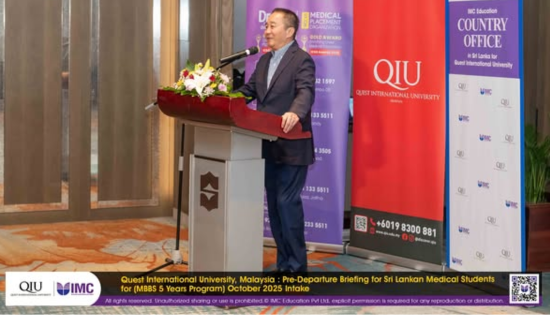
IMC Education Features Largest Student Recruitment for QIU’s October 2025 Intake
Quest International University (QIU), Malaysia recently hosted a pre-departure briefing and high tea at the Shangri-La Hotel in Colombo for its incoming… -
Global University Employability Ranking according to Times Higher Education
Attending college or university offers more than just career preparation, though selecting the right school and program can significantly enhance your job… -

Diploma in Occupational Safety & Health (DOSH) – CIPM
The Chartered Institute of Personnel Management (CIPM) is proud to announce the launch of its Diploma in Occupational Safety & Health (DOSH),… -
Small Grant Scheme for Australia Awards Alumni Sri Lanka
Australia Awards alumni are warmly invited to apply for a grant up to AUD 5,000 to support an innovative project that aim… -
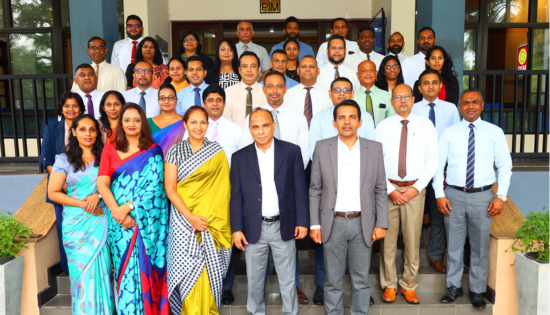
PIM Launches Special Programme for Newly Promoted SriLankan Airlines Managers
The Postgraduate Institute of Management (PIM) has launched a dedicated Newly Promoted Manager Programme designed to strengthen the leadership and management capabilities…
Newswire
-
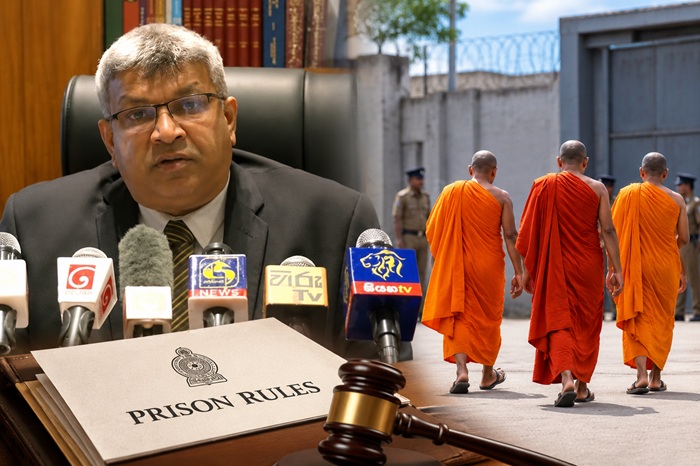
New prison rules proposed to allow Buddhist monks to wear robes outside prison
ON: October 14, 2026 -
Two ministry cabs broke down, had to use friend’s vehicle: Minister Lal Kantha
ON: October 14, 2026 -
Namal writes to President, seeks second-chance loan scheme in 2027 Budget
ON: October 14, 2026 -
Male-to-male sexual contact a major factor in rising HIV cases in Sri Lanka
ON: October 14, 2026