



The rise of micro-credentials: Are short courses replacing traditional qualifications?
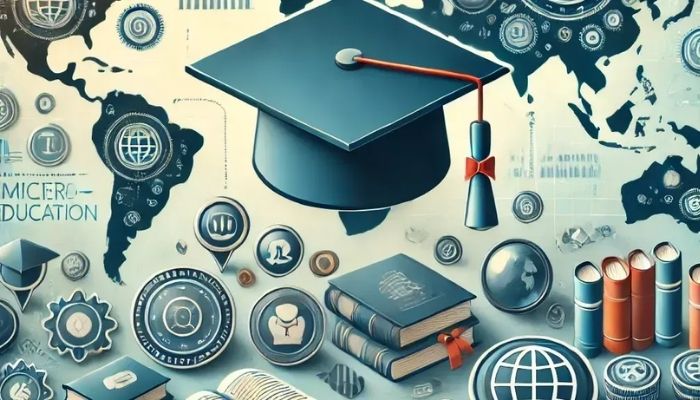
A growing number of students worldwide are turning towards short-term certifications, online courses, and micro-credentials to improve employability. Platforms such as Coursera, edX, LinkedIn Learning, and Google Career Certificates have transformed how people gain professional skills.
Micro-credentials are short, focused qualifications designed to teach specific competencies such as data analysis, digital marketing, cybersecurity, graphic design, project management, or AI fundamentals. Unlike traditional degrees that may take several years, many micro-credentials can be completed within weeks or months.
Researchers argue that the popularity of these programmes reflects changing employer expectations. Companies increasingly prioritise demonstrable skills over purely academic qualifications, particularly in rapidly evolving industries.
For Sri Lankan students facing financial limitations or uncertainty about long-term degree pathways, micro-credentials may offer more accessible opportunities to gain globally recognised skills. Some international employers now accept industry certifications alongside formal degrees during recruitment processes.
However, experts caution against viewing micro-credentials as complete replacements for university education. Traditional degrees still provide broader theoretical understanding, research exposure, networking opportunities, and long-term academic development.
Instead, researchers suggest that higher education is moving towards a “hybrid model,” where students combine degrees with specialised certifications to remain competitive in dynamic job markets.
Universities themselves are adapting to this trend. Several institutions worldwide now partner with technology companies to offer embedded certifications within degree programmes. Business schools and IT faculties increasingly integrate digital badges and skill-based assessments into curricula.
Sri Lanka’s higher education sector may also see growing demand for flexible learning systems as students seek faster, affordable, and career-oriented educational options.
The key question may no longer be whether students need degrees or certifications. Increasingly, successful graduates may require both.
Sources: OECD skills reports, Coursera Global Skills Report, World Economic Forum education analyses, higher education policy research.
Related News
Sri Lanka to introduce New School Curricula and National Preschool Education Reforms
Significant changes are set for Sri Lanka’s school curriculum from 2027, including reducing the G.C.E. Ordinary Level examination to seven core subjects…
Read MoreSchool children visit Presidential Secretariat to mark ‘Vision’ programme anniversary
Students from Pinnawala Central College and Matale Siri Seevali College visited the Presidential Secretariat on September 24 to mark the completion of…
Read More
Health Ministry stresses need for pre- school standards
The Government and relevant institutions hold a responsibility to ensure proper care for children during early childhood development, Secretary to the Ministry…
Read More
Estate-sector students celebrated at British Council NextGen ceremony
Over 100 students from three Tamil-medium estate-sector schools were recognized at the NextGen Skills Awards Ceremony and Student Showcase held at Araliya…
Read More
Applications Open for the Inaugural Upali Ratnayake Scholarship Scheme
Applications are now open for the inaugural Upali Ratnayake Scholarship Scheme, a prestigious initiative established to honour the legacy of Upali Ratnayake…
Read MoreCourses
-

The future of higher education tech: why industry needs purpose-built solutions
For years, Institutions and education agencies have been forced to rely on a patchwork of horizontal SaaS solutions – general tools that… -

MBA in Project Management & Artificial Intelligence – Oxford College of Business
In an era defined by rapid technological change, organizations increasingly demand leaders who not only understand traditional project management, but can also… -

Scholarships for 2025 Postgraduate Diploma in Education for SLEAS and SLTES Officers
The Ministry of Education, Higher Education and Vocational Education has announced the granting of full scholarships for the one-year weekend Postgraduate Diploma… -
Shape Your Future with a BSc in Business Management (HRM) at Horizon Campus
Human Resource Management is more than a career. It’s about growing people, building organizational culture, and leading with purpose. Every impactful journey… -
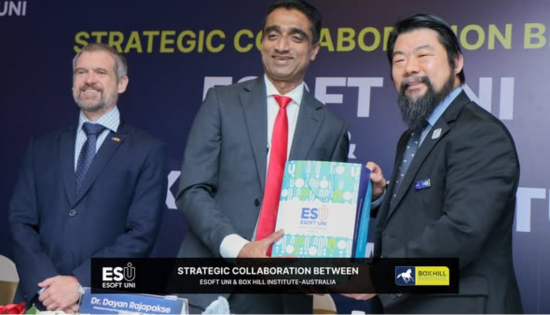
ESOFT UNI Signs MoU with Box Gill Institute, Australia
ESOFt UNI recently hosted a formal Memorandum of Understanding (MoU) signing ceremony with Box Hill Institute, Australia, signaling a significant step in… -

Ace Your University Interview in Sri Lanka: A Guide with Examples
Getting into a Sri Lankan sate or non-state university is not just about the scores. For some universities' programmes, your personality, communication… -
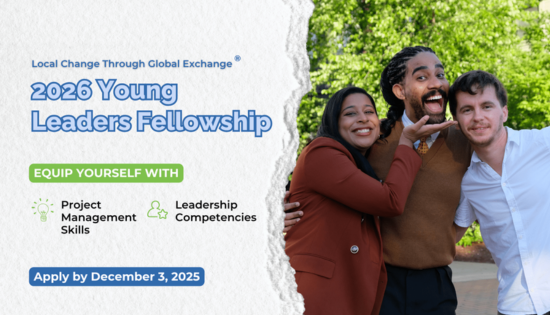
MCW Global Young Leaders Fellowship 2026
MCW Global (Miracle Corners of the World) runs a Young Leaders Fellowship, a year-long leadership program for young people (18–26) around the… -
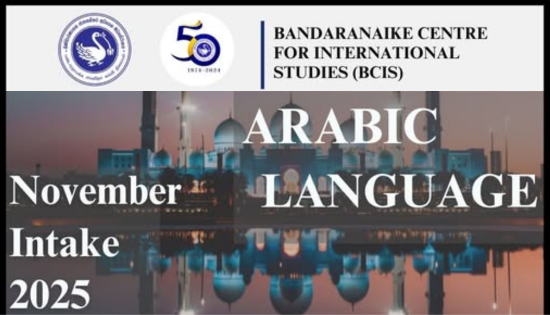
Enhance Your Arabic Skills with the Intermediate Language Course at BCIS
BCIS invites learners to join its Intermediate Arabic Language Course this November and further develop both linguistic skills and cultural understanding. Designed… -
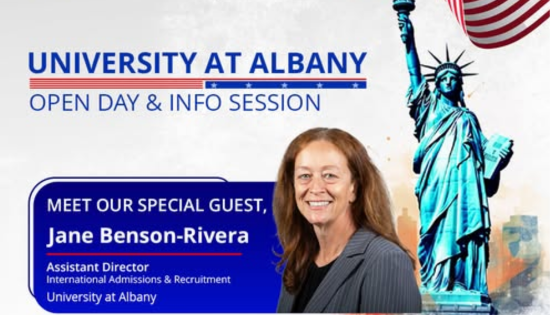
Achieve Your American Dream : NCHS Spring Intake Webinar
NCHS is paving the way for Sri Lankan students to achieve their American Dream. As Sri Lanka’s leading pathway provider to the… -
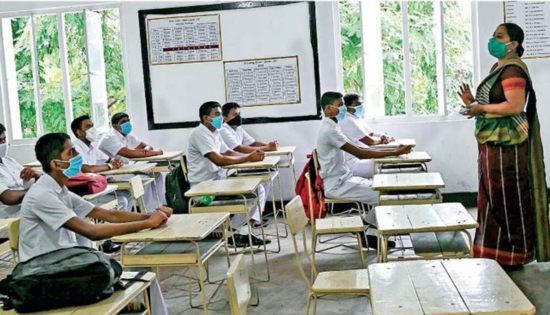
National Diploma in Teaching course : Notice
A Gazette notice has been released recently, concerning the enrollment of aspiring teachers into National Colleges of Education for the three-year pre-service… -
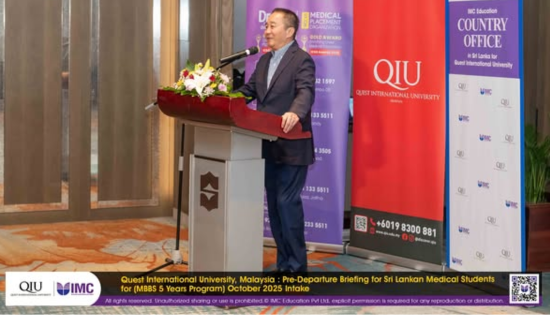
IMC Education Features Largest Student Recruitment for QIU’s October 2025 Intake
Quest International University (QIU), Malaysia recently hosted a pre-departure briefing and high tea at the Shangri-La Hotel in Colombo for its incoming… -

Global University Employability Ranking according to Times Higher Education
Attending college or university offers more than just career preparation, though selecting the right school and program can significantly enhance your job… -

Diploma in Occupational Safety & Health (DOSH) – CIPM
The Chartered Institute of Personnel Management (CIPM) is proud to announce the launch of its Diploma in Occupational Safety & Health (DOSH),… -
Small Grant Scheme for Australia Awards Alumni Sri Lanka
Australia Awards alumni are warmly invited to apply for a grant up to AUD 5,000 to support an innovative project that aim… -
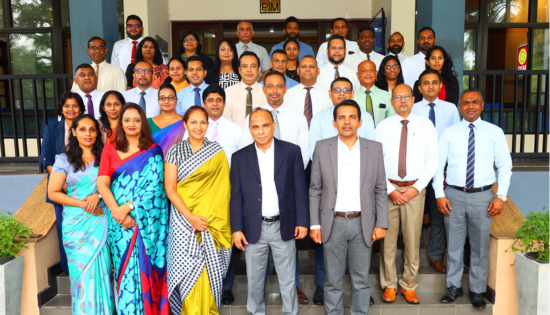
PIM Launches Special Programme for Newly Promoted SriLankan Airlines Managers
The Postgraduate Institute of Management (PIM) has launched a dedicated Newly Promoted Manager Programme designed to strengthen the leadership and management capabilities…
Newswire
-

MO Marketplace Partners Koko to Bring Buy Now, Pay Later to Sri Lankan Online Shoppers
ON: September 28, 2026 -
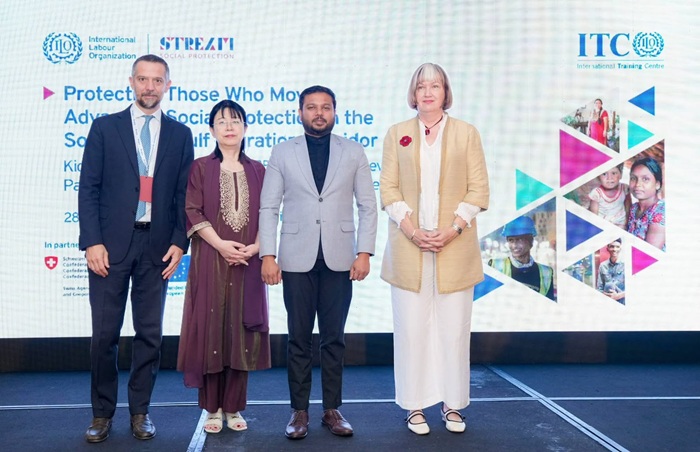
New Foreign Employment Bill, overseas voting mechanism in the works – Acting FM
ON: September 28, 2026 -

Severe lightning alert issued for several parts of Sri Lanka
ON: September 28, 2026