
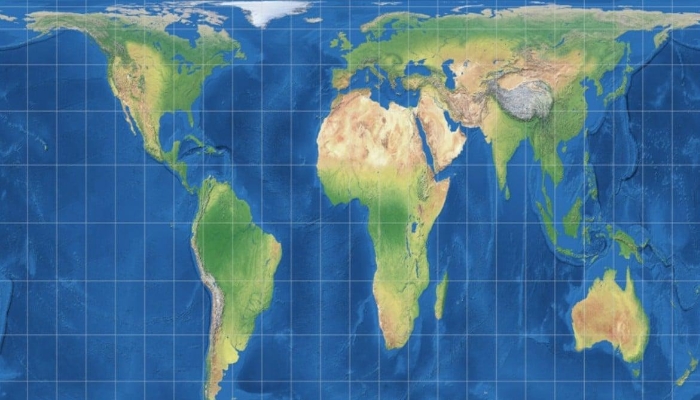




The mathematics of infinity: A concept that still puzzles scientists

Imagine counting forever.
Not for a day, a year, or even a million years, but endlessly. No matter how high you count, there is always another number waiting. This simple observation introduces one of the most fascinating and perplexing concepts ever encountered by the human mind: infinity.
Infinity appears everywhere. It emerges in mathematics, philosophy, cosmology, and even discussions about the nature of reality itself. Yet despite centuries of study, infinity remains one of the strangest ideas humanity has ever attempted to understand.
Unlike ordinary numbers, infinity is not something that can be reached. It has no final value and no endpoint. It stretches beyond imagination, challenging the limits of logic, intuition, and human understanding.
Ancient thinkers grapple with the infinite
The concept of infinity has fascinated thinkers since ancient times.
The ancient Greeks were among the first to explore its implications. While they made extraordinary advances in mathematics and philosophy, many Greek thinkers were deeply suspicious of infinity.
One of the earliest and most famous challenges came from the philosopher Zeno of Elea. Around the fifth century BCE, Zeno proposed a series of paradoxes designed to show that motion itself might be impossible.
In his most famous example, known as Achilles and the Tortoise, the legendary Greek hero Achilles races a tortoise that has been given a small head start. Before Achilles can catch the tortoise, he must first reach the point where the tortoise began. By that time, however, the tortoise has moved forward. Achilles must then reach this new point, but again the tortoise has advanced slightly.
The process continues indefinitely.
If there are infinitely many points Achilles must reach, how can he ever catch the tortoise?
Although modern mathematics provides solutions to Zeno’s paradoxes, they continue to provoke discussions about space, time, and infinity.
Another influential figure was the Greek philosopher Aristotle. He distinguished between what he called “potential infinity” and “actual infinity.”
Potential infinity referred to a process that could continue indefinitely, such as counting numbers forever. Actual infinity, on the other hand, referred to an infinite quantity existing as a complete entity.
Aristotle accepted potential infinity but rejected actual infinity, arguing that an infinite object could not truly exist in reality.
His views influenced Western thought for nearly two thousand years.

Georg Cantor’s revolutionary discovery
For centuries, infinity remained a controversial concept. Then, in the nineteenth century, a German mathematician named Georg Cantor transformed the field completely.
Cantor asked a seemingly simple question: Can one infinity be larger than another?
The answer shocked the mathematical world.
He demonstrated that some infinite sets contain more elements than others, even though both are infinite.
For example, the set of counting numbers, 1, 2, 3, 4, and so on, contains infinitely many numbers. Mathematicians call this a countable infinity because the numbers can be listed in sequence.
However, Cantor showed that the set of real numbers, which includes decimals and irrational numbers, is even larger. There are infinitely more real numbers than counting numbers.
This discovery was revolutionary because it challenged the common assumption that all infinities must be the same.
Cantor’s work gave rise to modern set theory and fundamentally changed mathematics.
Today, his ideas form part of the foundation of modern mathematical research.
The strange world of infinite paradoxes
Infinity often produces results that seem impossible.
One of the most famous examples is Hilbert’s Hotel, a thought experiment created by mathematician David Hilbert.
Imagine a hotel with infinitely many rooms, all of which are occupied.
Ordinarily, a full hotel cannot accept new guests.
Yet in Hilbert’s Hotel, a new guest can always be accommodated.
The manager simply moves the guest in Room 1 to Room 2, the guest in Room 2 to Room 3, and so on. Every guest shifts one room higher, leaving Room 1 empty for the newcomer.
Even more astonishingly, the hotel can accommodate infinitely many new guests using similar strategies.
The scenario seems absurd, but it illustrates how infinity behaves differently from finite quantities.
The rules that govern everyday life often break down when infinity enters the picture.
Infinity and the universe
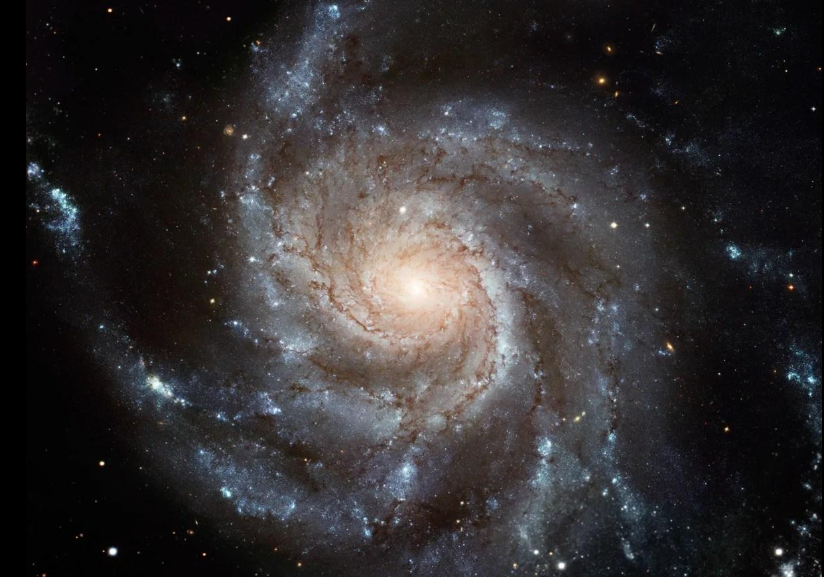
Infinity is not confined to mathematics.
Modern science frequently encounters infinite concepts when attempting to understand the universe.
Cosmologists continue to debate whether the universe itself is finite or infinite. Some models suggest that space may extend endlessly in every direction, while others propose that the universe is finite but unbounded, similar to the surface of a sphere.
Black holes present another challenge.
According to Einstein’s theory of general relativity, the centre of a black hole may contain a singularity, a point where density becomes infinite, and the known laws of physics break down.
Many physicists view these infinities as signs that existing theories are incomplete.
Quantum physics also encounters mathematical infinities. Throughout the twentieth century, physicists developed techniques known as renormalization to deal with infinite values that appeared in equations describing subatomic particles.
Without these methods, many modern scientific theories would fail.
Infinity, therefore, occupies a curious position in science. It is both a useful mathematical tool and a warning sign that deeper understanding may still be required.
Can infinity actually exist?
One of the biggest questions remains unresolved.
Does infinity exist in reality, or is it merely a mathematical concept?
Some philosophers argue that actual infinities cannot exist in the physical world. They view infinity as an abstract idea created by the human mind to describe processes without limits.
Others believe that infinite structures may genuinely exist. If the universe extends endlessly through space, for example, then physical infinity may be real.
The debate remains active among mathematicians, physicists, and philosophers.
Unlike many scientific questions, this issue may never have a definitive answer.
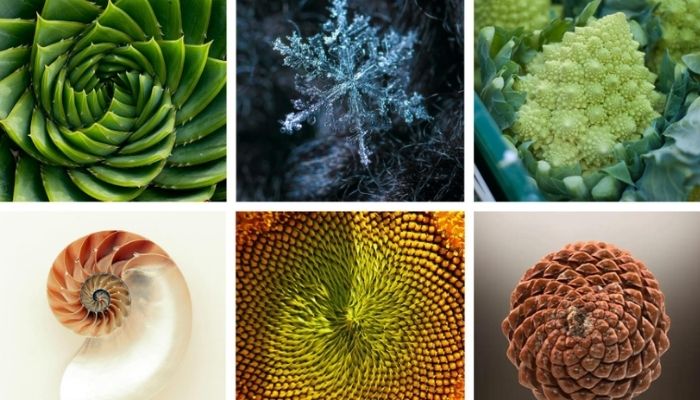
Why infinity continues to fascinate us
Infinity occupies a unique place in human thought because it lies at the boundary between what can be understood and what cannot.
Most mathematical concepts eventually become familiar through study and practice. Infinity, however, resists complete comprehension. No matter how deeply it is explored, it continues to generate new mysteries.
For mathematicians, infinity remains a powerful tool that reveals unexpected patterns and structures.
For physicists, it raises profound questions about the origins and nature of the universe.
For philosophers, it challenges assumptions about existence, reality, and the limits of human knowledge.
Perhaps that is why infinity continues to captivate the imagination.
It reminds us that despite humanity’s remarkable achievements in science and mathematics, there are still concepts so vast that they stretch the limits of reason itself.
In a universe filled with mysteries, infinity may be the greatest mystery of all.
Sources
- American Mathematical Society
- Stanford Encyclopedia of Philosophy
- Encyclopaedia Britannica
- Mathematical Association of America
- Scientific American
- Cambridge University Press – History of Mathematics
- Oxford Reference – Set Theory and Infinity
Related News

How CIMA Builds Practical Business and Problem Solving Skills for the Real…
For students considering what to study after school or alongside a university degree, one question matters more than ever: will the qualification…
Read More
CIMA Beyond Accounting: Why Business Skills Matter for the Next Generation
For many Sri Lankan students, completing school brings one major question: what qualification should come next? A bachelor’s degree remains an important…
Read More
Gateway College and Wilderness School Australia Launch Teacher Exchange Programme
Students of Wilderness School were most welcoming to the teachers of Gateway Gateway College is pleased to announce the establishment of a…
Read More
Oxford College of Business Celebrates 1,550 Graduates at Landmark 2026 Graduation Ceremony
Oxford College of Business (OCB) celebrated the academic achievements of 1,550 graduands at its 2026 Graduation Ceremony, bringing together students, academics, international…
Read More
Imperial Announces CIMA Certificate Intake with 50% Off Class Fees
Imperial College of Business Studies (ICBS) will commence its latest CIMA Certificate Level intake on 19 September 2026, with weekday and weekend…
Read MoreCourses
-

The future of higher education tech: why industry needs purpose-built solutions
For years, Institutions and education agencies have been forced to rely on a patchwork of horizontal SaaS solutions – general tools that… -

MBA in Project Management & Artificial Intelligence – Oxford College of Business
In an era defined by rapid technological change, organizations increasingly demand leaders who not only understand traditional project management, but can also… -

Scholarships for 2025 Postgraduate Diploma in Education for SLEAS and SLTES Officers
The Ministry of Education, Higher Education and Vocational Education has announced the granting of full scholarships for the one-year weekend Postgraduate Diploma… -

Shape Your Future with a BSc in Business Management (HRM) at Horizon Campus
Human Resource Management is more than a career. It’s about growing people, building organizational culture, and leading with purpose. Every impactful journey… -
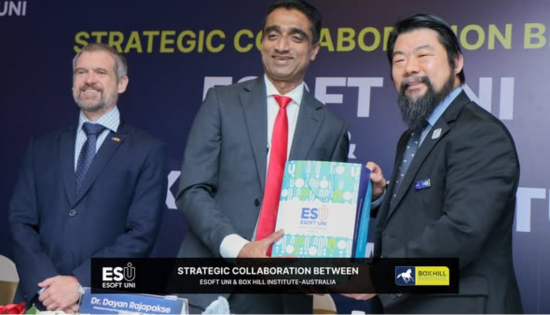
ESOFT UNI Signs MoU with Box Gill Institute, Australia
ESOFt UNI recently hosted a formal Memorandum of Understanding (MoU) signing ceremony with Box Hill Institute, Australia, signaling a significant step in… -

Ace Your University Interview in Sri Lanka: A Guide with Examples
Getting into a Sri Lankan sate or non-state university is not just about the scores. For some universities' programmes, your personality, communication… -
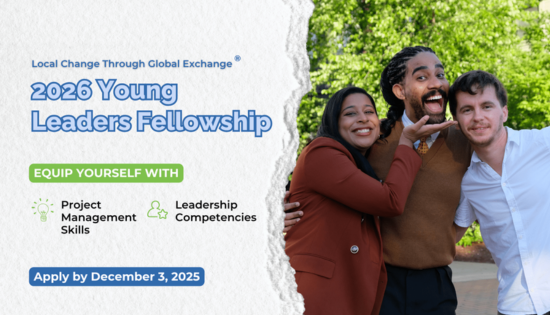
MCW Global Young Leaders Fellowship 2026
MCW Global (Miracle Corners of the World) runs a Young Leaders Fellowship, a year-long leadership program for young people (18–26) around the… -
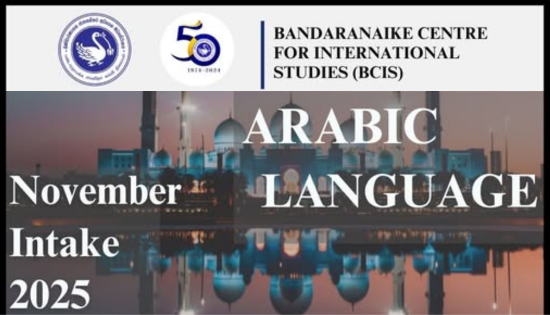
Enhance Your Arabic Skills with the Intermediate Language Course at BCIS
BCIS invites learners to join its Intermediate Arabic Language Course this November and further develop both linguistic skills and cultural understanding. Designed… -

Achieve Your American Dream : NCHS Spring Intake Webinar
NCHS is paving the way for Sri Lankan students to achieve their American Dream. As Sri Lanka’s leading pathway provider to the… -

National Diploma in Teaching course : Notice
A Gazette notice has been released recently, concerning the enrollment of aspiring teachers into National Colleges of Education for the three-year pre-service… -
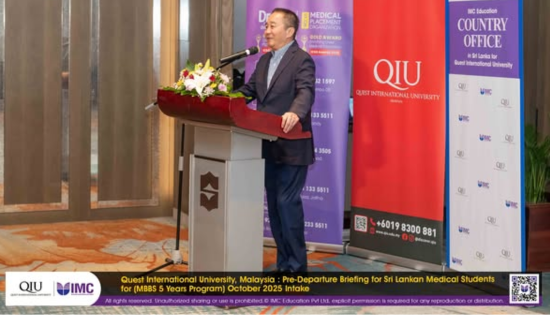
IMC Education Features Largest Student Recruitment for QIU’s October 2025 Intake
Quest International University (QIU), Malaysia recently hosted a pre-departure briefing and high tea at the Shangri-La Hotel in Colombo for its incoming… -

Global University Employability Ranking according to Times Higher Education
Attending college or university offers more than just career preparation, though selecting the right school and program can significantly enhance your job… -

Diploma in Occupational Safety & Health (DOSH) – CIPM
The Chartered Institute of Personnel Management (CIPM) is proud to announce the launch of its Diploma in Occupational Safety & Health (DOSH),… -

Small Grant Scheme for Australia Awards Alumni Sri Lanka
Australia Awards alumni are warmly invited to apply for a grant up to AUD 5,000 to support an innovative project that aim… -
PIM Launches Special Programme for Newly Promoted SriLankan Airlines Managers
The Postgraduate Institute of Management (PIM) has launched a dedicated Newly Promoted Manager Programme designed to strengthen the leadership and management capabilities…
Newswire
-

Wanindu Hasaranga to return home from England series
ON: September 23, 2026 -
Vehicle revenue licence issuance temporarily suspended in 8 provinces
ON: September 23, 2026 -

Archchuna calls for end to racist comments targeting Tamil-Canadian Netflix star
ON: September 23, 2026 -

Parliamentary Committee proposes to streamline driving licences for disabled
ON: September 23, 2026 -
Heavy rains over 100mm expected across several provinces
ON: September 23, 2026