



What happens to your digital life after you’re gone?
A person dies, but their social media profile continues to receive birthday wishes. Their emails remain stored on remote servers. Thousands of photographs stay in the cloud. Old messages continue to appear in family group chats, while streaming playlists, online shopping accounts, and digital documents remain exactly where they were left.
In today’s connected world, death no longer marks the end of a person’s presence in the digital space.
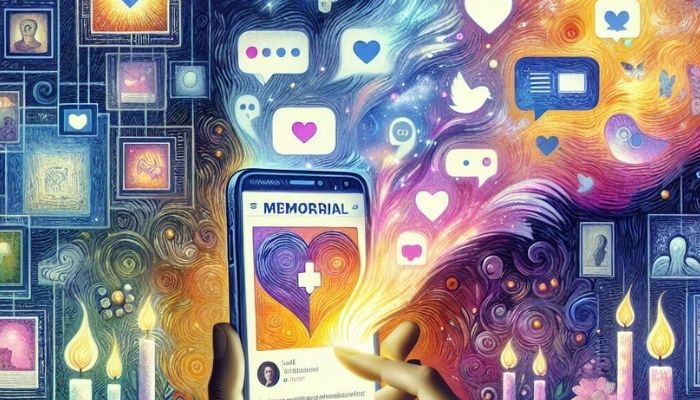
Every email sent, photograph uploaded, document stored, and social media post shared contributes to what experts now call a digital legacy, the collection of online information people leave behind after they die.
As billions of people spend increasing amounts of their lives online, an important question has emerged:
What should happen to our digital lives when our physical lives come to an end?
Researchers, technology companies, lawyers, and ethicists are now grappling with one of the newest challenges of the digital age.
We leave behind more than memories
For centuries, inheritance referred mainly to physical possessions, homes, jewellery, money, books, and family heirlooms.
Today, people also leave behind digital possessions.
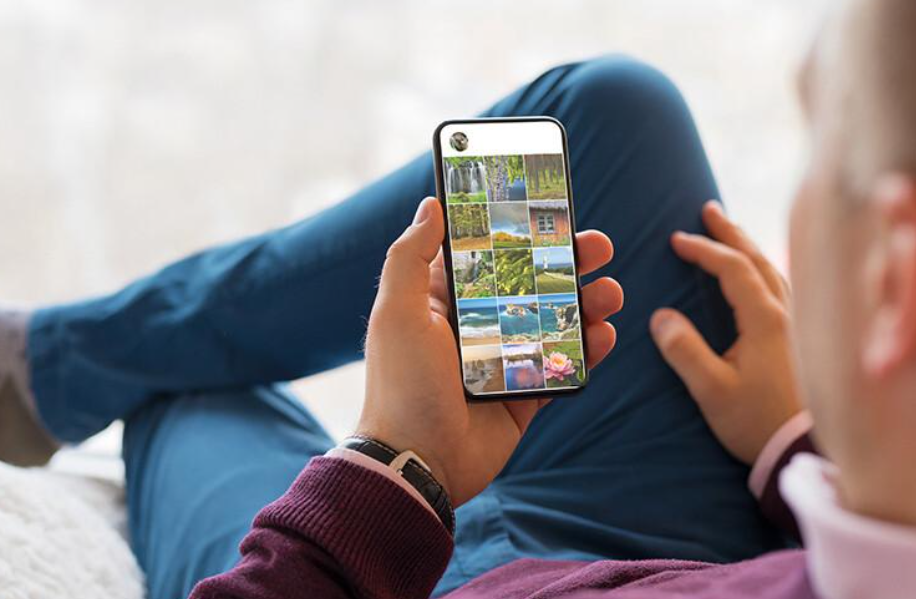
These include photographs stored in cloud services, emails, social media accounts, online banking information, cryptocurrency wallets, digital artwork, websites, videos, online businesses, and even game accounts.
Some individuals have spent decades building professional networks on platforms such as LinkedIn or creating thousands of educational videos, articles, or photographs.
In many cases, these digital assets hold emotional, financial, or historical value for surviving family members.
Unlike physical belongings, however, accessing digital property is often far more complicated.
Passwords may be unknown, accounts may be protected by privacy laws, and different technology companies have different policies regarding deceased users.
The rise of digital inheritance
This growing challenge has led to the concept of digital inheritance.
Digital inheritance refers to the process of managing a person’s online accounts and digital assets after death.
Many countries are now updating their legal systems to address questions that hardly existed twenty years ago.
Who owns a deceased person’s social media account?
Can family members access private emails?
Should cloud-stored photographs automatically become part of an estate?
Technology companies have responded in different ways.
Some platforms allow users to nominate a trusted individual to manage certain aspects of their account after death. Others allow accounts to be permanently deleted upon request or converted into memorial pages.
Legal experts encourage people to include digital assets alongside traditional property when preparing estate plans.
When social media becomes a memorial
One of the most visible changes in recent years has been the transformation of social media into spaces of remembrance.
Profiles belonging to deceased individuals often remain online for years.
Friends and family continue posting birthday messages, sharing memories, and leaving tributes long after someone has passed away.
For many families, these online spaces become modern memorials.
Unlike traditional gravestones, they contain photographs, conversations, videos, and everyday moments that preserve aspects of a person’s life.
Researchers studying grief suggest these digital memorials can provide comfort by allowing loved ones to revisit memories and maintain symbolic connections.
Others, however, argue that constant digital reminders may make it more difficult for some people to process loss.
The psychological impact varies from person to person.

When artificial intelligence recreates the dead
Perhaps the most controversial development involves artificial intelligence.
Recent advances in AI have made it possible to create digital chatbots that imitate the writing style, voice, or personality of deceased individuals using information gathered from text messages, emails, videos, and social media posts.
Some companies have even begun experimenting with AI systems capable of generating conversations based on a person’s digital history.
Supporters argue that these technologies may help preserve memories or offer comfort to grieving families.
Critics, however, raise serious ethical concerns.
Can an AI truly represent someone’s thoughts?
Would the deceased have consented to such a recreation?
Could interacting with an AI version of a loved one complicate the grieving process?
Researchers emphasise that today’s AI systems do not recreate consciousness or personality. Instead, they generate responses by identifying patterns within existing digital data.
The result may resemble the person, but it is not the person.
The ethical questions
As digital technologies continue evolving, they raise difficult ethical questions.
Who should decide what happens to someone’s online identity after death?
Should companies preserve digital accounts indefinitely, or should they eventually be deleted?
What responsibilities do technology companies have in protecting the privacy of deceased users?
What happens if AI-generated versions of individuals are used commercially without clear consent?
These questions have no universal answers.
Ethicists argue that society is still developing norms for a world in which human identities increasingly exist both offline and online.
Many believe that clear consent and transparency should become central principles when dealing with digital remains.
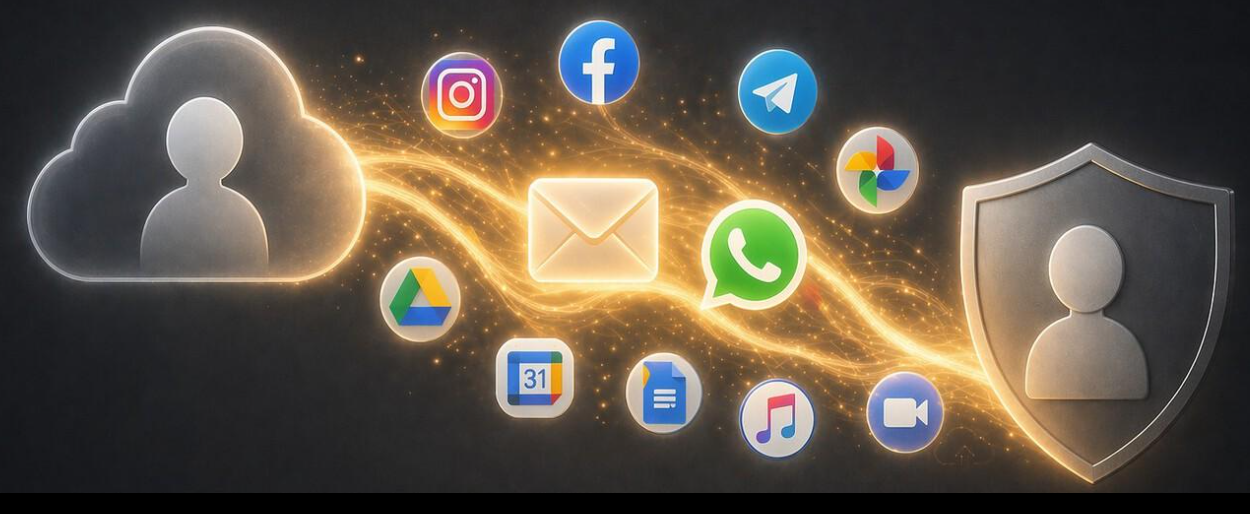
Planning for a digital future
Just as people prepare wills for physical possessions, experts increasingly recommend planning for digital assets as well.
Creating secure password management systems, documenting important online accounts, and specifying personal wishes regarding digital information can make the process much easier for family members.
Some people may wish for their accounts to remain online as memorials.
Others may prefer complete deletion.
The important point, researchers say, is making those decisions before they become someone else’s responsibility.
A new kind of legacy
Every generation leaves behind traces of its existence.
Ancient civilisations left monuments, manuscripts, and works of art.
Previous generations preserved family albums, handwritten letters, and printed diaries.
Today’s generation leaves behind something entirely different.
Millions of photographs stored in the cloud.
Thousands of conversations are saved on messaging apps.
Years of social media posts.
Online businesses.
Digital artwork.
Personal websites.
Voice recordings.
Together, these form an extraordinary archive of human lives.
Remembered in a connected world
Technology has changed the way people communicate, learn, work, and build relationships.
Now it is also changing how they are remembered.
The question is no longer simply what people leave behind.
It is also how that legacy should be preserved, protected, or respectfully concluded in an increasingly digital world.
As artificial intelligence, cloud computing, and online communities continue evolving, digital legacy will become an issue affecting nearly everyone.
Perhaps the most valuable lesson is this:
Long after devices are switched off, the choices people make online today may continue telling their stories tomorrow.
Sources
- MIT Technology Review – Artificial intelligence, digital legacy, and posthumous technology
- Oxford Internet Institute – Digital identity and online society research
- IEEE Spectrum – AI ethics and emerging technologies
- Digital Legacy Association – Research on digital assets and bereavement
- Harvard Law Review – Digital inheritance and privacy
- Pew Research Center – Internet use and digital behaviour
- Journal of Information, Communication and Ethics in Society
Related News
Mrs. Nimala Perera; A Treasure Trove and the Heart of St. Joseph’s College, Colombo 10.
By : Guruji Ravindhiran Maruthai Mrs. Nimala Perera, a renowned educator of the hallowed educational institutionSt. Joseph’s College, Colombo 10, Sri Lanka,celebrates…
Read More
Online admission cards released for 2026 A/L Biosystems Technology Practical Exams
Candidates appearing for the 2026 G.C.E. Advanced Level Biosystems Technology practical examinations can download their admission cards from the official Department of…
Read MoreGovt to renew MoU with Asia Pacific Body to elevate vocational training
The Cabinet of Ministers has approved a proposal to renew the Memorandum of Understanding (MoU) between Sri Lanka’s Tertiary and Vocational Education…
Read MorePM inaugurates ‘Sittam 2026’ Art Exhibition under ‘Kolomtota Abhinandana’ initiative
In parallel with the National Literary and Arts Festival, Prime Minister Dr. Harini Amarasuriya opened the 'Sittam 2026' art exhibition on October…
Read MoreKorean Association pledges medical aid and special needs youth programme for Sri Lanka
The Korean Volunteer Association for Distinguished Service to the State is organizing an 11-day programme for next year aimed at identifying and…
Read MoreCourses
-

The future of higher education tech: why industry needs purpose-built solutions
For years, Institutions and education agencies have been forced to rely on a patchwork of horizontal SaaS solutions – general tools that… -

MBA in Project Management & Artificial Intelligence – Oxford College of Business
In an era defined by rapid technological change, organizations increasingly demand leaders who not only understand traditional project management, but can also… -

Scholarships for 2025 Postgraduate Diploma in Education for SLEAS and SLTES Officers
The Ministry of Education, Higher Education and Vocational Education has announced the granting of full scholarships for the one-year weekend Postgraduate Diploma… -
Shape Your Future with a BSc in Business Management (HRM) at Horizon Campus
Human Resource Management is more than a career. It’s about growing people, building organizational culture, and leading with purpose. Every impactful journey… -
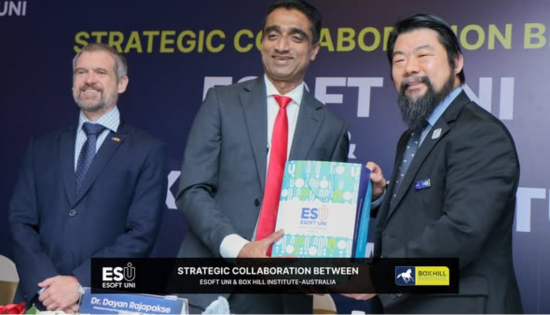
ESOFT UNI Signs MoU with Box Gill Institute, Australia
ESOFt UNI recently hosted a formal Memorandum of Understanding (MoU) signing ceremony with Box Hill Institute, Australia, signaling a significant step in… -

Ace Your University Interview in Sri Lanka: A Guide with Examples
Getting into a Sri Lankan sate or non-state university is not just about the scores. For some universities' programmes, your personality, communication… -
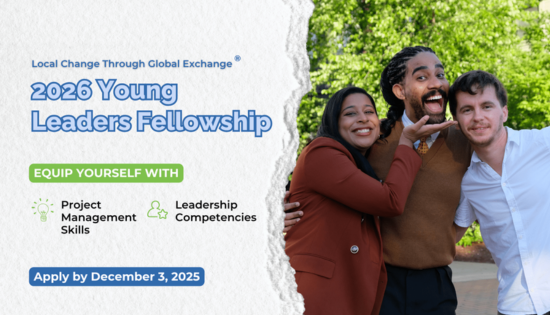
MCW Global Young Leaders Fellowship 2026
MCW Global (Miracle Corners of the World) runs a Young Leaders Fellowship, a year-long leadership program for young people (18–26) around the… -
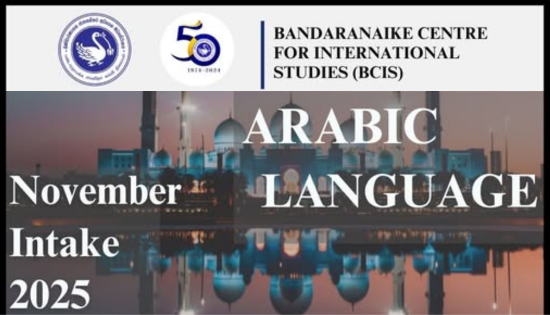
Enhance Your Arabic Skills with the Intermediate Language Course at BCIS
BCIS invites learners to join its Intermediate Arabic Language Course this November and further develop both linguistic skills and cultural understanding. Designed… -
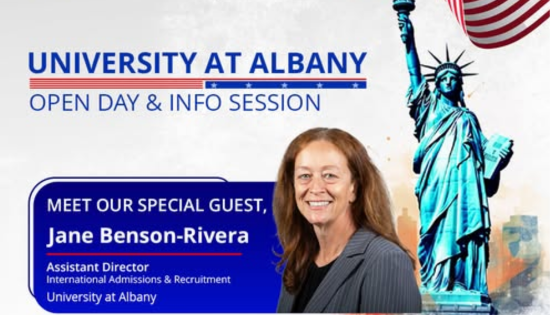
Achieve Your American Dream : NCHS Spring Intake Webinar
NCHS is paving the way for Sri Lankan students to achieve their American Dream. As Sri Lanka’s leading pathway provider to the… -
National Diploma in Teaching course : Notice
A Gazette notice has been released recently, concerning the enrollment of aspiring teachers into National Colleges of Education for the three-year pre-service… -
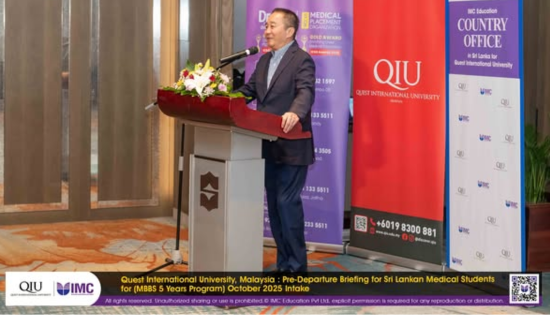
IMC Education Features Largest Student Recruitment for QIU’s October 2025 Intake
Quest International University (QIU), Malaysia recently hosted a pre-departure briefing and high tea at the Shangri-La Hotel in Colombo for its incoming… -
Global University Employability Ranking according to Times Higher Education
Attending college or university offers more than just career preparation, though selecting the right school and program can significantly enhance your job… -

Diploma in Occupational Safety & Health (DOSH) – CIPM
The Chartered Institute of Personnel Management (CIPM) is proud to announce the launch of its Diploma in Occupational Safety & Health (DOSH),… -
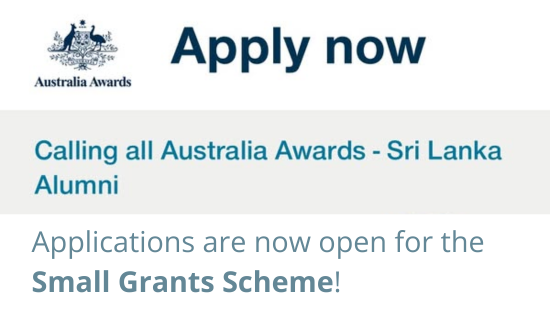
Small Grant Scheme for Australia Awards Alumni Sri Lanka
Australia Awards alumni are warmly invited to apply for a grant up to AUD 5,000 to support an innovative project that aim… -
PIM Launches Special Programme for Newly Promoted SriLankan Airlines Managers
The Postgraduate Institute of Management (PIM) has launched a dedicated Newly Promoted Manager Programme designed to strengthen the leadership and management capabilities…
Newswire
-
St. Joseph’s College Honours Mrs Nimala Perera’s Five Decades of Service
ON: October 14, 2026 -
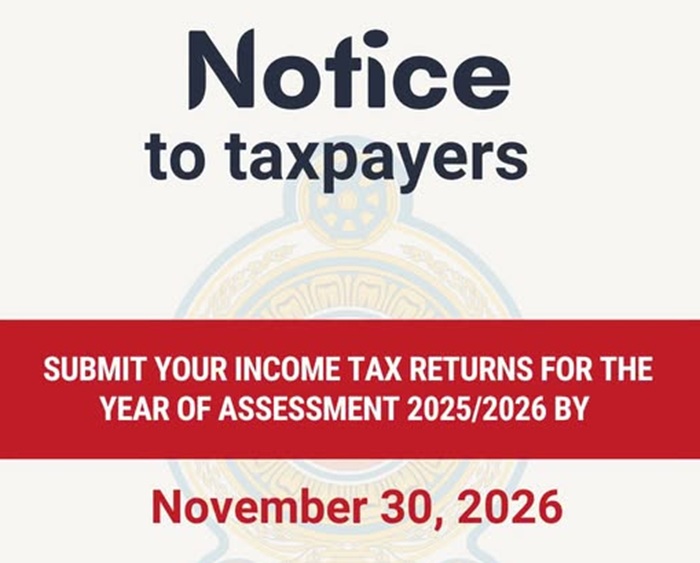
Taxpayers reminded to submit income tax returns by November 30
ON: October 14, 2026 -
Sri Lanka joins first BIMSTEC Home Ministers’ Meeting in India
ON: October 14, 2026 -
PM hails Sri Lanka’s $9 Bn export performance in first half of 2026
ON: October 14, 2026 -
New prison rules proposed to allow Buddhist monks to wear robes outside prison
ON: October 14, 2026