



The bystander effect: When doing nothing becomes a group decision
A person collapses on a crowded street.
Dozens of people are nearby.
Some glance over briefly. Others continue walking. A few assume someone else has already called for help.
Minutes pass before anyone intervenes.
To many people, this seems impossible. Surely, the more people who witness an emergency, the greater the chance that someone will help.
Surprisingly, psychological research suggests the opposite can sometimes happen.
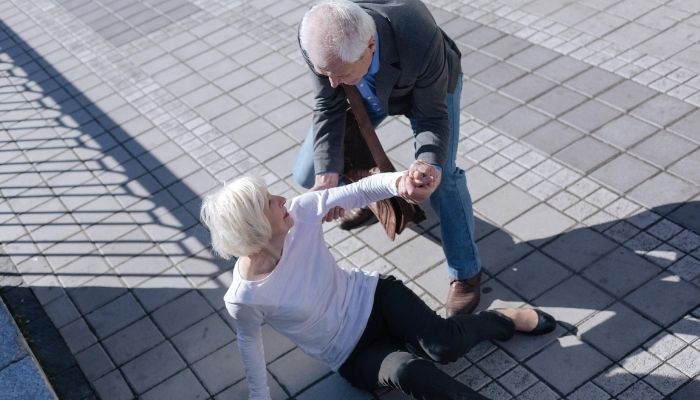
Known as the bystander effect, this phenomenon describes situations in which individuals become less likely to offer assistance when other people are present. It is one of the most influential discoveries in social psychology, revealing how human behaviour can change dramatically in groups.
The bystander effect does not mean people are uncaring. Instead, it demonstrates how social situations can influence decisions in ways people may not even realise.
The case that changed psychology
The bystander effect is closely associated with the 1964 murder of Kitty Genovese in New York City.
At the time, newspaper reports claimed that 38 witnesses watched or heard the attack without helping or contacting the police. The story shocked the public and quickly became an example of public indifference.
However, later investigations found that the original reports were significantly oversimplified.
Some neighbours did call the police. Others misunderstood what they had seen or heard, believing it was a domestic argument rather than a violent attack. Several witnesses could not clearly observe the incident from where they were.
Although the details of the original reporting were inaccurate, the case inspired psychologists to investigate an important question:
How does the presence of other people influence a person’s willingness to help during emergencies?
That question led to decades of groundbreaking research.
Understanding diffusion of responsibility

Psychologists John Darley and Bibb Latané conducted a series of experiments following the Genovese case.
They discovered that people were often less likely to intervene when they believed others were also witnessing the situation.
This phenomenon became known as diffusion of responsibility.
When someone is alone and encounters an emergency, responsibility feels personal.
“I need to help.”
But when many people are present, individuals may unconsciously assume someone else will act.
“Surely someone has already called.”
“I don’t want to interfere.”
“If no one else seems concerned, maybe it isn’t serious.”
As responsibility spreads across the group, each individual may feel less personally responsible.
Ironically, the presence of more potential helpers can reduce the likelihood that anyone helps at all.
Looking to others for clues
Another factor influencing the bystander effect is something psychologists call pluralistic ignorance.
During uncertain situations, people often observe those around them to decide how they should react.
If everyone appears calm, individuals may assume there is no real emergency, even when everyone else is making the same assumption.
Imagine hearing a loud crash in a shopping centre.
If nobody reacts, you may conclude it was harmless.
Meanwhile, everyone else is thinking exactly the same thing.
This creates a powerful cycle where inaction reinforces further inaction.

The psychology of crowds
Human beings are naturally influenced by groups.
In everyday life, this tendency helps people cooperate and maintain social order.
During emergencies, however, it can sometimes delay action.
Researchers have found that people often hesitate because they fear making a mistake or appearing foolish.
What if the person isn’t actually in danger?
What if someone else is already helping?
What if I overreact?
These concerns can create hesitation, particularly in public settings where people feel they are being observed by others.
The result is often a few critical moments of delay.
When people do step forward
The bystander effect does not mean crowds never help.
In fact, countless examples demonstrate extraordinary courage from ordinary people.
Passengers have rescued strangers from floods.
Bystanders have lifted vehicles to free trapped victims.
People regularly perform CPR, stop traffic, or assist those experiencing medical emergencies.
Researchers emphasise that the bystander effect increases the risk of inaction, ;it does not determine behaviour.
Training, confidence, and recognising an emergency all increase the likelihood that someone will intervene.
Breaking the cycle
Fortunately, psychologists have identified several ways to overcome the bystander effect.
One of the most effective strategies is to make responsibility specific.
Instead of shouting, “Somebody call an ambulance!”, experts recommend pointing to one individual and saying, “You in the blue shirt, please call emergency services.”
This removes uncertainty and gives one person clear responsibility.
Learning basic first aid and CPR can also increase confidence during emergencies.
People who know what to do are often more willing to act.
Perhaps most importantly, individuals can remind themselves that waiting for someone else may mean no one acts at all.
Recognising the bystander effect makes it easier to resist it.

Lessons beyond emergencies
The bystander effect extends beyond accidents or medical emergencies.
Researchers have found similar patterns in schools, workplaces, and online communities.
Cyberbullying, workplace harassment, discrimination, and social exclusion may continue because individuals assume someone else will intervene.
Understanding the psychology behind these situations encourages people to take greater personal responsibility rather than waiting for others to act.
One person can make the difference
Social psychology teaches an important lesson.
Human behaviour is shaped not only by personality but also by circumstances.
Most people like to believe they would help during an emergency.
Yet research shows that group situations can subtly influence even well-intentioned individuals.
The encouraging news is that awareness changes behaviour.
People who understand the bystander effect are more likely to recognise hesitation and choose action instead.
Sometimes, the difference between a crowd that watches and a crowd that helps begins with a single person deciding not to wait for someone else.
In moments of uncertainty, that decision can save a life.
Sources
- American Psychological Association (APA) – Research on helping behaviour and social psychology
- Encyclopaedia Britannica – Bystander Effect
- American Red Cross – Emergency response guidance
- Journal of Personality and Social Psychology – Darley & Latané’s foundational research
- The New Yorker – “A Call for Help” (reassessment of the Kitty Genovese case)
- National Institutes of Health (NIH) – Studies on social behaviour and decision-making
Related News

A Warm Welcome to a New Beginning: Horizon College International Welcomes New Students and Parents
Horizon College International (HCI) commenced the 2026/27 Academic Year with a warm and memorable welcome to its newest members of the Horizon…
Read More
Gateway Girls Triumph in Football
Under 18 Champions: Standing Order Left to Right – Mr Rafaah Suhail (Coach), Ms Sahani Fernando (Coach), Brianna Perera, Tasneem Malik, KenuliAbeygunawardhane…
Read More
Gateway College Crowned TISSL Under-19 Basketball Champions for Fifth Consecutive Year
Back Row (left to right):DhanukaWijegoonaratne, Tevan Sela, Jonathan Herath, Mikyle Reza, Akain Vitanachy, Samuel Tsung, Thinuk Attanayaka, NavinduWaduwavala, Julan Senmitha, Jithein Kulatunga,…
Read More
USJ Leo Club’s ‘Pranadhara ’26’ Brings Water Storage Support to Habarana Community
The Leo Club of the University of Sri Jayewardenepura has completed the second phase of its ‘Pranadhara ’26’ water security project, providing…
Read More
Sri Lanka Skills Expo 2026 to promote vocational education in Colombo
The Sri Lanka Skills Expo 2026 is scheduled to take place from October 23 to 25 at Viharamahadevi Park and Green Path…
Read MoreCourses
-

The future of higher education tech: why industry needs purpose-built solutions
For years, Institutions and education agencies have been forced to rely on a patchwork of horizontal SaaS solutions – general tools that… -

MBA in Project Management & Artificial Intelligence – Oxford College of Business
In an era defined by rapid technological change, organizations increasingly demand leaders who not only understand traditional project management, but can also… -

Scholarships for 2025 Postgraduate Diploma in Education for SLEAS and SLTES Officers
The Ministry of Education, Higher Education and Vocational Education has announced the granting of full scholarships for the one-year weekend Postgraduate Diploma… -
Shape Your Future with a BSc in Business Management (HRM) at Horizon Campus
Human Resource Management is more than a career. It’s about growing people, building organizational culture, and leading with purpose. Every impactful journey… -

ESOFT UNI Signs MoU with Box Gill Institute, Australia
ESOFt UNI recently hosted a formal Memorandum of Understanding (MoU) signing ceremony with Box Hill Institute, Australia, signaling a significant step in… -

Ace Your University Interview in Sri Lanka: A Guide with Examples
Getting into a Sri Lankan sate or non-state university is not just about the scores. For some universities' programmes, your personality, communication… -
MCW Global Young Leaders Fellowship 2026
MCW Global (Miracle Corners of the World) runs a Young Leaders Fellowship, a year-long leadership program for young people (18–26) around the… -

Enhance Your Arabic Skills with the Intermediate Language Course at BCIS
BCIS invites learners to join its Intermediate Arabic Language Course this November and further develop both linguistic skills and cultural understanding. Designed… -
Achieve Your American Dream : NCHS Spring Intake Webinar
NCHS is paving the way for Sri Lankan students to achieve their American Dream. As Sri Lanka’s leading pathway provider to the… -
National Diploma in Teaching course : Notice
A Gazette notice has been released recently, concerning the enrollment of aspiring teachers into National Colleges of Education for the three-year pre-service… -

IMC Education Features Largest Student Recruitment for QIU’s October 2025 Intake
Quest International University (QIU), Malaysia recently hosted a pre-departure briefing and high tea at the Shangri-La Hotel in Colombo for its incoming… -

Global University Employability Ranking according to Times Higher Education
Attending college or university offers more than just career preparation, though selecting the right school and program can significantly enhance your job… -

Diploma in Occupational Safety & Health (DOSH) – CIPM
The Chartered Institute of Personnel Management (CIPM) is proud to announce the launch of its Diploma in Occupational Safety & Health (DOSH),… -

Small Grant Scheme for Australia Awards Alumni Sri Lanka
Australia Awards alumni are warmly invited to apply for a grant up to AUD 5,000 to support an innovative project that aim… -

PIM Launches Special Programme for Newly Promoted SriLankan Airlines Managers
The Postgraduate Institute of Management (PIM) has launched a dedicated Newly Promoted Manager Programme designed to strengthen the leadership and management capabilities…
Newswire
-
Silent protest in Galle demands action against corruption and drug trafficking
ON: October 23, 2026 -

Government moves to shut down or merge 34 state institutions
ON: October 23, 2026 -
Wildlife Department strengthens field operations with 229 new recruits
ON: October 23, 2026 -

Train services suspended between Rambukkana, Peradeniya and Gampola for two days
ON: October 23, 2026