





Six Tips For Choosing a Future Career
Not sure what your future career looks like? Here are six tips to help you find the right career for you.

1. Pay attention to the subjects you enjoy
It’s normal to enjoy certain courses or subjects more than others. If there’s a particular subject or course that you really enjoy, find out what careers it could lead to.
For example, if you’re studying marketing and you like learning about social media marketing the most, you could apply for social media marketing positions, perhaps even before your graduate.
Likewise, if you’re studying psychology and you prefer the theoretical units over your practical placements, you might like to plan for working in research rather than practice.
2. Research careers
Spend some time researching available careers. New jobs and occupations are being created every day, and you might be surprised by the range of roles in your area of interest.
You can start by doing a quick Google search of relevant industries. You can also use your provider’s website or search LinkedIn to find out the careers of graduates from your course. Or, you can read our student stories collection. There’s also a library of free masterclasses that might give you inspiration to explore new career paths.
3. Take a career quiz
There are some great online tools that can help you narrow down your career path. The Study Australia Career Matcher quiz asks you some questions about your personality and work style. Using your answers to match you to careers, the tool then sends you a detailed, personalsied report on the industries and careers that might best suit your strengths and traits.
4. Consider your future lifestyle
When you choose a career, you’re also choosing a lifestyle. Some jobs come with long working hours, while others come with location requirements.
Different jobs also offer different rates of pay. It’s a good idea to think about whether your dream career aligns with your lifestyle expectations. Some people don’t mind working long hours if they are passionate about their career. For others, flexible working hours are more important than a high salary.
5. Chat to professionals
If you’re thinking about pursuing a certain career, speaking to somebody who currently works in that role can help you to make your decision. Professionals can break down the positives and negatives of the job, explain how they initially got into the role, and give you a better understanding of the reality of the career.
You can find people to talk to at your future industry’s networking events, or you can ask your education or training provider if they know anyone you could speak to. Make sure you talk to a few different people, as everyone’s experience of a career will be a little bit different.
6. Do some work experience
The only way to know whether a career is really right for you is to give it a try. Luckily, you don’t have to wait until you’re qualified to try out the career you’re working towards.
A work experience or volunteering placement gives you the chance to spend some time in the workplace while you’re still studying. Or, you might like to do an industry experience program to get an inside look into a real-world business setting.
Whichever option you choose, it will put you in direct contact with potential employers, improve your skills and be a great addition to your resume.
You might find out that you love that career. Or, you might discover that it’s definitely not for you. But that’s okay! You’re now one step further to finding the career that is.
Source – Study Australia
Related News

Gateway Students Win Record 10 Medals for Sri Lanka at International Earth Science Olympiad 2026
Gateway Colleges celebrates an outstanding international achievement by four of its students, who represented Sri Lanka at the 19th International Earth Science…
Read MoreThe world on a flat page
How map projections change the way we see Earth Look at a world map and it feels reassuringly familiar. Continents have recognizable…
Read More
Horizon College International Celebrates Football, Teamwork and Sportsmanship at Inter-House Tournament 2026
The Inter-House Football Tournament 2026 at Horizon College International was held with great enthusiasm, bringing together the four houses, Athena, Apollo, Hermes,…
Read More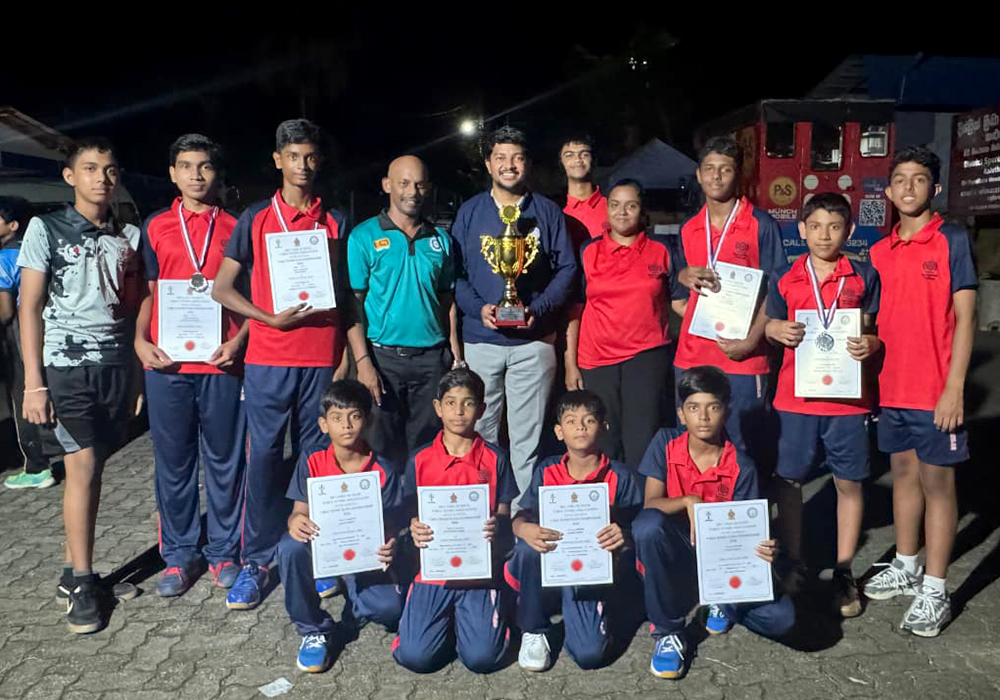
Springfield College Kandy Paddlers Shine with Double Runners-Up Finish at All-Island Championships
Standing from Left to Right: ThisumIllankoon, Nathesha Wijesinghe, Bilal Zaman, Mr.Rajesh Kumar (Assistant Coach), Mr.Lahiru Senarathne (MIC), Mhadhi Hassan, Ms.Kanchana Wedagedara (Coach),…
Read More
Studying in Australia: What Students Should Know About Accommodation and Part-Time Work
For many Sri Lankan students, receiving an offer from an Australian university is the exciting part. But once the celebrations are over,…
Read MoreCourses
-

The future of higher education tech: why industry needs purpose-built solutions
For years, Institutions and education agencies have been forced to rely on a patchwork of horizontal SaaS solutions – general tools that… -

MBA in Project Management & Artificial Intelligence – Oxford College of Business
In an era defined by rapid technological change, organizations increasingly demand leaders who not only understand traditional project management, but can also… -

Scholarships for 2025 Postgraduate Diploma in Education for SLEAS and SLTES Officers
The Ministry of Education, Higher Education and Vocational Education has announced the granting of full scholarships for the one-year weekend Postgraduate Diploma… -
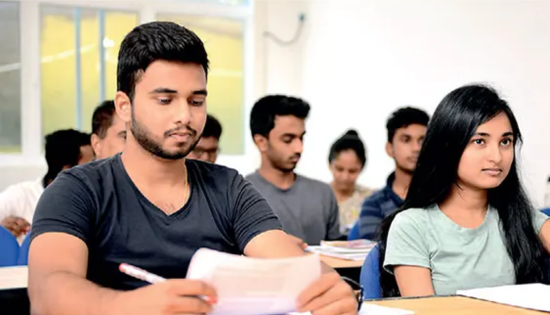
Shape Your Future with a BSc in Business Management (HRM) at Horizon Campus
Human Resource Management is more than a career. It’s about growing people, building organizational culture, and leading with purpose. Every impactful journey… -
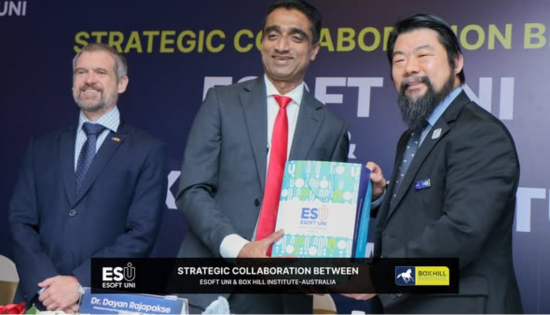
ESOFT UNI Signs MoU with Box Gill Institute, Australia
ESOFt UNI recently hosted a formal Memorandum of Understanding (MoU) signing ceremony with Box Hill Institute, Australia, signaling a significant step in… -

Ace Your University Interview in Sri Lanka: A Guide with Examples
Getting into a Sri Lankan sate or non-state university is not just about the scores. For some universities' programmes, your personality, communication… -
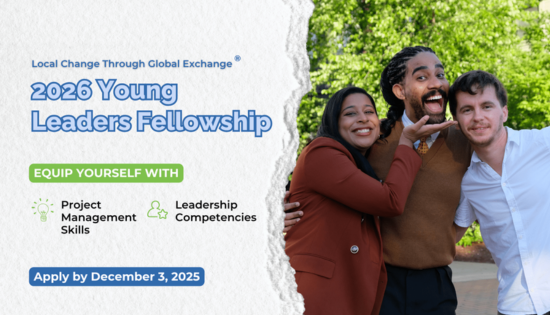
MCW Global Young Leaders Fellowship 2026
MCW Global (Miracle Corners of the World) runs a Young Leaders Fellowship, a year-long leadership program for young people (18–26) around the… -
Enhance Your Arabic Skills with the Intermediate Language Course at BCIS
BCIS invites learners to join its Intermediate Arabic Language Course this November and further develop both linguistic skills and cultural understanding. Designed… -

Achieve Your American Dream : NCHS Spring Intake Webinar
NCHS is paving the way for Sri Lankan students to achieve their American Dream. As Sri Lanka’s leading pathway provider to the… -
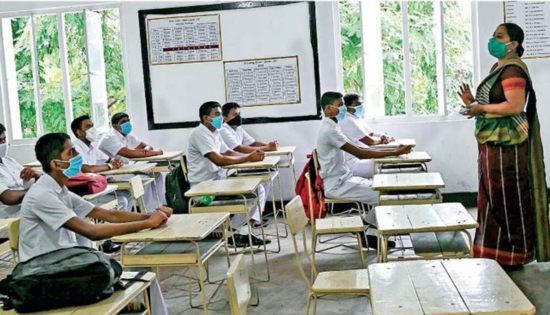
National Diploma in Teaching course : Notice
A Gazette notice has been released recently, concerning the enrollment of aspiring teachers into National Colleges of Education for the three-year pre-service… -
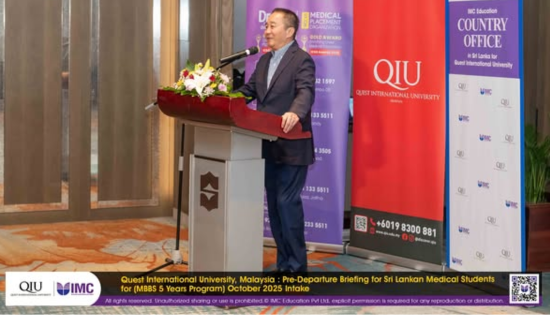
IMC Education Features Largest Student Recruitment for QIU’s October 2025 Intake
Quest International University (QIU), Malaysia recently hosted a pre-departure briefing and high tea at the Shangri-La Hotel in Colombo for its incoming… -

Global University Employability Ranking according to Times Higher Education
Attending college or university offers more than just career preparation, though selecting the right school and program can significantly enhance your job… -

Diploma in Occupational Safety & Health (DOSH) – CIPM
The Chartered Institute of Personnel Management (CIPM) is proud to announce the launch of its Diploma in Occupational Safety & Health (DOSH),… -
Small Grant Scheme for Australia Awards Alumni Sri Lanka
Australia Awards alumni are warmly invited to apply for a grant up to AUD 5,000 to support an innovative project that aim… -
PIM Launches Special Programme for Newly Promoted SriLankan Airlines Managers
The Postgraduate Institute of Management (PIM) has launched a dedicated Newly Promoted Manager Programme designed to strengthen the leadership and management capabilities…
Newswire
-

India to supply Nepal electricity after floods wreck hydropower projects
ON: September 14, 2026 -

Tamil groups in North stage protests highlighting longstanding demands
ON: September 14, 2026 -

England confirm XI for first T20I against Sri Lanka; Donald to debut
ON: September 14, 2026 -

CA appoints three-judge bench over contempt complaint against Wimal, Gammanpila and Dilith
ON: September 14, 2026 -

Rs. 7.1 billion health projects to be launched in four districts
ON: September 14, 2026