





CIMA Beyond Accounting: Why Business Skills Matter for the Next Generation

For many Sri Lankan students, completing school brings one major question: what qualification should come next?
A bachelor’s degree remains an important pathway, but as the workplace becomes increasingly competitive, academic knowledge alone may not always be enough. Employers are also looking for young professionals who can analyse problems, understand how businesses operate, communicate ideas and turn what they have learnt into practical solutions.
That is where professional qualifications such as CIMA can play an important role.
While CIMA is often associated primarily with accounting and finance, its scope is considerably wider. The qualification develops an understanding of how different parts of a business work together, giving students exposure to areas such as finance, management, strategy, performance, decision-making and the wider commercial environment.
Speaking about the value of the qualification, Ovin Bimsara, Senior CIMA Lecturer at Imperial College of Business Studies and Educator & Trainer of the Year at the CGMA Professional Awards Asia Pacific 2024, said one of the biggest misconceptions among students is that CIMA is only for those who want to become accountants.
In reality, business and financial literacy can be useful across almost every profession.
A doctor may eventually establish a medical centre. An engineer could build a construction company. A lawyer may develop a legal practice. An IT professional could launch a technology company or be responsible for recommending a major technology investment to senior management.
In all of these situations, professional expertise matters. But so does understanding costs, budgets, investments, risks, performance and whether a particular decision will create value.
Consider an IT engineer proposing a new software platform to a company.
Knowing the technology is only part of the job. To convince management or a board to approve the investment, the engineer may also need to demonstrate what the system will cost, how much it could save, how productivity could improve and whether the expected benefits justify the investment.
That requires more than technical knowledge. It requires business thinking.
This is why CIMA can also be relevant to students from mathematics, science, technology, arts and other academic backgrounds, rather than being viewed exclusively as a pathway for commerce students.
Whether someone eventually works for an organisation or becomes an entrepreneur, understanding how a business makes money, manages resources, controls costs and makes decisions can become an important career advantage.

From learning theory to solving business problems
One of the central ideas behind the CIMA qualification is practical application.
Traditional education can sometimes place considerable emphasis on remembering theories, formulas and concepts. In the workplace, however, knowing a theory is rarely enough. Employees are expected to decide which knowledge is relevant, understand the problem in front of them and recommend a workable solution.
CIMA’s Case Study examinations are designed around this type of thinking, placing students in simulated business environments and asking them to respond to realistic scenarios. Instead of simply recalling what was taught in a classroom, candidates have to demonstrate how they would use that knowledge in a business situation.
They may have to analyse information, identify a problem, consider different options and explain what action should be taken. It brings together technical knowledge with practical skills such as critical thinking, analytical ability, problem solving and decision-making.
These are increasingly valuable skills as technology changes the workplace.
The World Economic Forum’s Future of Jobs Report 2025 identifies analytical thinking as the most sought-after core skill among employers, while AI and big data, technological literacy, creative thinking, resilience and lifelong learning are among the skills expected to grow in importance towards 2030.
The direction of CIMA’s qualification has also evolved alongside these changes.
The CGMA Professional Qualification syllabus upgraded for 2026 places greater emphasis on finance business partnering, analytical and critical thinking, strategic planning, technology and real world problem-solving. Emerging areas include generative AI, sustainability reporting, environmental costing and green finance.
The message for students is increasingly clear: the future of business education is not simply about knowing numbers. It is about understanding what those numbers mean and using them to make better decisions.
Starting CIMA after school
Another advantage for young students considering CIMA in Sri Lanka is the opportunity to begin building business knowledge relatively early in their education journey.
The CIMA Certificate in Business Accounting provides a foundation in business economics, management accounting, financial accounting and business-related subjects before students progress further through the professional qualification.
This makes CIMA an option worth exploring for students considering professional qualifications after O/Ls, A/Ls or alongside university studies. Beginning professional education early can also expose students to business terminology, commercial thinking and decision making before they enter full time employment.
The objective should not simply be to collect another qualification for a CV.
The greater value comes from developing the ability to understand how organisations work and how decisions affect their performance.
More than finance
A modern organisation cannot operate with each department working independently.
Finance teams interact with marketing, human resources, operations, technology, sales and senior management. Decisions in one part of a company can have significant financial and strategic consequences elsewhere.
A marketing campaign involves a budget and an expected return. Recruitment decisions affect costs and productivity. New technology requires investment. Expansion into a new market involves forecasting, risk analysis and strategic planning.
Understanding these connections is what makes broader business knowledge valuable.
A professional who can understand both their own area of expertise and its impact on the wider organisation may be better positioned to contribute to management discussions and future leadership roles.
It also challenges the traditional perception that studying CIMA means following only one career path.
The knowledge can support careers across finance and management while also strengthening the commercial understanding of professionals and entrepreneurs working in other fields. For someone planning to start a business one day, those skills may become particularly important.
Having a good product, profession or business idea does not automatically guarantee success. Entrepreneurs also need to understand pricing, costs, cash flow, investment, performance and long-term decision making. Business literacy therefore becomes useful whether someone plans to work for a multinational company, develop a professional career or build an organisation of their own.
Developing professionals for a changing workplace
The rise of artificial intelligence is also changing what employers expect from future professionals.
Technology can already perform many routine calculations, process large amounts of information and automate repetitive tasks. Human value increasingly comes from what happens after that information is available: interpreting it, questioning it, understanding its implications and deciding what should happen next.
This makes critical thinking and practical judgement particularly important.
CIMA’s 2026 qualification update reflects that shift, with AICPA & CIMA saying the changes are intended to prepare finance professionals to operate as business partners who can use technology while applying strategic and critical thinking. For young people planning careers that may stretch over the next 30 or 40 years, learning how to adapt could therefore become as important as learning any individual subject.
Four decades of CIMA education at Imperial
Imperial College of Business Studies has been part of Sri Lanka’s business education landscape for four decades.
The institution traces its history to 1985, when it began as Colombo Business School, and became a CIMA Learning Partner Institute in 2004. Its Kandy campus opened in 2010, expanding access to professional business education beyond Colombo.
Today, Imperial operates as a broader higher education institution offering professional and academic pathways, giving students the opportunity to pursue CIMA alongside a wider educational journey.
That combination reflects a growing trend among students who no longer necessarily see academic and professional education as competing options.
A university degree can provide academic depth, while a professional qualification can add industry focused knowledge and practical application. For students deciding what to study after school, the more useful question may therefore not always be whether to choose an academic qualification or a professional qualification.
It may be how the two can complement each other.
The qualification is only the beginning
Degrees, master’s qualifications and professional credentials can all open doors, but qualifications alone do not determine how someone performs once they enter the workplace.
The real test comes when a problem does not have an obvious textbook answer.
Can a young professional analyse the situation? Can they understand its commercial impact? Can they explain their recommendation? Can they challenge assumptions? Can they make a decision when several options appear possible?
That is where practical business education becomes valuable.
As Sri Lankan students prepare for careers in an increasingly technology driven and competitive global economy, there is growing value in developing both specialised knowledge and a broader understanding of business.
CIMA provides one pathway towards building that combination.
Whether the future leads to accounting, finance, management, entrepreneurship, engineering, technology, medicine, law or another profession, business and financial literacy can help young people understand not only how to do their job, but how their decisions create value.
And in the workplace of the future, knowing the theory may only be the starting point.
Knowing how to apply it could make the difference.
Related News

CIMA Beyond Accounting: Why Business Skills Matter for the Next Generation
For many Sri Lankan students, completing school brings one major question: what qualification should come next? A bachelor’s degree remains an important…
Read More
Gateway College and Wilderness School Australia Launch Teacher Exchange Programme
Students of Wilderness School were most welcoming to the teachers of Gateway Gateway College is pleased to announce the establishment of a…
Read More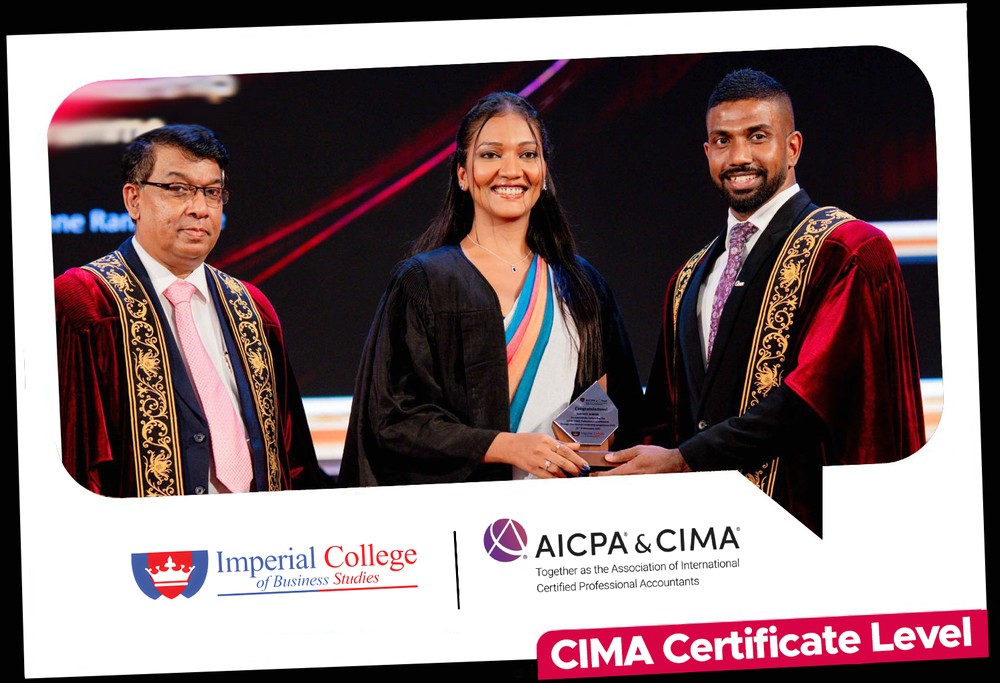
Imperial Announces CIMA Certificate Intake with 50% Off Class Fees
Imperial College of Business Studies (ICBS) will commence its latest CIMA Certificate Level intake on 19 September 2026, with weekday and weekend…
Read More
AIESEC in Colombo North and Rotaract Colombo Mid Town Introduce CSR Project: Bloom 2026
Following the success of its first chapter, Bloom returns in 2026 with a renewed vision, focusing on Galaha Divisional Hospital and the…
Read More
Gateway Students Win Record 10 Medals for Sri Lanka at International Earth Science Olympiad 2026
Gateway Colleges celebrates an outstanding international achievement by four of its students, who represented Sri Lanka at the 19th International Earth Science…
Read MoreCourses
-

The future of higher education tech: why industry needs purpose-built solutions
For years, Institutions and education agencies have been forced to rely on a patchwork of horizontal SaaS solutions – general tools that… -

MBA in Project Management & Artificial Intelligence – Oxford College of Business
In an era defined by rapid technological change, organizations increasingly demand leaders who not only understand traditional project management, but can also… -

Scholarships for 2025 Postgraduate Diploma in Education for SLEAS and SLTES Officers
The Ministry of Education, Higher Education and Vocational Education has announced the granting of full scholarships for the one-year weekend Postgraduate Diploma… -

Shape Your Future with a BSc in Business Management (HRM) at Horizon Campus
Human Resource Management is more than a career. It’s about growing people, building organizational culture, and leading with purpose. Every impactful journey… -
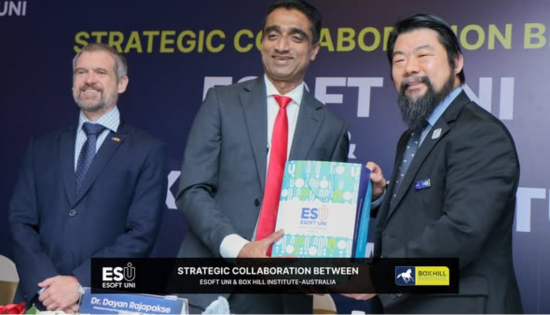
ESOFT UNI Signs MoU with Box Gill Institute, Australia
ESOFt UNI recently hosted a formal Memorandum of Understanding (MoU) signing ceremony with Box Hill Institute, Australia, signaling a significant step in… -

Ace Your University Interview in Sri Lanka: A Guide with Examples
Getting into a Sri Lankan sate or non-state university is not just about the scores. For some universities' programmes, your personality, communication… -
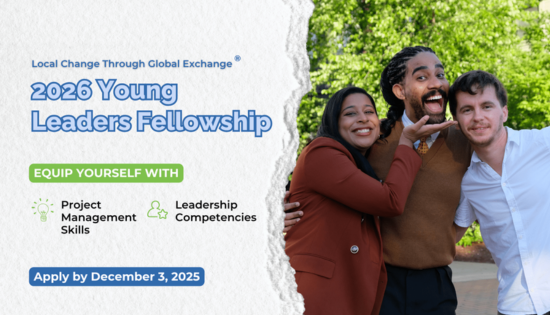
MCW Global Young Leaders Fellowship 2026
MCW Global (Miracle Corners of the World) runs a Young Leaders Fellowship, a year-long leadership program for young people (18–26) around the… -
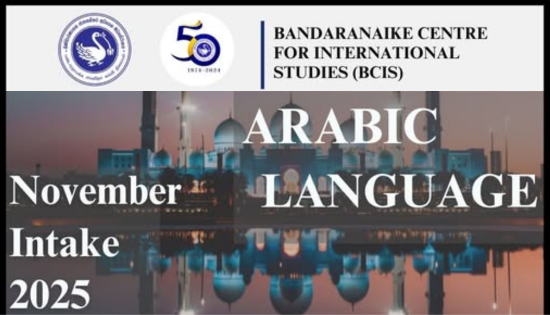
Enhance Your Arabic Skills with the Intermediate Language Course at BCIS
BCIS invites learners to join its Intermediate Arabic Language Course this November and further develop both linguistic skills and cultural understanding. Designed… -

Achieve Your American Dream : NCHS Spring Intake Webinar
NCHS is paving the way for Sri Lankan students to achieve their American Dream. As Sri Lanka’s leading pathway provider to the… -
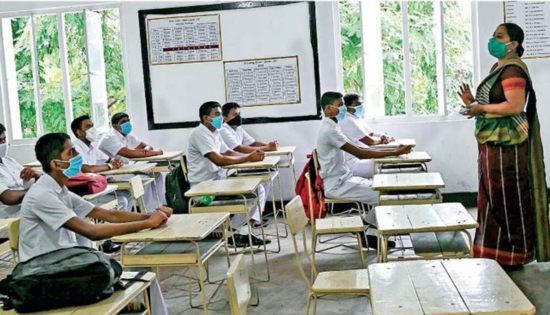
National Diploma in Teaching course : Notice
A Gazette notice has been released recently, concerning the enrollment of aspiring teachers into National Colleges of Education for the three-year pre-service… -
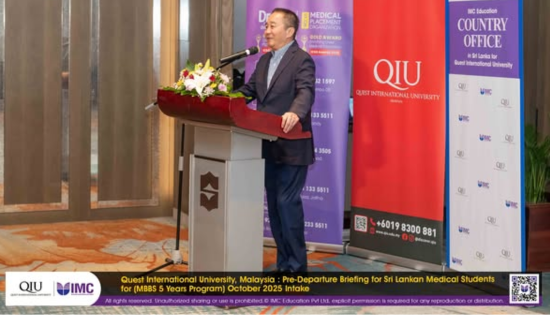
IMC Education Features Largest Student Recruitment for QIU’s October 2025 Intake
Quest International University (QIU), Malaysia recently hosted a pre-departure briefing and high tea at the Shangri-La Hotel in Colombo for its incoming… -

Global University Employability Ranking according to Times Higher Education
Attending college or university offers more than just career preparation, though selecting the right school and program can significantly enhance your job… -

Diploma in Occupational Safety & Health (DOSH) – CIPM
The Chartered Institute of Personnel Management (CIPM) is proud to announce the launch of its Diploma in Occupational Safety & Health (DOSH),… -
Small Grant Scheme for Australia Awards Alumni Sri Lanka
Australia Awards alumni are warmly invited to apply for a grant up to AUD 5,000 to support an innovative project that aim… -
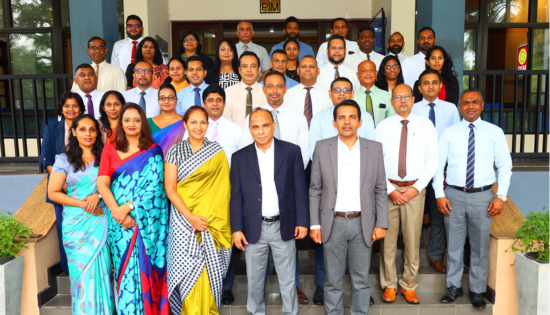
PIM Launches Special Programme for Newly Promoted SriLankan Airlines Managers
The Postgraduate Institute of Management (PIM) has launched a dedicated Newly Promoted Manager Programme designed to strengthen the leadership and management capabilities…
Newswire
-

MP Rishad Bathiudeen visits Anojan’s Family, Pledges Joint Appeal to Saudi King
ON: September 18, 2026 -

Police take 11-year-old Child into protective Custody after Viral Drug Video
ON: September 18, 2026 -

‘My Car, My Petrol’ Only at Home: Minister Reveals New Road Safety Rules
ON: September 18, 2026 -

Global Hospitality Leaders to Gather in Colombo for Vision 2030 Conference
ON: September 18, 2026 -

Former FM Ali Sabry Urges Saudi Arabia to Grant Clemency to Anojan
ON: September 18, 2026