




Your Brain on Scroll: Why Your Attention Span Isn’t What It Used to Be
You open your laptop to study. Five minutes later, you’re checking WhatsApp. Then Instagram. Then a “quick” YouTube video. Suddenly, an hour has passed.
If this sounds familiar, you’re not alone.
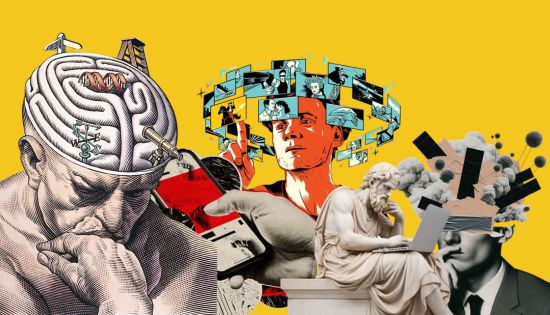
Across the world, researchers are studying a growing concern: declining attention spans in the digital age. But is our attention span actually shrinking, or is something more complex happening?
Let’s break down what science says.
The Myth (and Reality) of the “Shrinking” Attention Span
You may have heard that the average human attention span is now shorter than a goldfish’s. That popular claim originated from a 2015 report by Microsoft, but scientists have pointed out that the “goldfish comparison” isn’t supported by strong biological evidence.
However, that doesn’t mean nothing has changed.
Research published in Nature Communications (2019) found that collective attention spans how long people focus on a single topic online are narrowing. Trends rise and fall faster. News cycles move more quickly. Viral content burns out in days instead of weeks.
In short, we aren’t necessarily biologically damaged, but our environment is changing how we focus.
How Social Media Rewires Focus
Platforms like TikTok, Instagram, and YouTube are designed around short-form, high-stimulation content.
Each scroll gives you:
- A new video
- A new joke
- A new drama
- A new dopamine hit
Neuroscientists explain this through the brain’s dopamine reward system. Dopamine is a neurotransmitter linked to motivation and reward. When you receive unpredictable rewards (likes, messages, new content), your brain becomes conditioned to seek quick stimulation.
Over time, long tasks like reading a textbook or writing an essay feel “boring” because they don’t provide the same rapid feedback.
Multitasking Is Making It Worse
Think you’re good at multitasking? Research from Stanford University suggests otherwise.
A well-known study by psychologist Clifford Nass found that heavy media multitaskers performed worse on tasks requiring sustained attention and memory filtering. Constant task-switching weakens your brain’s ability to focus deeply.
In reality, what we call multitasking is just rapid switching between tasks — and every switch costs mental energy.
The Rise of the “Continuous Partial Attention” Lifestyle
Technology researcher Linda Stone coined the term “continuous partial attention.” It describes a state where we are never fully focused on one thing, always slightly alert for the next notification.
This habit affects:
- Academic performance
- Reading comprehension
- Memory retention
- Emotional regulation
When attention becomes fragmented, learning becomes shallow.
Stress, Sleep, and Information Overload
It’s not just social media.
The modern student faces:
- Academic pressure
- Economic uncertainty
- 24/7 news cycles
- Endless notifications
Chronic stress increases cortisol levels, which directly affect concentration and memory.
Meanwhile, sleep deprivation, often caused by late-night scrolling, reduces cognitive performance and attention control.
The result? A brain that feels tired even when you’re sitting still.
Are We Doomed? Not Exactly.
The good news: attention is trainable.
Studies in cognitive psychology show that practices such as:
- Mindfulness meditation
- Deep reading (books, long-form essays)
- Time-blocked study sessions
- Reduced notification exposure
can rebuild sustained attention over time.
Your brain is plastic, meaning it can rewire itself based on habits.
So What’s Actually Happening?
Our brains haven’t suddenly evolved to be weaker.
Instead, we live in an environment optimised for distraction.
The issue isn’t that young people are “lazy” or “less intelligent.” It’s that the digital ecosystem rewards speed, novelty, and constant engagement, not depth.
And attention, like a muscle, adapts to how it’s used.
Final Thought
If you feel like your attention span isn’t what it used to be, you’re not broken.
You’re responding normally to a hyper-stimulating world.
The real challenge for this generation isn’t intelligence, it’s intentional focus.
And that’s something we can train.
Sources
- Microsoft (2015). Attention Spans Report.
- Lorenz-Spreen, P., et al. (2019). “Accelerating dynamics of collective attention.” Nature Communications.
- Ophir, E., Nass, C., & Wagner, A. (2009). “Cognitive control in media multitaskers.” Proceedings of the National Academy of Sciences.
- American Psychological Association. Research on stress and cognitive function.
- Stone, L. (2008). “Continuous Partial Attention.”
- Harvard Health Publishing. Articles on dopamine and attention
Related News

Mrs. Nimala Perera; A Treasure Trove and the Heart of St. Joseph’s College, Colombo 10.
By : Guruji Ravindhiran Maruthai Mrs. Nimala Perera, a renowned educator of the hallowed educational institutionSt. Joseph’s College, Colombo 10, Sri Lanka,celebrates…
Read More
Online admission cards released for 2026 A/L Biosystems Technology Practical Exams
Candidates appearing for the 2026 G.C.E. Advanced Level Biosystems Technology practical examinations can download their admission cards from the official Department of…
Read MoreGovt to renew MoU with Asia Pacific Body to elevate vocational training
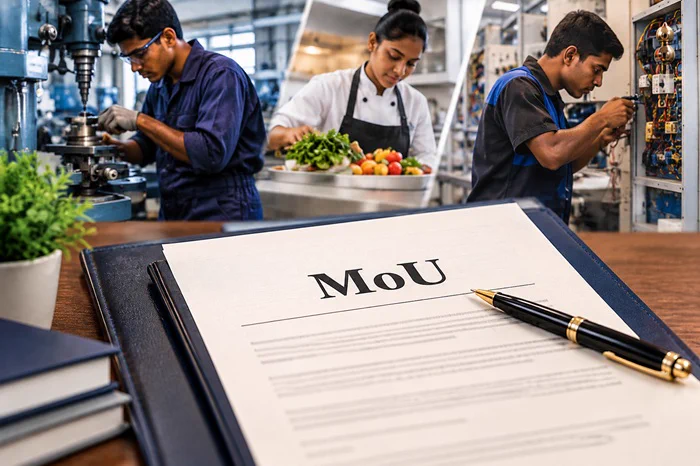
The Cabinet of Ministers has approved a proposal to renew the Memorandum of Understanding (MoU) between Sri Lanka’s Tertiary and Vocational Education…
Read MorePM inaugurates ‘Sittam 2026’ Art Exhibition under ‘Kolomtota Abhinandana’ initiative
In parallel with the National Literary and Arts Festival, Prime Minister Dr. Harini Amarasuriya opened the 'Sittam 2026' art exhibition on October…
Read MoreKorean Association pledges medical aid and special needs youth programme for Sri Lanka
The Korean Volunteer Association for Distinguished Service to the State is organizing an 11-day programme for next year aimed at identifying and…
Read MoreCourses
-

The future of higher education tech: why industry needs purpose-built solutions
For years, Institutions and education agencies have been forced to rely on a patchwork of horizontal SaaS solutions – general tools that… -

MBA in Project Management & Artificial Intelligence – Oxford College of Business
In an era defined by rapid technological change, organizations increasingly demand leaders who not only understand traditional project management, but can also… -

Scholarships for 2025 Postgraduate Diploma in Education for SLEAS and SLTES Officers
The Ministry of Education, Higher Education and Vocational Education has announced the granting of full scholarships for the one-year weekend Postgraduate Diploma… -

Shape Your Future with a BSc in Business Management (HRM) at Horizon Campus
Human Resource Management is more than a career. It’s about growing people, building organizational culture, and leading with purpose. Every impactful journey… -
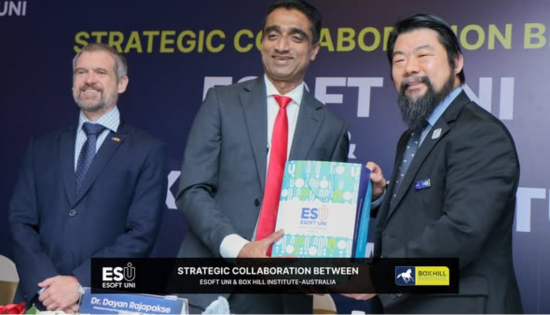
ESOFT UNI Signs MoU with Box Gill Institute, Australia
ESOFt UNI recently hosted a formal Memorandum of Understanding (MoU) signing ceremony with Box Hill Institute, Australia, signaling a significant step in… -

Ace Your University Interview in Sri Lanka: A Guide with Examples
Getting into a Sri Lankan sate or non-state university is not just about the scores. For some universities' programmes, your personality, communication… -
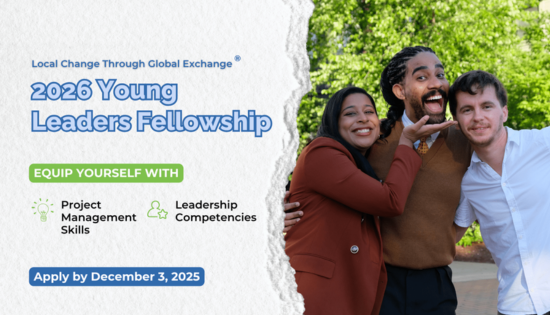
MCW Global Young Leaders Fellowship 2026
MCW Global (Miracle Corners of the World) runs a Young Leaders Fellowship, a year-long leadership program for young people (18–26) around the… -
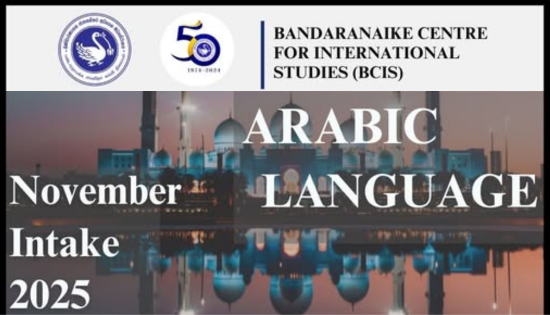
Enhance Your Arabic Skills with the Intermediate Language Course at BCIS
BCIS invites learners to join its Intermediate Arabic Language Course this November and further develop both linguistic skills and cultural understanding. Designed… -
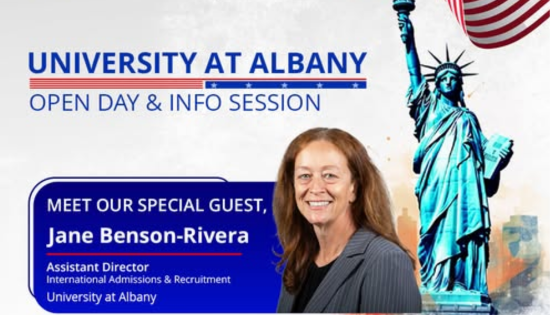
Achieve Your American Dream : NCHS Spring Intake Webinar
NCHS is paving the way for Sri Lankan students to achieve their American Dream. As Sri Lanka’s leading pathway provider to the… -

National Diploma in Teaching course : Notice
A Gazette notice has been released recently, concerning the enrollment of aspiring teachers into National Colleges of Education for the three-year pre-service… -
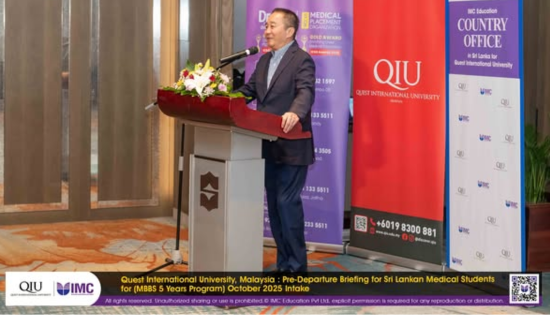
IMC Education Features Largest Student Recruitment for QIU’s October 2025 Intake
Quest International University (QIU), Malaysia recently hosted a pre-departure briefing and high tea at the Shangri-La Hotel in Colombo for its incoming… -

Global University Employability Ranking according to Times Higher Education
Attending college or university offers more than just career preparation, though selecting the right school and program can significantly enhance your job… -

Diploma in Occupational Safety & Health (DOSH) – CIPM
The Chartered Institute of Personnel Management (CIPM) is proud to announce the launch of its Diploma in Occupational Safety & Health (DOSH),… -
Small Grant Scheme for Australia Awards Alumni Sri Lanka
Australia Awards alumni are warmly invited to apply for a grant up to AUD 5,000 to support an innovative project that aim… -
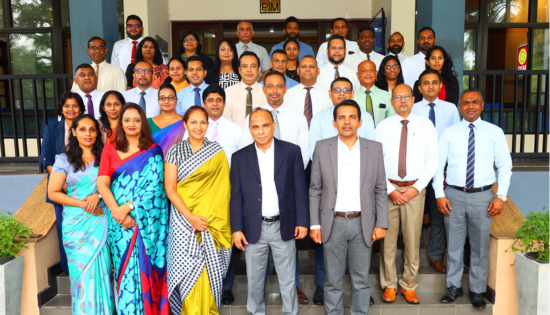
PIM Launches Special Programme for Newly Promoted SriLankan Airlines Managers
The Postgraduate Institute of Management (PIM) has launched a dedicated Newly Promoted Manager Programme designed to strengthen the leadership and management capabilities…
Newswire
-

Wildlife officers arrest four suspects with porcupine meat, illegal firearms
ON: October 14, 2026 -
Sri Lanka Customs reaches 2026 revenue target of Rs. 2,208 Bn by Oct.13
ON: October 14, 2026 -
St. Joseph’s College Honours Mrs Nimala Perera’s Five Decades of Service
ON: October 14, 2026 -
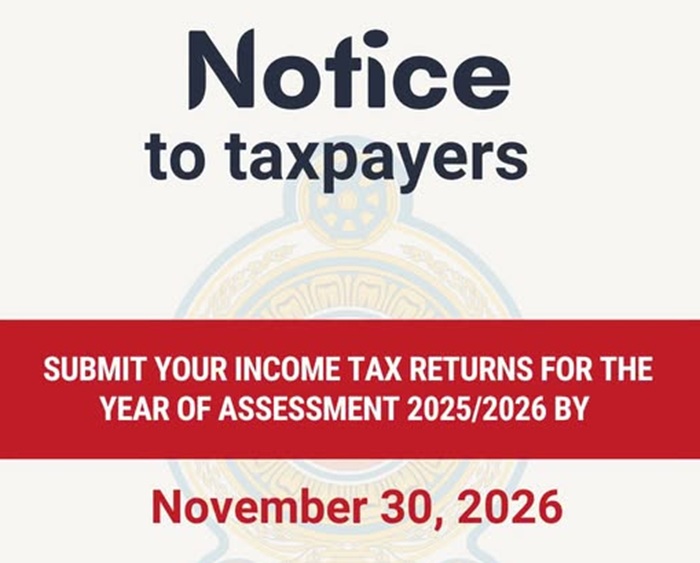
Taxpayers reminded to submit income tax returns by November 30
ON: October 14, 2026 -

Sri Lanka joins first BIMSTEC Home Ministers’ Meeting in India
ON: October 14, 2026