
Can Sri Lankan Students Practise Medicine After Studying Abroad? Licensing Pathways Explained
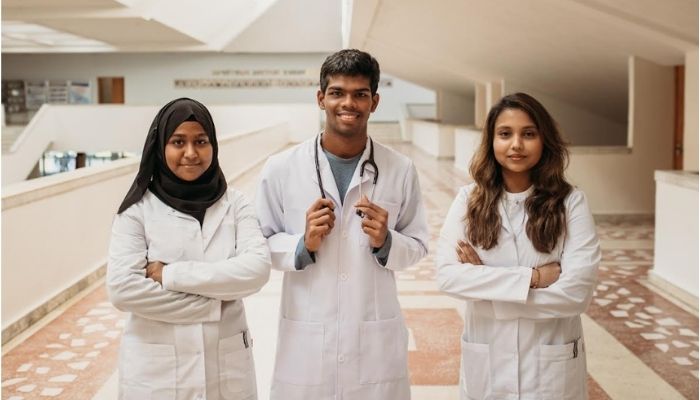
For many Sri Lankan students, the dream of becoming a doctor does not end with local university admission. Every year, students explore recognised medical universities overseas as a pathway to earn a medical degree and build a future in healthcare.
However, one of the biggest questions parents and students ask is simple:
“After studying medicine abroad, can I come back and practise as a doctor?”
The answer is yes, but it depends on choosing the right university, understanding the required licensing pathway, and preparing properly from the beginning. A medical degree alone is not the final step. After graduation, students must follow the registration or licensing process of the country where they wish to practise.
This is why choosing a medical university abroad should never be based only on tuition fees, location, or admission availability. Students must also consider recognition, clinical training, documentation, internship requirements, and future licensing options.
At ISC Education, students and parents are guided not only during the admission stage, but throughout the wider medical journey, including awareness of post-graduation pathways, licensing preparation, documentation guidance, and future career direction.
Why Recognition Matters Before Choosing a Medical University Abroad
Before applying to any medical university overseas, Sri Lankan students must check whether the qualification is recognised for the career pathway they want to pursue.
For students who wish to return to Sri Lanka, the medical degree must meet the requirements of the Sri Lanka Medical Council, commonly known as the SLMC. The SLMC states that candidates who obtained their medical qualification overseas must possess an MBBS or equivalent degree from a medical school recognised by the SLMC to be eligible to sit the ERPM examination.
This is one of the most important points for students and parents to understand. A university may offer a medical programme, but students must confirm whether the degree is suitable for their intended licensing pathway.
Recognition also matters for students who hope to practise in countries such as the UK, USA, Australia, or elsewhere. Each country has its own medical licensing authority, examination process, registration requirements, and documentation standards.
Practising Medicine in Sri Lanka After Studying Abroad
Sri Lankan students who complete their medical degree overseas and wish to practise in Sri Lanka generally need to follow the pathway set by the Sri Lanka Medical Council.
The main licensing examination for foreign medical graduates in Sri Lanka is the ERPM, formerly known as the Act 16 Examination. According to the SLMC, the ERPM applies to Sri Lankan citizens who obtained their medical qualification from overseas medical schools.
Students must also prepare documents such as their degree certificate, transcript, passport details, A/L results sheet, and other relevant documents when applying through the SLMC process.
This is where long-term guidance becomes important. Students should not wait until graduation to understand these steps. From the first year of medical school, they should know what documents to maintain, what academic standards to meet, and what licensing route they may follow after completing their degree.
ISC Education supports students by helping them understand these requirements early, guiding them on the importance of proper documentation, and continuing to assist students and families even after university admission.
Practising Medicine in the United Kingdom
Many Sri Lankan medical students also consider the UK as a future practice destination.
For international medical graduates, the UK’s General Medical Council explains that the PLAB test is aligned with the requirements of the Medical Licensing Assessment, known as the MLA. The assessment is based on the core knowledge, skills, and behaviours required for medical practice in the UK.
The GMC also states that international medical graduates may apply for full registration with a licence to practise if they meet the required conditions, including passing both parts of the PLAB test within the required period and completing an internship.
For students, this means UK practice is possible, but it requires planning. Students need to understand examination timelines, internship expectations, English language requirements, and GMC registration procedures.
ISC Education helps students and parents understand these future options from the beginning, so they can make informed choices when selecting a university and planning their career after graduation.
Practising Medicine in the United States
The United States has a different pathway for international medical graduates.
The Educational Commission for Foreign Medical Graduates, known as ECFMG, states that ECFMG Certification is the standard used to evaluate the qualifications of international medical graduates who want to enter the US healthcare system.
International medical graduates must also satisfy examination requirements, including passing USMLE Step 1 and USMLE Step 2 Clinical Knowledge as part of the ECFMG Certification process.
The US pathway is highly structured and competitive. Students who are interested in this route should begin understanding the process early, especially because preparation for the USMLE requires strong academic discipline, long-term planning, and a clear understanding of documentation and eligibility requirements.
This is another reason why students benefit from working with an education partner that understands the full medical journey, not just the admission process.
Practising Medicine in Australia
Australia is another destination considered by many international medical graduates.
The Australian Medical Council provides assessment pathways for international medical graduates who wish to qualify for registration in Australia.
For many international medical graduates, the Standard Pathway may involve the AMC written examination, the AMC clinical examination or workplace-based assessment, and a period of supervised practice, depending on the applicant’s circumstances and eligibility.
Students interested in Australia should understand that registration pathways can vary depending on the university, degree, internship, clinical experience, and the applicant’s profile. Therefore, early guidance is essential.
Why Students Should Think Beyond Admission
Many students focus only on getting into medical school. While admission is important, it is only the beginning of a much longer journey.
A good medical pathway should answer questions such as:
Can I return to Sri Lanka and sit for the required licensing examination?
Can I pursue licensing pathways in the UK, USA, Australia, or another country?
Will I receive proper clinical training during my degree?
Will I have the documents required after graduation?
Who will guide me after I leave Sri Lanka?
What support will I receive if I face challenges overseas?
These questions matter because medicine is not a short-term academic decision. It is a long-term professional pathway that requires commitment, planning, and the right support system.
How ISC Education Supports Students Beyond University Admission
ISC Education’s role does not end once a student receives an offer letter or flies overseas.
For medical students, ISC Education provides guidance throughout the student journey, including support before departure, during university life, and after graduation. This includes helping students and parents understand medical university selection, application procedures, visa guidance, pre-departure preparation, overseas settlement, academic progress, and future licensing awareness.
ISC Education also continues to support students after graduation by guiding them on documentation, next-step planning, and general awareness of licensing pathways such as SLMC registration in Sri Lanka and international routes such as the UK, USA, and Australia.
This long-term approach is especially important for medicine because students and parents need confidence not only at the point of admission, but throughout the full six-year journey and beyond.
Final Thoughts
Sri Lankan students can practise medicine after studying abroad, but the pathway depends on choosing a recognised medical university, completing the required degree, fulfilling internship or clinical requirements, and following the licensing process of the country where they wish to practise.
For Sri Lanka, students must understand the SLMC and ERPM pathway. For the UK, students must understand GMC registration and PLAB/MLA requirements. For the USA, students must understand ECFMG Certification and USMLE requirements. For Australia, students must understand AMC assessment pathways.
The key is to plan early.
With the right guidance, studying medicine abroad can become a structured and achievable pathway for Sri Lankan students who are serious about becoming doctors. Through ISC Education, students and parents receive guidance not only for university admission, but also for the wider medical journey, including post-graduation direction and licensing pathway awareness.
Planning to study medicine abroad?
Speak to ISC Education for guidance on recognised medical universities, application support, visa guidance, student support, and post-graduation pathway awareness.
Call our hotline: 0777 55 66 66
Or visit us at No. 4A, Cambridge Place, Colombo 7.
You can also visit our branches in Kalmunai, Batticaloa, or Jaffna to begin your medical journey with confidence.
Related News
PM pledges equal opportunities and enhanced school infrastructure at Habarana Maha Vidyalaya event
Prime Minister and Minister of Education, Higher Education and Vocational Education, Dr. Harini Amarasuriya said on 10 October that the Government is…
Read MoreRichmond College hosts inaugural Kannangara Oration to mark 150th Anniversary
The inaugural Dr. C. W. W. Kannangara Memorial Oration will take place tomorrow, Oct. 13, at 9:00am at Richmond College's Darrell Hall…
Read MoreYoung Sri Lankan authors in Bahrain launch debut short story collection “Api Hayai – Katha Godai
The Embassy of Sri Lanka in the Kingdom of Bahrain, in collaboration with the Sri Lanka Club of Bahrain and the Sinhala…
Read More
PM outlines new five-year strategy to revamp IT education infrastructure
Prime Minister Harini Amarasuriya told Parliament that the Government has proposed a five-year project to upgrade computer facilities at secondary schools and…
Read MoreMeasures underway to resolve teacher salary anomalies: PM
Appropriate measures are currently being taken through the Public Service Commission to resolve the salary anomalies of teachers and principals, Prime Minister…
Read MoreCourses
-

The future of higher education tech: why industry needs purpose-built solutions
For years, Institutions and education agencies have been forced to rely on a patchwork of horizontal SaaS solutions – general tools that… -

MBA in Project Management & Artificial Intelligence – Oxford College of Business
In an era defined by rapid technological change, organizations increasingly demand leaders who not only understand traditional project management, but can also… -

Scholarships for 2025 Postgraduate Diploma in Education for SLEAS and SLTES Officers
The Ministry of Education, Higher Education and Vocational Education has announced the granting of full scholarships for the one-year weekend Postgraduate Diploma… -
Shape Your Future with a BSc in Business Management (HRM) at Horizon Campus
Human Resource Management is more than a career. It’s about growing people, building organizational culture, and leading with purpose. Every impactful journey… -
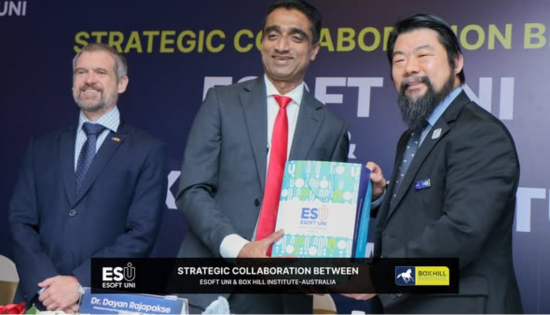
ESOFT UNI Signs MoU with Box Gill Institute, Australia
ESOFt UNI recently hosted a formal Memorandum of Understanding (MoU) signing ceremony with Box Hill Institute, Australia, signaling a significant step in… -

Ace Your University Interview in Sri Lanka: A Guide with Examples
Getting into a Sri Lankan sate or non-state university is not just about the scores. For some universities' programmes, your personality, communication… -
MCW Global Young Leaders Fellowship 2026
MCW Global (Miracle Corners of the World) runs a Young Leaders Fellowship, a year-long leadership program for young people (18–26) around the… -
Enhance Your Arabic Skills with the Intermediate Language Course at BCIS
BCIS invites learners to join its Intermediate Arabic Language Course this November and further develop both linguistic skills and cultural understanding. Designed… -

Achieve Your American Dream : NCHS Spring Intake Webinar
NCHS is paving the way for Sri Lankan students to achieve their American Dream. As Sri Lanka’s leading pathway provider to the… -
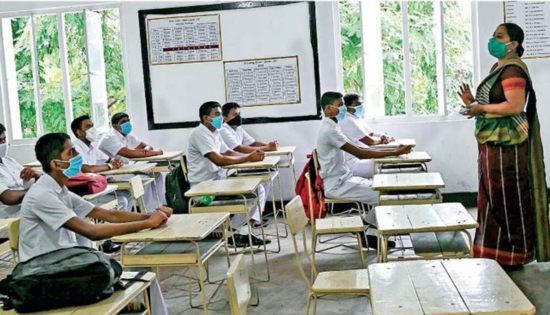
National Diploma in Teaching course : Notice
A Gazette notice has been released recently, concerning the enrollment of aspiring teachers into National Colleges of Education for the three-year pre-service… -
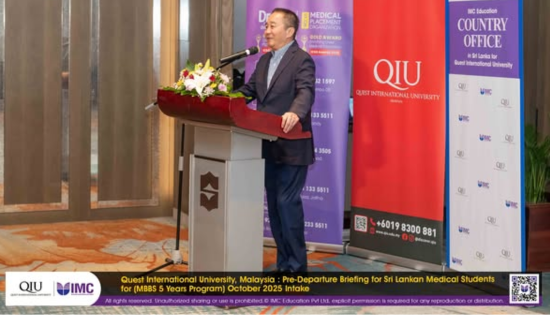
IMC Education Features Largest Student Recruitment for QIU’s October 2025 Intake
Quest International University (QIU), Malaysia recently hosted a pre-departure briefing and high tea at the Shangri-La Hotel in Colombo for its incoming… -

Global University Employability Ranking according to Times Higher Education
Attending college or university offers more than just career preparation, though selecting the right school and program can significantly enhance your job… -

Diploma in Occupational Safety & Health (DOSH) – CIPM
The Chartered Institute of Personnel Management (CIPM) is proud to announce the launch of its Diploma in Occupational Safety & Health (DOSH),… -
Small Grant Scheme for Australia Awards Alumni Sri Lanka
Australia Awards alumni are warmly invited to apply for a grant up to AUD 5,000 to support an innovative project that aim… -
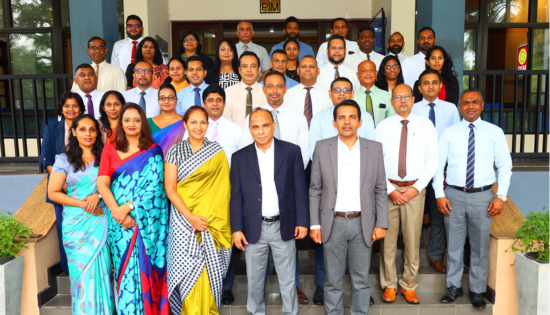
PIM Launches Special Programme for Newly Promoted SriLankan Airlines Managers
The Postgraduate Institute of Management (PIM) has launched a dedicated Newly Promoted Manager Programme designed to strengthen the leadership and management capabilities…
Newswire
-
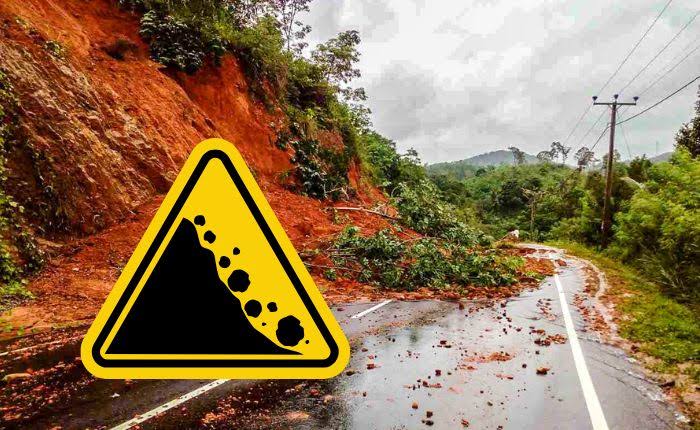
Amber landslide warning issued for several areas in Kegalle district
ON: October 12, 2026 -

HRCSL finds Customs violated Tamil author’s rights by seizing books
ON: October 12, 2026 -
Prime Minister engages in dialogue with young people on mental health
ON: October 12, 2026 -
HRCSL calls for new rules allowing religious attire for Govt employees
ON: October 12, 2026 -

Today’s News Digest – October 12
ON: October 12, 2026