




Why some words exist in one language but not another
Have you ever encountered a word in another language that seems impossible to translate?
The Portuguese word saudade describes a deep emotional longing for something or someone absent. The Japanese word komorebi refers to sunlight filtering through the leaves of trees. In German, fernweh expresses a longing for distant places one has never visited. Danish speakers use hygge to describe a feeling of comfort, warmth, and contentment often experienced in the company of others.
While these words can be explained, they often resist direct translation. A single word in one language may require an entire sentence, or even a paragraph, in another.

This raises a fascinating question. Why do some languages contain words that seem not to exist anywhere else? Are speakers of different languages experiencing entirely different realities, or are they simply describing the same human experiences in different ways?
For centuries, linguists, psychologists, anthropologists, and philosophers have explored these questions. What they have discovered reveals that language is much more than a tool for communication. It is also a window into culture, history, environment, and the way human beings make sense of the world.
A dictionary shaped by culture
Every language develops within a specific social and cultural environment. Communities create words for ideas, experiences, and objects that matter to them.
People living in desert regions may develop rich vocabularies for describing sand, wind, and weather conditions. Communities dependent on fishing may have dozens of terms for ocean currents, tides, or types of fish. Agricultural societies often develop highly specific language related to seasons, crops, and landscapes.
As a result, language becomes a record of what a society values, notices, and experiences regularly.
This helps explain why certain concepts become condensed into a single word in one language while requiring lengthy explanations in another.
For example, the Finnish word sisu refers to determination, resilience, courage, and perseverance in the face of adversity. While English contains words related to these ideas, none captures exactly the same combination of meanings and cultural significance.
Language, in this sense, reflects the priorities and experiences of the communities that speak it.

Does language shape how we think?
One of the most influential debates in linguistics concerns whether language influences thought.
This idea became widely known through the work of linguists Edward Sapir and Benjamin Lee Whorf during the twentieth century. Their theories suggested that the structure of a language might affect how its speakers perceive and understand the world.
The strongest versions of this theory, often called linguistic determinism, claimed that language could limit what people were capable of thinking.
Most modern linguists reject this extreme view. Human beings are clearly capable of understanding concepts that do not exist as words in their native language.
However, many researchers do believe that language can influence attention, memory, and perception in subtle ways.
Studies have shown that speakers of different languages may pay attention to different aspects of the same situation. Some languages require speakers to specify directions such as north, south, east, and west, even in everyday conversation. Research suggests that speakers of these languages often develop unusually strong spatial awareness as a result.
Similarly, languages differ in how they describe colours, time, emotions, and relationships, potentially influencing how speakers think about these concepts.
Language may not determine thought, but it can shape habits of attention.
The world’s most fascinating untranslatable words
The popularity of “untranslatable words” on social media and in popular books reflects a growing fascination with linguistic diversity.
Many of these words reveal unique cultural perspectives.
The Japanese term tsundoku refers to the habit of acquiring books and allowing them to pile up unread. The German word schadenfreude describes pleasure derived from another person’s misfortune. The Korean word nunchi refers to the subtle art of understanding another person’s emotions and intentions through observation.
In South Africa, the Nguni word ubuntu expresses a philosophy emphasizing interconnectedness and shared humanity. Often translated as “I am because we are,” the concept has influenced discussions of ethics, leadership, and community across the world.
These words remind us that language often captures ideas that are deeply embedded within particular cultural traditions.
At the same time, they also reveal how many human experiences are universal. People everywhere understand longing, comfort, perseverance, empathy, and belonging, even if their languages describe these experiences differently.

When languages disappear
The study of language becomes even more important when we consider how many languages are currently at risk.
According to UNESCO, nearly half of the world’s approximately 7,000 languages may disappear within the coming century.
Every time a language dies, humanity loses more than vocabulary and grammar.
Languages often contain generations of knowledge about local ecosystems, medicinal plants, agricultural practices, oral histories, and cultural traditions. Some Indigenous languages include highly detailed environmental knowledge accumulated over centuries of interaction with specific landscapes.
When these languages disappear, valuable knowledge may disappear with them.
Linguists increasingly argue that language preservation is not simply about protecting cultural heritage. It is also about safeguarding diverse ways of understanding the world.
Can technology save endangered languages?
Ironically, some of the same technologies that have accelerated cultural globalization may now help preserve linguistic diversity.
Artificial intelligence, digital archives, translation software, and language-learning applications are being used to document and revitalize endangered languages around the world.
Researchers are creating digital dictionaries, recording native speakers, and developing educational tools to help younger generations learn ancestral languages.
However, experts caution that technology alone cannot save a language. Languages survive when communities continue to use them in everyday life, pass them to future generations, and maintain the cultural contexts that give them meaning.

More than words
The mystery of why some words exist in one language but not another ultimately reveals something profound about humanity.
Languages are not merely collections of words. They are living records of history, geography, culture, emotion, and collective experience.
Every language highlights certain aspects of reality while leaving others in the background. Each offers a slightly different lens through which people interpret the world.
This diversity does not divide humanity. Instead, it enriches it.
The existence of untranslatable words reminds us that while people may speak thousands of different languages, they are often attempting to describe the same hopes, fears, joys, and struggles.
Sometimes another language simply finds a particularly beautiful way to express them.
Sources
- UNESCO – Atlas of the World’s Languages
- Linguistic Society of America
- Cambridge University Press – Linguistics and language studies publications
- Oxford University Press – Research on language and cognition
- National Geographic Society – Language preservation features
- Stanford Encyclopedia of Philosophy – Philosophy of Language
Related News

CIMA Beyond Accounting: Why Business Skills Matter for the Next Generation
For many Sri Lankan students, completing school brings one major question: what qualification should come next? A bachelor’s degree remains an important…
Read More
Gateway College and Wilderness School Australia Launch Teacher Exchange Programme
Students of Wilderness School were most welcoming to the teachers of Gateway Gateway College is pleased to announce the establishment of a…
Read More
Imperial Announces CIMA Certificate Intake with 50% Off Class Fees
Imperial College of Business Studies (ICBS) will commence its latest CIMA Certificate Level intake on 19 September 2026, with weekday and weekend…
Read More
AIESEC in Colombo North and Rotaract Colombo Mid Town Introduce CSR Project: Bloom 2026
Following the success of its first chapter, Bloom returns in 2026 with a renewed vision, focusing on Galaha Divisional Hospital and the…
Read More
Gateway Students Win Record 10 Medals for Sri Lanka at International Earth Science Olympiad 2026
Gateway Colleges celebrates an outstanding international achievement by four of its students, who represented Sri Lanka at the 19th International Earth Science…
Read MoreCourses
-

The future of higher education tech: why industry needs purpose-built solutions
For years, Institutions and education agencies have been forced to rely on a patchwork of horizontal SaaS solutions – general tools that… -

MBA in Project Management & Artificial Intelligence – Oxford College of Business
In an era defined by rapid technological change, organizations increasingly demand leaders who not only understand traditional project management, but can also… -

Scholarships for 2025 Postgraduate Diploma in Education for SLEAS and SLTES Officers
The Ministry of Education, Higher Education and Vocational Education has announced the granting of full scholarships for the one-year weekend Postgraduate Diploma… -

Shape Your Future with a BSc in Business Management (HRM) at Horizon Campus
Human Resource Management is more than a career. It’s about growing people, building organizational culture, and leading with purpose. Every impactful journey… -
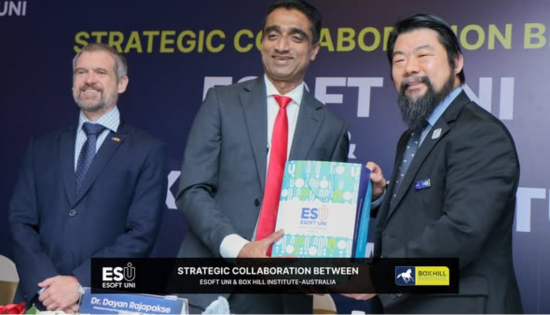
ESOFT UNI Signs MoU with Box Gill Institute, Australia
ESOFt UNI recently hosted a formal Memorandum of Understanding (MoU) signing ceremony with Box Hill Institute, Australia, signaling a significant step in… -

Ace Your University Interview in Sri Lanka: A Guide with Examples
Getting into a Sri Lankan sate or non-state university is not just about the scores. For some universities' programmes, your personality, communication… -
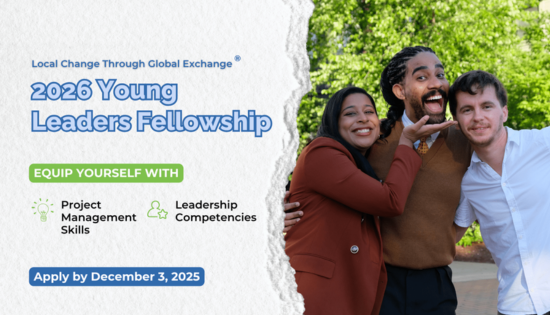
MCW Global Young Leaders Fellowship 2026
MCW Global (Miracle Corners of the World) runs a Young Leaders Fellowship, a year-long leadership program for young people (18–26) around the… -
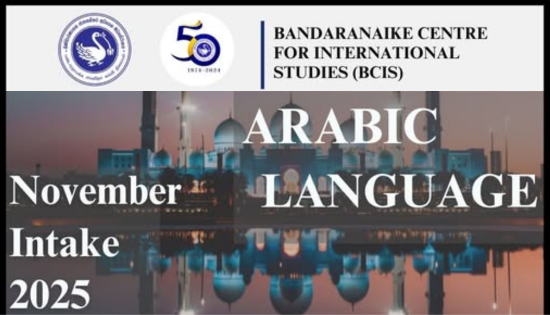
Enhance Your Arabic Skills with the Intermediate Language Course at BCIS
BCIS invites learners to join its Intermediate Arabic Language Course this November and further develop both linguistic skills and cultural understanding. Designed… -

Achieve Your American Dream : NCHS Spring Intake Webinar
NCHS is paving the way for Sri Lankan students to achieve their American Dream. As Sri Lanka’s leading pathway provider to the… -

National Diploma in Teaching course : Notice
A Gazette notice has been released recently, concerning the enrollment of aspiring teachers into National Colleges of Education for the three-year pre-service… -
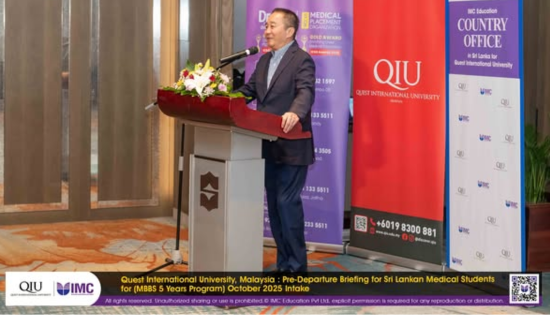
IMC Education Features Largest Student Recruitment for QIU’s October 2025 Intake
Quest International University (QIU), Malaysia recently hosted a pre-departure briefing and high tea at the Shangri-La Hotel in Colombo for its incoming… -

Global University Employability Ranking according to Times Higher Education
Attending college or university offers more than just career preparation, though selecting the right school and program can significantly enhance your job… -

Diploma in Occupational Safety & Health (DOSH) – CIPM
The Chartered Institute of Personnel Management (CIPM) is proud to announce the launch of its Diploma in Occupational Safety & Health (DOSH),… -
Small Grant Scheme for Australia Awards Alumni Sri Lanka
Australia Awards alumni are warmly invited to apply for a grant up to AUD 5,000 to support an innovative project that aim… -
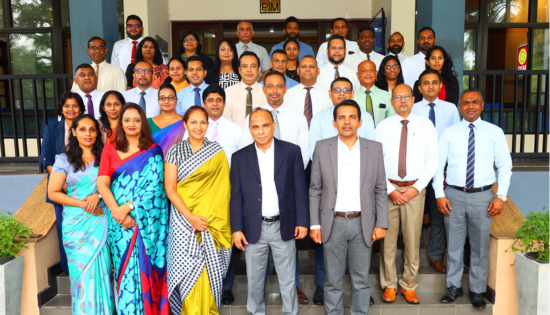
PIM Launches Special Programme for Newly Promoted SriLankan Airlines Managers
The Postgraduate Institute of Management (PIM) has launched a dedicated Newly Promoted Manager Programme designed to strengthen the leadership and management capabilities…
Newswire
-

“Every drop counts” : Sangakkara calls for rainwater harvesting
ON: September 19, 2026 -

Google’s Gemini AI hacks 3 companies in security test, then stops
ON: September 19, 2026 -

FBC, Dengue and COVID Tests: CAA clarifies maximum charges
ON: September 19, 2026 -

Telegram fraud : Woman arrested over online scam case
ON: September 19, 2026 -

Sri Lanka Netball player faces ban over “Old Women” comment – Report
ON: September 19, 2026