





University Admissions and Z-Score Cutoffs in Sri Lanka
Getting into a state university in Sri Lanka is a dream for many students. After finishing the G.C.E. Advanced Level (A/L) exams, students hope to enter public universities to study for free. But the competition is very high, and the most important factor in university selection is something called the Z-score.
What is the Z-Score?
The Z-score is a number that helps compare students who did different A/L subject combinations. It is not the same as your raw marks or grades. Instead, the Z-score shows how well you did compared to others in your same subject stream.
For example:
- If you did A/Ls in the science stream, your Z-score will be compared only with other science students.
- If you are in the commerce or arts stream, your Z-score is compared with students in those streams.
This way, even if some subjects are harder than others, the Z-score makes the system fair for everyone.
Why is the Z-Score Important?
The Z-score decides:
- If you qualify for university
- What course you can study (like medicine, engineering, law, arts, etc.)
- Which university you can go to
Higher Z-scores mean better chances of getting into popular courses and top universities.
University Admission Process
Here is a step-by-step look at how the system works:
- Sit for the A/L exam
- Students do 3 main subjects and General English.
- Receive your results and Z-score
- The Department of Examinations releases A/L results and Z-scores for each subject stream.
- Check minimum Z-score cutoffs
- The University Grants Commission (UGC) publishes Z-score cutoffs for each course at each university. These are the lowest Z-scores accepted for entry.
- Apply through the UGC
- Students must fill out the UGC application, listing their course and university preferences.
- Wait for selection
- If your Z-score meets the cutoff for a course and university, you will receive an offer.
What are Z-Score Cutoffs?
Z-score cutoffs are the minimum Z-scores needed to get into each course. For example:
- To study medicine at Colombo University, you might need a Z-score of 2.000 or more.
- For arts or management programs, the Z-score might be lower.
These cutoffs change every year depending on how many students apply and how well they perform in the A/Ls.
Tips for Students
- Focus on your A/L preparation — every mark counts toward your Z-score.
- Choose subjects you are strong in, as performance in your stream matters.
- Keep track of past Z-score cutoffs to understand the competition.
- Consider applying for private universities or foreign education if your Z-score is not enough for state universities.
The Z-score system may seem confusing at first, but it plays a big role in helping students get into university in a fair way. By understanding how it works and what the cutoffs mean, students and parents can better plan for the future.
Related News

How CIMA Builds Practical Business and Problem Solving Skills for the Real…
For students considering what to study after school or alongside a university degree, one question matters more than ever: will the qualification…
Read More
CIMA Beyond Accounting: Why Business Skills Matter for the Next Generation
For many Sri Lankan students, completing school brings one major question: what qualification should come next? A bachelor’s degree remains an important…
Read More
Gateway College and Wilderness School Australia Launch Teacher Exchange Programme
Students of Wilderness School were most welcoming to the teachers of Gateway Gateway College is pleased to announce the establishment of a…
Read More
Oxford College of Business Celebrates 1,550 Graduates at Landmark 2026 Graduation Ceremony
Oxford College of Business (OCB) celebrated the academic achievements of 1,550 graduands at its 2026 Graduation Ceremony, bringing together students, academics, international…
Read More
Imperial Announces CIMA Certificate Intake with 50% Off Class Fees
Imperial College of Business Studies (ICBS) will commence its latest CIMA Certificate Level intake on 19 September 2026, with weekday and weekend…
Read MoreCourses
-

The future of higher education tech: why industry needs purpose-built solutions
For years, Institutions and education agencies have been forced to rely on a patchwork of horizontal SaaS solutions – general tools that… -

MBA in Project Management & Artificial Intelligence – Oxford College of Business
In an era defined by rapid technological change, organizations increasingly demand leaders who not only understand traditional project management, but can also… -

Scholarships for 2025 Postgraduate Diploma in Education for SLEAS and SLTES Officers
The Ministry of Education, Higher Education and Vocational Education has announced the granting of full scholarships for the one-year weekend Postgraduate Diploma… -

Shape Your Future with a BSc in Business Management (HRM) at Horizon Campus
Human Resource Management is more than a career. It’s about growing people, building organizational culture, and leading with purpose. Every impactful journey… -

ESOFT UNI Signs MoU with Box Gill Institute, Australia
ESOFt UNI recently hosted a formal Memorandum of Understanding (MoU) signing ceremony with Box Hill Institute, Australia, signaling a significant step in… -

Ace Your University Interview in Sri Lanka: A Guide with Examples
Getting into a Sri Lankan sate or non-state university is not just about the scores. For some universities' programmes, your personality, communication… -
MCW Global Young Leaders Fellowship 2026
MCW Global (Miracle Corners of the World) runs a Young Leaders Fellowship, a year-long leadership program for young people (18–26) around the… -
Enhance Your Arabic Skills with the Intermediate Language Course at BCIS
BCIS invites learners to join its Intermediate Arabic Language Course this November and further develop both linguistic skills and cultural understanding. Designed… -

Achieve Your American Dream : NCHS Spring Intake Webinar
NCHS is paving the way for Sri Lankan students to achieve their American Dream. As Sri Lanka’s leading pathway provider to the… -
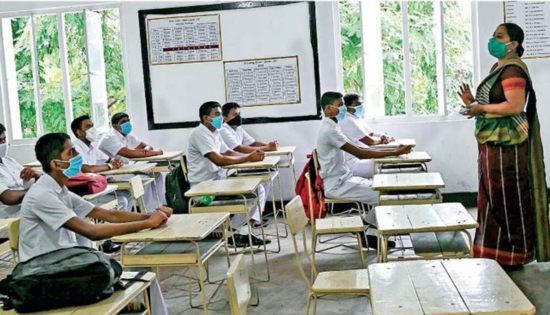
National Diploma in Teaching course : Notice
A Gazette notice has been released recently, concerning the enrollment of aspiring teachers into National Colleges of Education for the three-year pre-service… -
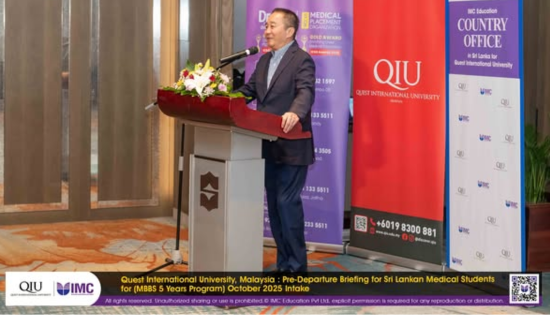
IMC Education Features Largest Student Recruitment for QIU’s October 2025 Intake
Quest International University (QIU), Malaysia recently hosted a pre-departure briefing and high tea at the Shangri-La Hotel in Colombo for its incoming… -

Global University Employability Ranking according to Times Higher Education
Attending college or university offers more than just career preparation, though selecting the right school and program can significantly enhance your job… -

Diploma in Occupational Safety & Health (DOSH) – CIPM
The Chartered Institute of Personnel Management (CIPM) is proud to announce the launch of its Diploma in Occupational Safety & Health (DOSH),… -
Small Grant Scheme for Australia Awards Alumni Sri Lanka
Australia Awards alumni are warmly invited to apply for a grant up to AUD 5,000 to support an innovative project that aim… -
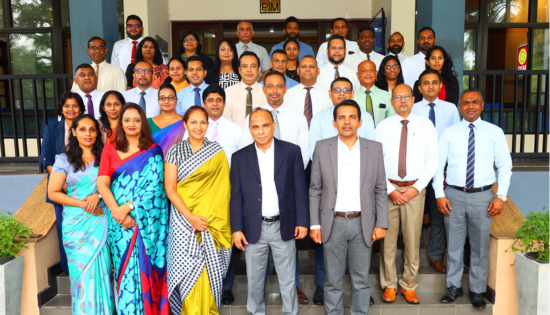
PIM Launches Special Programme for Newly Promoted SriLankan Airlines Managers
The Postgraduate Institute of Management (PIM) has launched a dedicated Newly Promoted Manager Programme designed to strengthen the leadership and management capabilities…
Newswire
-
New Post Office declared open in Kaithady, Jaffna
ON: September 21, 2026 -

CBSL rates: US Dollar selling rate drops to Rs. 335
ON: September 21, 2026 -
Flood warnings extended for Kuda Ganga and Gin Ganga
ON: September 21, 2026 -

Chinese President Xi Jinping will pay state visit to US this week, Beijing confirms
ON: September 21, 2026 -

What We Have Done So Far”: Sri Lanka Cricket Transformation Committee Gives Progress Update
ON: September 21, 2026