





Student activist settles University of Queensland lawsuit

Drew Pavlou outside the Supreme Court after filing proceedings against UQ, Vice-Chancellor Peter Hoj and Chancellor Peter Varghese.
Photographer: Annette Dew
A multimillion-dollar lawsuit against the University of Queensland (UQ) has been dismissed, after the institution reached an agreement with student activist Drew Pavlou.
Mr Pavlou, a former student representative on the university’s senate, initiated proceedings in the Queensland Supreme Court in mid-2020 after being suspended over multiple misconduct allegations. He claimed that the university had penalised him for his activism against the Chinese Communist Party, and sought A$3.5 million (£1.8 million) in damages for alleged negligence, defamation, deceit, conspiracy and breach of contract.
Mr Pavlou said he had decided to settle after UQ offered to spend A$120,000 on scholarships for disadvantaged law students. “I took ZERO dollars from UQ in my settlement,” he posted on X, formerly Twitter. “Still a great victory because I can help people and leave a legacy at UQ.”
The university, which denied Mr Pavlou’s allegations, said it had agreed to resolve the matter despite being “confident of its position”. In a statement, it said it had opted to commit A$120,000 towards its Leadership, Excellence and Diversity Scholarships “rather than incurring further legal costs if the proceedings had continued”.
The scholarships provide disadvantaged legal undergraduates with up to A$40,000 against their living and study expenses, along with dedicated mentors and social and community support.
Mr Pavlou, a former philosophy student, told AAP that his lawsuit had never been about money. “UQ tried to expel me because I protested against UQ’s immoral economic ties with the Chinese Communist Party. Now I’m back on campus studying law,” he said.
His activism, which captured headlines around the world, escalated after he was manhandled during a 2019 campus demonstration in support of Hong Kong democracy. His allegations upset UQ leaders, who said the university’s Chinese links were in Australia’s interests and stemmed from a time when Australian institutions were being encouraged to build ties with China.
Mr Pavlou initiated separate court proceedings in 2019 against China’s then consul-general in Brisbane, Xu Jie, who was also an adjunct professor at the university. Mr Pavlou blamed Dr Xu for death threats he received after a consulate statement the day after the campus demonstration accused “people with ulterior motives” of capitalising on the situation in Hong Kong to “incite anti-China sentiment”.
That action was dismissed in 2020, after Dr Xu claimed consular immunity. Mr Pavlou sought permission to appeal in 2022, but his application was dismissed a year later because the time limit for appeal had expired. The court found that further action “would be both unnecessary and futile” given that Dr Xu had become China’s ambassador to Cape Verde.
-John Ross – “THE”
Related News
Cabinet approves US University pacts for Jaffna University, Arthur C. Clarke Institute
The Cabinet of Ministers has approved two separate proposals to execute five year Memoranda of Understanding (MoUs) with universities in the United…
Read More
Grade 6 curriculum to include entrepreneurship, financial literacy from 2027: PM
The Sri Lankan government will introduce entrepreneurship and financial literacy into the Grade 6 curriculum starting in 2027 as part of broader…
Read More
COPE discloses Rs. 30 Bn unrecovered from bond defaulting academics
Nearly Rs. 30 billion is currently owed by university lecturers across the entire Sri Lankan university system for defaulting on their agreements…
Read More
National Colleges of Education to be upgraded to university level: PM
Prime Minister and Minister of Education, Higher Education, and Vocational Education, Dr. Harini Amarasuriya, announced that the government is taking steps to…
Read More
Sri Lanka’s OCU and Thailand’s RMUTK sign MoU to expand higher education ties
Sri Lanka’s Oxford Chester Uni of Higher Education (OCU) and the Institute of Science Innovation and Culture (ISIC) at Rajamangala University of…
Read MoreCourses
-

The future of higher education tech: why industry needs purpose-built solutions
For years, Institutions and education agencies have been forced to rely on a patchwork of horizontal SaaS solutions – general tools that… -

MBA in Project Management & Artificial Intelligence – Oxford College of Business
In an era defined by rapid technological change, organizations increasingly demand leaders who not only understand traditional project management, but can also… -

Scholarships for 2025 Postgraduate Diploma in Education for SLEAS and SLTES Officers
The Ministry of Education, Higher Education and Vocational Education has announced the granting of full scholarships for the one-year weekend Postgraduate Diploma… -

Shape Your Future with a BSc in Business Management (HRM) at Horizon Campus
Human Resource Management is more than a career. It’s about growing people, building organizational culture, and leading with purpose. Every impactful journey… -
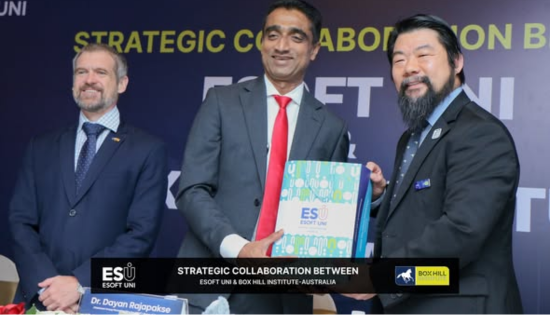
ESOFT UNI Signs MoU with Box Gill Institute, Australia
ESOFt UNI recently hosted a formal Memorandum of Understanding (MoU) signing ceremony with Box Hill Institute, Australia, signaling a significant step in… -

Ace Your University Interview in Sri Lanka: A Guide with Examples
Getting into a Sri Lankan sate or non-state university is not just about the scores. For some universities' programmes, your personality, communication… -
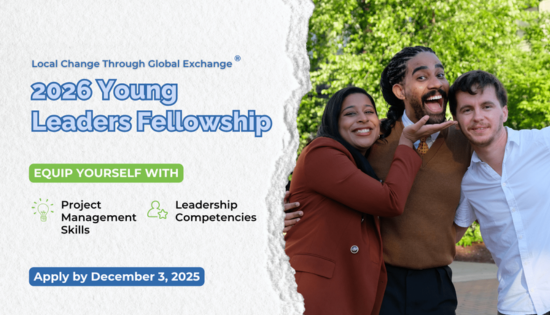
MCW Global Young Leaders Fellowship 2026
MCW Global (Miracle Corners of the World) runs a Young Leaders Fellowship, a year-long leadership program for young people (18–26) around the… -
Enhance Your Arabic Skills with the Intermediate Language Course at BCIS
BCIS invites learners to join its Intermediate Arabic Language Course this November and further develop both linguistic skills and cultural understanding. Designed… -

Achieve Your American Dream : NCHS Spring Intake Webinar
NCHS is paving the way for Sri Lankan students to achieve their American Dream. As Sri Lanka’s leading pathway provider to the… -
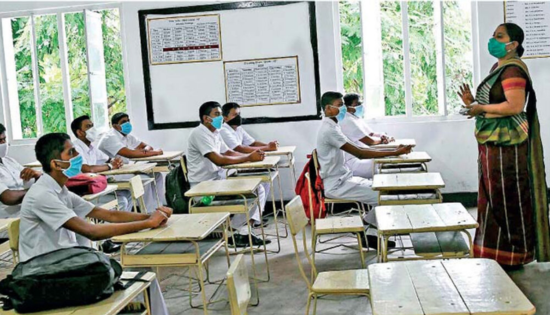
National Diploma in Teaching course : Notice
A Gazette notice has been released recently, concerning the enrollment of aspiring teachers into National Colleges of Education for the three-year pre-service… -
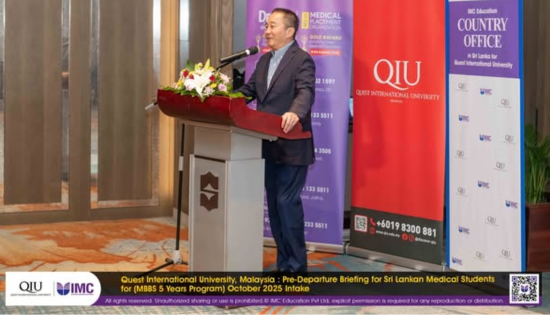
IMC Education Features Largest Student Recruitment for QIU’s October 2025 Intake
Quest International University (QIU), Malaysia recently hosted a pre-departure briefing and high tea at the Shangri-La Hotel in Colombo for its incoming… -

Global University Employability Ranking according to Times Higher Education
Attending college or university offers more than just career preparation, though selecting the right school and program can significantly enhance your job… -

Diploma in Occupational Safety & Health (DOSH) – CIPM
The Chartered Institute of Personnel Management (CIPM) is proud to announce the launch of its Diploma in Occupational Safety & Health (DOSH),… -
Small Grant Scheme for Australia Awards Alumni Sri Lanka
Australia Awards alumni are warmly invited to apply for a grant up to AUD 5,000 to support an innovative project that aim… -
PIM Launches Special Programme for Newly Promoted SriLankan Airlines Managers
The Postgraduate Institute of Management (PIM) has launched a dedicated Newly Promoted Manager Programme designed to strengthen the leadership and management capabilities…
Newswire
-

KPMG breaks down Budget 2027: Key tax changes, relief measures and economic proposals
ON: November 12, 2026 -
Sajith calls Budget 2027 a “parrot-like speech” without solutions
ON: November 12, 2026 -
No future for Gen Z and Millennials in Budget 2027: UNP
ON: November 12, 2026 -

Customs security officer arrested for accepting bribe
ON: November 12, 2026 -
Special Commodity Levies on dried sprats, maldive fish and dried chillies reduced
ON: November 12, 2026