





Sir Tim Berners-Lee: The Father of the World Wide Web
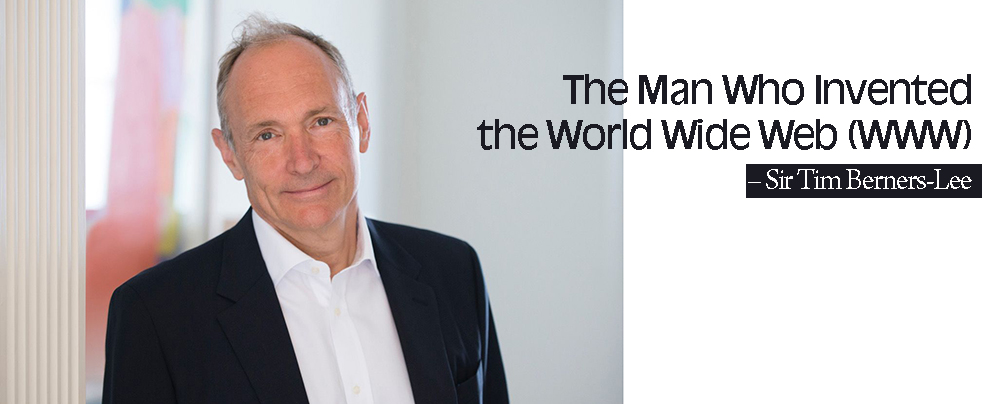
Every day, billions of people around the world open websites, share links, stream videos, or shop online. Yet, very few stop to ask: Who made this possible? Behind every webpage and every “http://” is one man Sir Tim Berners-Lee, the English computer scientist who invented the World Wide Web. His vision transformed the way humanity shares information, communicates, and connects.
Born on 8 June 1955 in London, Berners-Lee grew up in a family of computer pioneers his parents helped build one of the first commercial computers. As a child, Tim loved tinkering with electronics, building gadgets and experimenting with machines. Later, at Oxford University, he studied physics and even built his own computer using spare parts. This deep curiosity set the foundation for an invention that would one day change the world.
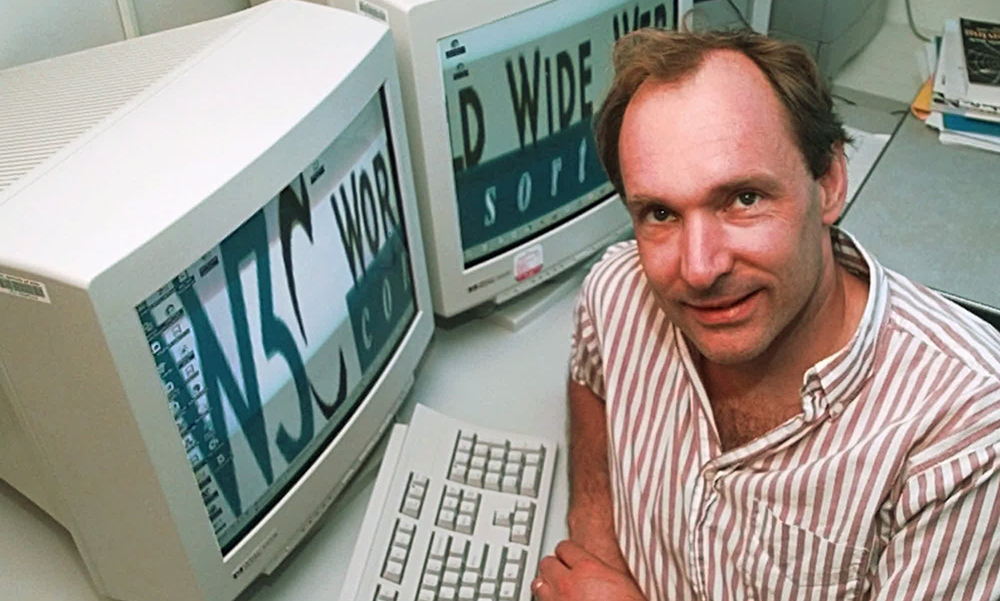
In 1989, while working at CERN (the European physics research center in Switzerland), Berners-Lee noticed a problem: scientists had research data scattered across different systems, making it hard to share and access information. To solve this, he proposed a “global hypertext system” a way to link documents so people could navigate them easily.
By 1990, he created the first web browser, first web server, and the first website. To make this work, he also designed three core technologies we still use today:
- HTML (HyperText Markup Language) – the language used to build webpages.
- URL (Uniform Resource Locator) – the “address” of a webpage.
- HTTP (HyperText Transfer Protocol) – the system that allows browsers and servers to communicate.
This was the birth of the World Wide Web and it all started with a simple vision: to make knowledge shareable and accessible for everyone.

Unlike many tech entrepreneurs, Berners-Lee did not patent or sell his invention. In 1993, CERN made the World Wide Web free and open to everyone. This act of generosity allowed the web to spread across the globe at lightning speed, powering today’s internet economy, social networks, and digital culture.
To guide its development, he founded the World Wide Web Consortium (W3C), which sets standards to keep the web open and functional for all. Later, he established the World Wide Web Foundation to ensure the internet remains a force for good, promoting accessibility, freedom, and fairness.
For his contributions, Berners-Lee has received countless awards, including being knighted in 2004 and awarded the Turing Award in 2016, often called the “Nobel Prize of Computing.” Yet, he remains humble, often reminding the world that “the web was made to connect people.”
Today, he continues to advocate for an open and safe internet. Concerned about issues like privacy, misinformation, and the power of big tech companies, he is working on new projects like Solid, a system that gives people control of their own data.
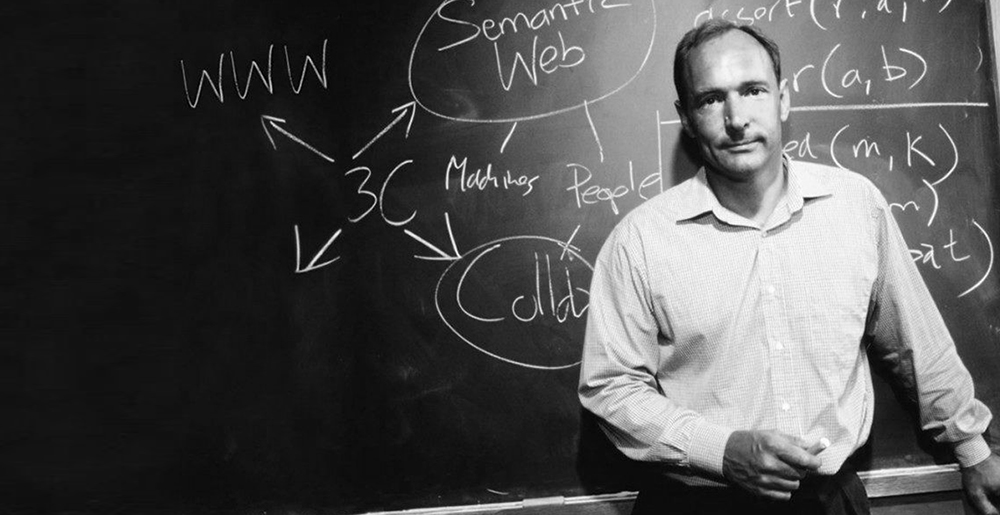
Most of us know the names of tech billionaires, but not the man who made their empires possible. Without Berners-Lee’s decision to keep the web free, the internet might have become a closed system controlled by a few corporations. His vision gave us freedom, connection, and opportunity.
Sir Tim Berners-Lee is more than just the inventor of the web he is a guardian of its future, constantly reminding us that the internet should serve humanity, not just profit.
Sir Tim Berners-Lee
- Born in 1955 in London; studied physics at Oxford University.
- Invented the World Wide Web in 1989 while working at CERN.
- Created the three core technologies: HTML, URL, HTTP.
- Built the first website, browser, and server in 1990.
- Made the web free and open in 1993, enabling global growth.
- Founded the World Wide Web Consortium (W3C) and World Wide Web Foundation.
- Knighted by Queen Elizabeth II in 2004 and awarded the Turing Award in 2016.
- Advocates for an open, fair, and safe web, currently working on Solid to give users control of their data.
- Believes: “The web is for everyone.”
Related News

How CIMA Builds Practical Business and Problem Solving Skills for the Real…
For students considering what to study after school or alongside a university degree, one question matters more than ever: will the qualification…
Read More
CIMA Beyond Accounting: Why Business Skills Matter for the Next Generation
For many Sri Lankan students, completing school brings one major question: what qualification should come next? A bachelor’s degree remains an important…
Read More
Gateway College and Wilderness School Australia Launch Teacher Exchange Programme
Students of Wilderness School were most welcoming to the teachers of Gateway Gateway College is pleased to announce the establishment of a…
Read More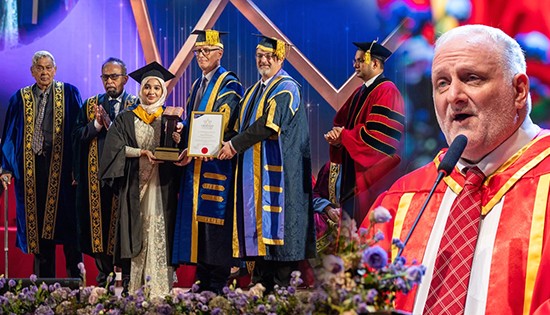
Oxford College of Business Celebrates 1,550 Graduates at Landmark 2026 Graduation Ceremony
Oxford College of Business (OCB) celebrated the academic achievements of 1,550 graduands at its 2026 Graduation Ceremony, bringing together students, academics, international…
Read More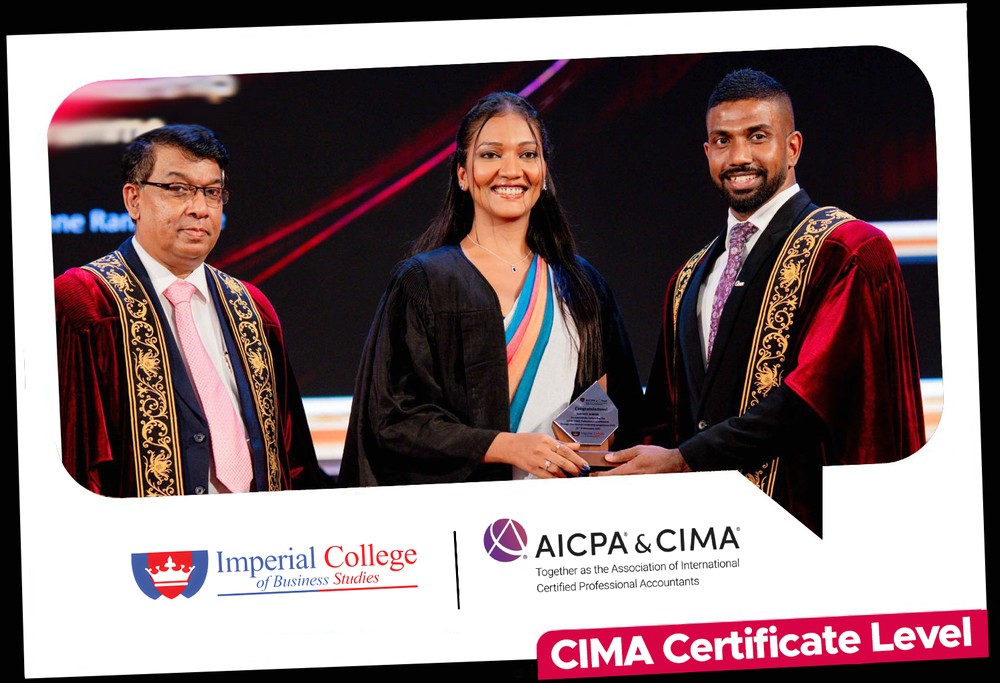
Imperial Announces CIMA Certificate Intake with 50% Off Class Fees
Imperial College of Business Studies (ICBS) will commence its latest CIMA Certificate Level intake on 19 September 2026, with weekday and weekend…
Read MoreCourses
-

The future of higher education tech: why industry needs purpose-built solutions
For years, Institutions and education agencies have been forced to rely on a patchwork of horizontal SaaS solutions – general tools that… -

MBA in Project Management & Artificial Intelligence – Oxford College of Business
In an era defined by rapid technological change, organizations increasingly demand leaders who not only understand traditional project management, but can also… -

Scholarships for 2025 Postgraduate Diploma in Education for SLEAS and SLTES Officers
The Ministry of Education, Higher Education and Vocational Education has announced the granting of full scholarships for the one-year weekend Postgraduate Diploma… -
Shape Your Future with a BSc in Business Management (HRM) at Horizon Campus
Human Resource Management is more than a career. It’s about growing people, building organizational culture, and leading with purpose. Every impactful journey… -
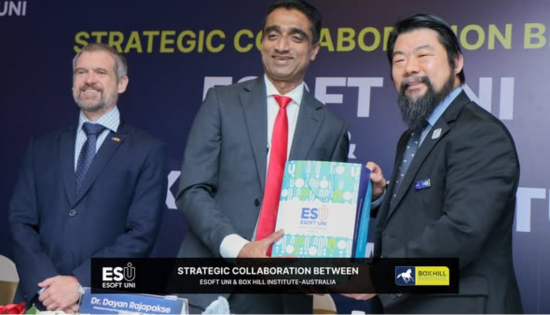
ESOFT UNI Signs MoU with Box Gill Institute, Australia
ESOFt UNI recently hosted a formal Memorandum of Understanding (MoU) signing ceremony with Box Hill Institute, Australia, signaling a significant step in… -

Ace Your University Interview in Sri Lanka: A Guide with Examples
Getting into a Sri Lankan sate or non-state university is not just about the scores. For some universities' programmes, your personality, communication… -
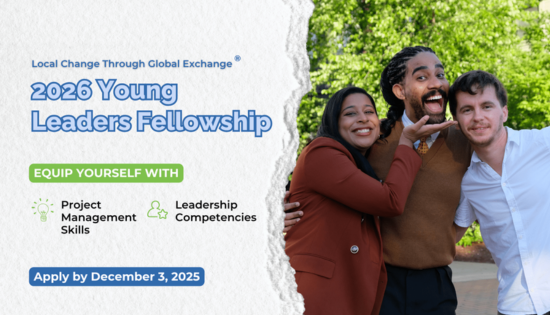
MCW Global Young Leaders Fellowship 2026
MCW Global (Miracle Corners of the World) runs a Young Leaders Fellowship, a year-long leadership program for young people (18–26) around the… -
Enhance Your Arabic Skills with the Intermediate Language Course at BCIS
BCIS invites learners to join its Intermediate Arabic Language Course this November and further develop both linguistic skills and cultural understanding. Designed… -
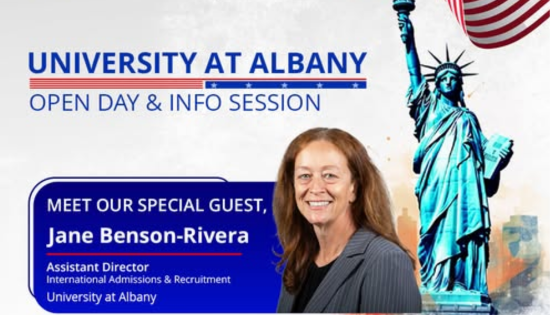
Achieve Your American Dream : NCHS Spring Intake Webinar
NCHS is paving the way for Sri Lankan students to achieve their American Dream. As Sri Lanka’s leading pathway provider to the… -
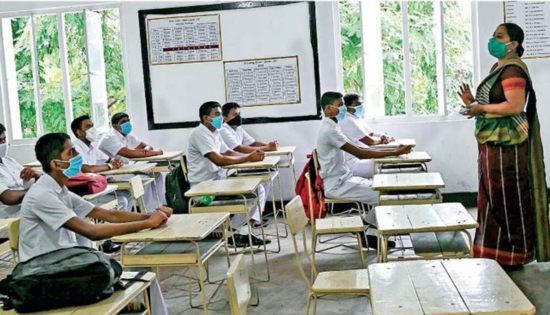
National Diploma in Teaching course : Notice
A Gazette notice has been released recently, concerning the enrollment of aspiring teachers into National Colleges of Education for the three-year pre-service… -
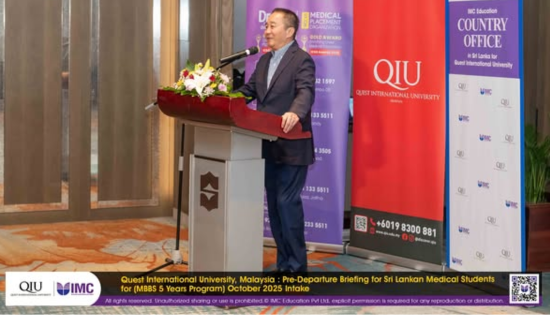
IMC Education Features Largest Student Recruitment for QIU’s October 2025 Intake
Quest International University (QIU), Malaysia recently hosted a pre-departure briefing and high tea at the Shangri-La Hotel in Colombo for its incoming… -

Global University Employability Ranking according to Times Higher Education
Attending college or university offers more than just career preparation, though selecting the right school and program can significantly enhance your job… -

Diploma in Occupational Safety & Health (DOSH) – CIPM
The Chartered Institute of Personnel Management (CIPM) is proud to announce the launch of its Diploma in Occupational Safety & Health (DOSH),… -
Small Grant Scheme for Australia Awards Alumni Sri Lanka
Australia Awards alumni are warmly invited to apply for a grant up to AUD 5,000 to support an innovative project that aim… -
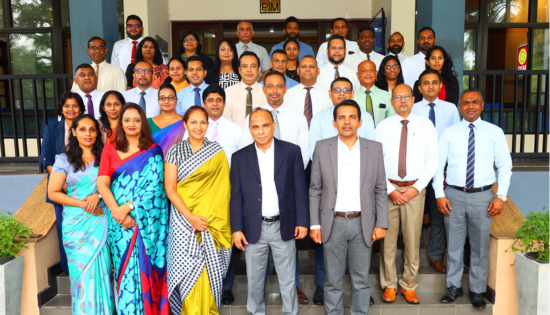
PIM Launches Special Programme for Newly Promoted SriLankan Airlines Managers
The Postgraduate Institute of Management (PIM) has launched a dedicated Newly Promoted Manager Programme designed to strengthen the leadership and management capabilities…
Newswire
-

Wanindu Hasaranga to return home from England series
ON: September 23, 2026 -
Vehicle revenue licence issuance temporarily suspended in 8 provinces
ON: September 23, 2026 -
Archchuna calls for end to racist comments targeting Tamil-Canadian Netflix star
ON: September 23, 2026 -

Parliamentary Committee proposes to streamline driving licences for disabled
ON: September 23, 2026 -
Heavy rains over 100mm expected across several provinces
ON: September 23, 2026