


Kafka’s world, our reality: The writer who predicted modern anxiety
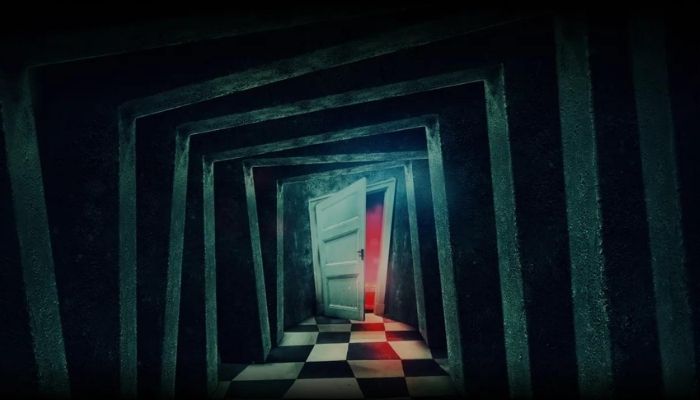
Imagine waking up one morning to discover you have transformed into a giant insect.
Or being arrested without ever being told what crime you committed.
Or spending your entire life trying to enter a mysterious institution that refuses to explain its rules.
These strange and unsettling situations define the fictional world of Franz Kafka, one of the most influential writers of the twentieth century. At first glance, his stories seem bizarre, almost dreamlike. Yet more than a hundred years after they were written, readers continue to find them remarkably familiar.
So familiar, in fact, that the English language has adopted an adjective based on his name.
Today, the word Kafkaesque describes situations that are confusing, irrational, oppressive, and seemingly impossible to escape. Whether struggling with endless bureaucracy, navigating automated systems, or feeling powerless in the face of institutions that never fully explain themselves, many people encounter moments that feel unmistakably Kafkaesque.
It is a remarkable legacy for a writer who believed much of his work should never have been read.
The author who almost disappeared from history
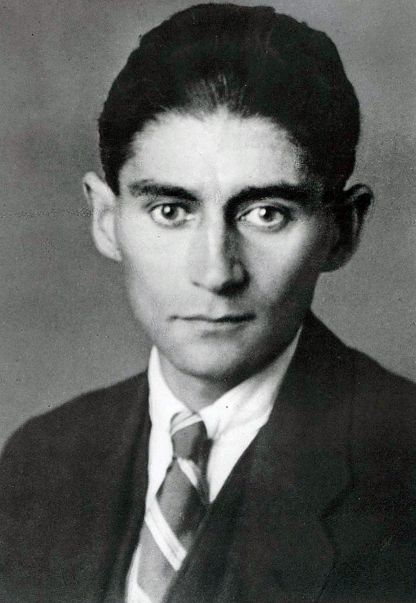
Franz Kafka was born in Prague in 1883, then part of the Austro-Hungarian Empire. During his lifetime, he worked as an insurance officer and published only a small number of stories. Outside literary circles, he remained largely unknown.
Before his death in 1924, Kafka instructed his closest friend, Max Brod, to destroy all of his unpublished manuscripts.
Brod refused.
Ignoring Kafka’s final request, he preserved and published unfinished novels including The Trial, The Castle, and Amerika. His decision changed the course of modern literature.
Today, Kafka is regarded as one of the most influential writers of the modern era, inspiring novelists, filmmakers, philosophers, psychologists, and political thinkers across the world.
More than strange stories
Kafka’s novels and short stories are filled with impossible events, but their true power lies beneath the surface.
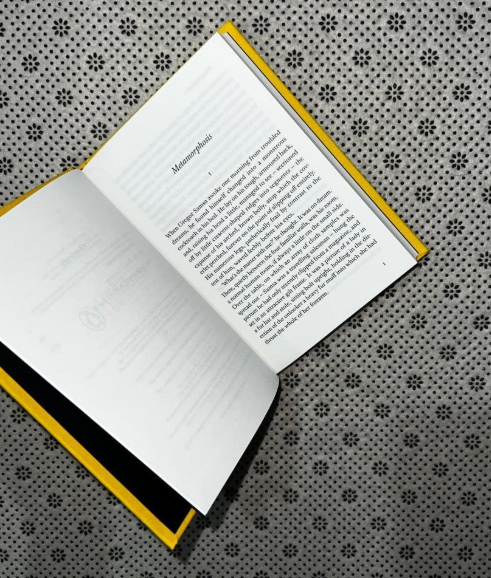
In The Metamorphosis, Gregor Samsa wakes to find himself transformed into a monstrous insect. Rather than explaining the transformation, Kafka explores its emotional consequences—alienation, rejection, and the gradual loss of identity.
In The Trial, Josef K. is arrested one morning without ever learning what law he has supposedly broken. He spends the rest of the novel trapped within an incomprehensible legal system that offers procedures but no answers.
In The Castle, a land surveyor struggles endlessly to gain access to the mysterious authorities who control the village, only to find himself caught in an endless maze of bureaucracy and miscommunication.
These stories are not simply fantasies.
They are explorations of anxiety, powerlessness, uncertainty, and the search for meaning in systems that often seem indifferent to the individual.
The birth of “Kafkaesque”
Few authors have given the world an adjective based on their name.
Today, “Kafkaesque” is used to describe situations that feel absurdly complicated, illogical, or oppressive.
Imagine trying to solve a simple administrative problem but being passed from one office to another without explanation. Picture spending hours navigating automated phone menus, filling out endless online forms, or receiving decisions made by systems that offer no clear reasoning.
The process becomes confusing, frustrating, and strangely impersonal.
That is Kafkaesque.
Political scientists, lawyers, and sociologists frequently use the term to describe bureaucratic systems where individuals feel trapped by rules they neither understand nor control.
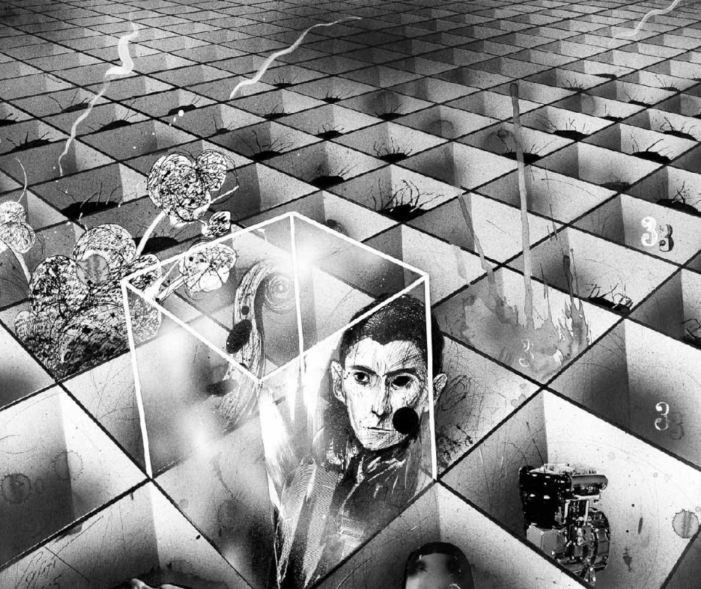
The writer who predicted modern anxiety
Although Kafka died decades before computers, smartphones, and artificial intelligence, many readers believe his work anticipated aspects of modern life with astonishing accuracy.
Today, people routinely interact with invisible algorithms that decide what news they read, which advertisements they see, and sometimes even whether they qualify for loans or job interviews.
Customer service is increasingly handled by automated systems.
Government and corporate procedures often involve digital forms, verification processes, passwords, and online portals that can leave users feeling confused and powerless.
Social media has also introduced new forms of anxiety, where individuals often feel constantly observed, evaluated, or pressured to meet invisible expectations.
While Kafka never imagined today’s technology, he understood something timeless about the human experience: the anxiety that arises when individuals confront systems too vast or complex to fully understand.
Literature that asks difficult questions
Kafka’s enduring influence extends beyond literature because his stories raise questions that remain relevant today.
What happens when institutions become more important than individuals?
How do people preserve their identity in an increasingly complex world?
Can justice exist without transparency?
What does freedom mean when people are surrounded by rules they did not create?
These are questions explored not only in literature classes but also in philosophy, psychology, law, political science, and sociology.
Rather than providing easy answers, Kafka encourages readers to confront uncertainty itself.
A voice for every generation
Students continue studying Kafka because every generation discovers something new in his work.
Readers living through political upheaval see warnings about authoritarianism.
Psychologists recognise themes of anxiety, isolation, and identity.
Office workers recognise bureaucracy.
Technology experts see parallels with algorithms and digital systems.
Young people navigating an increasingly complicated world often recognise the uncertainty felt by Kafka’s characters.
His stories remain relevant because they speak to emotions that transcend time and place.
An unfinished legacy
Ironically, the writer who wanted many of his manuscripts destroyed became one of the defining voices of modern literature.
His unfinished novels continue to be translated into dozens of languages, adapted into films and theatre productions, and studied in universities around the world.
Perhaps Kafka’s greatest achievement was not predicting the future.
It was understanding something fundamental about the human condition.
Life is often uncertain.
Systems are not always fair.
People frequently search for answers they never receive.
Yet they continue searching.
More than a century after Franz Kafka put pen to paper, the world has become more connected, more digital, and more complex than he could ever have imagined.
And still, there are days when reality feels strangely Kafkaesque.
That may be the clearest sign that Kafka’s world has become, in many ways, our own.
Sources
- The Metamorphosis
- The Trial
- The Castle
- Franz Kafka
- Encyclopaedia Britannica – Franz Kafka
- The British Library – Franz Kafka collections and essays
- Stanford Encyclopedia of Philosophy – Kafka and existential thought
- Oxford Reference – Kafka’s influence on modern literature
- Penguin Classics – Critical introductions to Kafka’s works
Related News
Mrs. Nimala Perera; A Treasure Trove and the Heart of St. Joseph’s College, Colombo 10.
By : Guruji Ravindhiran Maruthai Mrs. Nimala Perera, a renowned educator of the hallowed educational institutionSt. Joseph’s College, Colombo 10, Sri Lanka,celebrates…
Read More
Online admission cards released for 2026 A/L Biosystems Technology Practical Exams
Candidates appearing for the 2026 G.C.E. Advanced Level Biosystems Technology practical examinations can download their admission cards from the official Department of…
Read MoreGovt to renew MoU with Asia Pacific Body to elevate vocational training
The Cabinet of Ministers has approved a proposal to renew the Memorandum of Understanding (MoU) between Sri Lanka’s Tertiary and Vocational Education…
Read MorePM inaugurates ‘Sittam 2026’ Art Exhibition under ‘Kolomtota Abhinandana’ initiative
In parallel with the National Literary and Arts Festival, Prime Minister Dr. Harini Amarasuriya opened the 'Sittam 2026' art exhibition on October…
Read MoreKorean Association pledges medical aid and special needs youth programme for Sri Lanka
The Korean Volunteer Association for Distinguished Service to the State is organizing an 11-day programme for next year aimed at identifying and…
Read MoreCourses
-

The future of higher education tech: why industry needs purpose-built solutions
For years, Institutions and education agencies have been forced to rely on a patchwork of horizontal SaaS solutions – general tools that… -

MBA in Project Management & Artificial Intelligence – Oxford College of Business
In an era defined by rapid technological change, organizations increasingly demand leaders who not only understand traditional project management, but can also… -

Scholarships for 2025 Postgraduate Diploma in Education for SLEAS and SLTES Officers
The Ministry of Education, Higher Education and Vocational Education has announced the granting of full scholarships for the one-year weekend Postgraduate Diploma… -
Shape Your Future with a BSc in Business Management (HRM) at Horizon Campus
Human Resource Management is more than a career. It’s about growing people, building organizational culture, and leading with purpose. Every impactful journey… -
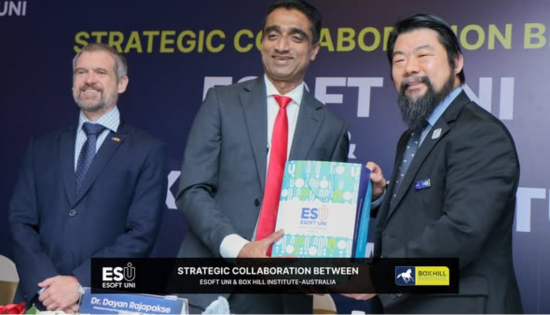
ESOFT UNI Signs MoU with Box Gill Institute, Australia
ESOFt UNI recently hosted a formal Memorandum of Understanding (MoU) signing ceremony with Box Hill Institute, Australia, signaling a significant step in… -

Ace Your University Interview in Sri Lanka: A Guide with Examples
Getting into a Sri Lankan sate or non-state university is not just about the scores. For some universities' programmes, your personality, communication… -
MCW Global Young Leaders Fellowship 2026
MCW Global (Miracle Corners of the World) runs a Young Leaders Fellowship, a year-long leadership program for young people (18–26) around the… -
Enhance Your Arabic Skills with the Intermediate Language Course at BCIS
BCIS invites learners to join its Intermediate Arabic Language Course this November and further develop both linguistic skills and cultural understanding. Designed… -
Achieve Your American Dream : NCHS Spring Intake Webinar
NCHS is paving the way for Sri Lankan students to achieve their American Dream. As Sri Lanka’s leading pathway provider to the… -
National Diploma in Teaching course : Notice
A Gazette notice has been released recently, concerning the enrollment of aspiring teachers into National Colleges of Education for the three-year pre-service… -
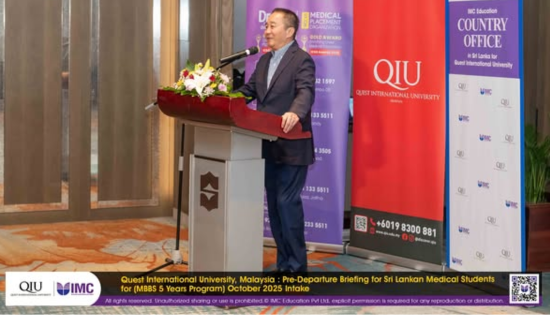
IMC Education Features Largest Student Recruitment for QIU’s October 2025 Intake
Quest International University (QIU), Malaysia recently hosted a pre-departure briefing and high tea at the Shangri-La Hotel in Colombo for its incoming… -

Global University Employability Ranking according to Times Higher Education
Attending college or university offers more than just career preparation, though selecting the right school and program can significantly enhance your job… -

Diploma in Occupational Safety & Health (DOSH) – CIPM
The Chartered Institute of Personnel Management (CIPM) is proud to announce the launch of its Diploma in Occupational Safety & Health (DOSH),… -
Small Grant Scheme for Australia Awards Alumni Sri Lanka
Australia Awards alumni are warmly invited to apply for a grant up to AUD 5,000 to support an innovative project that aim… -
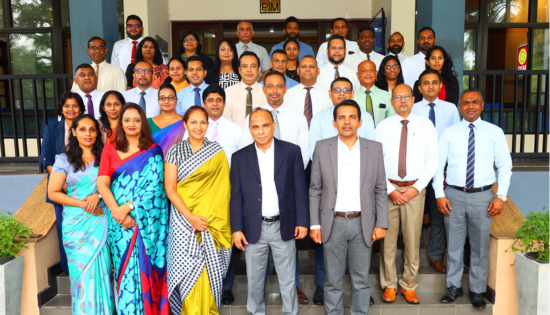
PIM Launches Special Programme for Newly Promoted SriLankan Airlines Managers
The Postgraduate Institute of Management (PIM) has launched a dedicated Newly Promoted Manager Programme designed to strengthen the leadership and management capabilities…
Newswire
-
St. Joseph’s College Honours Mrs Nimala Perera’s Five Decades of Service
ON: October 14, 2026 -
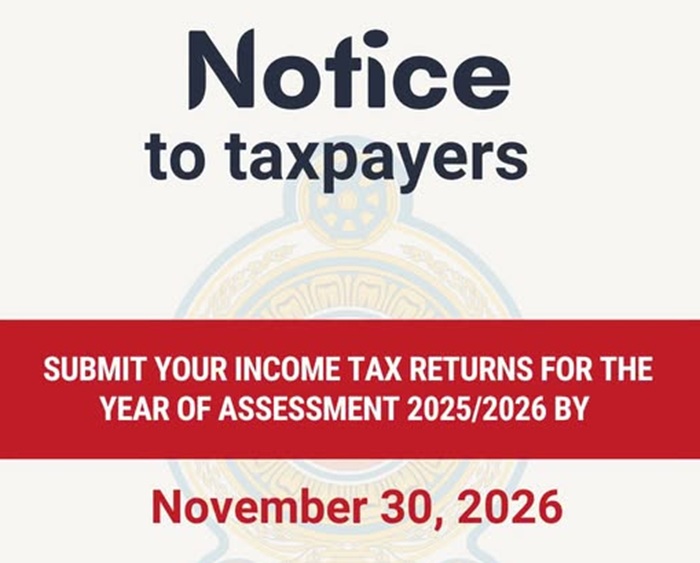
Taxpayers reminded to submit income tax returns by November 30
ON: October 14, 2026 -
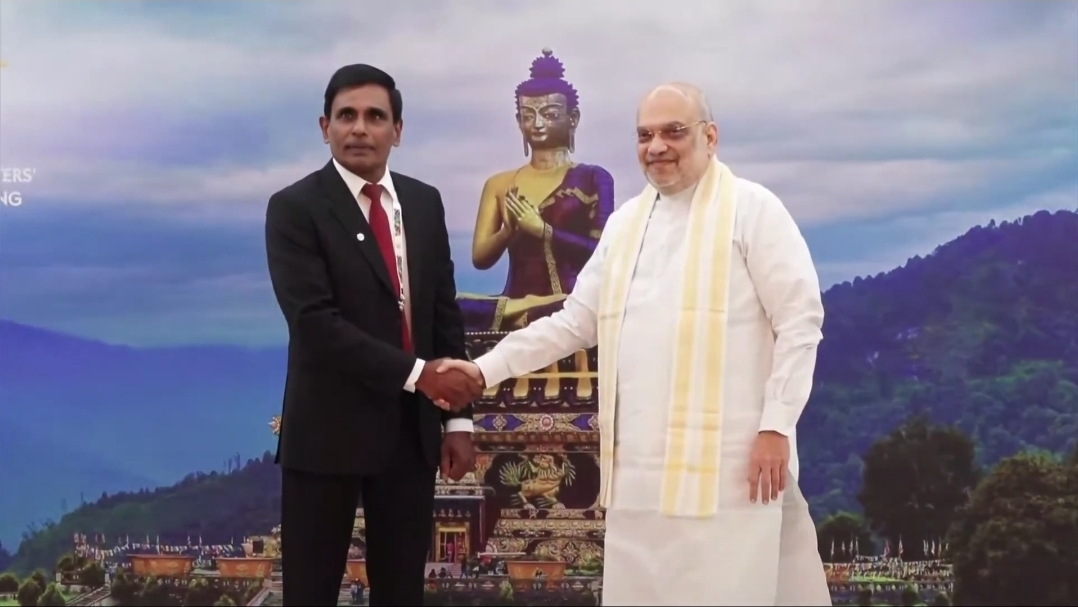
Sri Lanka joins first BIMSTEC Home Ministers’ Meeting in India
ON: October 14, 2026 -
PM hails Sri Lanka’s $9 Bn export performance in first half of 2026
ON: October 14, 2026 -
New prison rules proposed to allow Buddhist monks to wear robes outside prison
ON: October 14, 2026