




Outdated Exams in a Digital Age: It’s Time to Rethink How We Measure Students

In 2025, a student can speak to an AI and get a clear, concise explanation of quantum physics in seconds. Yet, in schools and universities around the world, we still ask students to memorise the definition of Newton’s Laws and reproduce them in timed exam halls as if nothing has changed in the last hundred years.
It’s time we addressed the elephant in the classroom: our methods of student assessment are fundamentally outdated. The emphasis on memory based examinations made sense in an era when access to information was difficult, knowledge was scarce, and success depended on how much a person could retain. But in today’s information saturated world, where data is more accessible than ever, this approach no longer serves students, educators, or society.
Let’s be honest: memorisation is not understanding. A student might memorise a list of economic theories and score an ‘A’ on an exam, but that doesn’t mean they understand how to apply those theories in a real-world scenario such as during a national crisis or in advising a business. What matters today is not how much one remembers, but how well one can apply, adapt, evaluate, and solve problems using available information and tools.
And yes those tools now include artificial intelligence.
Just as calculators were once feared as the ‘death of mathematics’ (and later became essential learning aids), AI is often unfairly viewed as a shortcut or even a threat in education. But we must recognise this for what it is: fear of change, not reasoned critique. In reality, the ability to collaborate with AI to gather insights, improve productivity, and generate new ideas is rapidly becoming a core skill one that should be taught, nurtured, and evaluated.
Let’s consider the working world. Who gets ahead in a workplace? Is it the person who remembers the most facts? Or is it the one who can problem-solve under pressure, seek out the right resources, and deliver solutions efficiently? Employers consistently value adaptability, communication skills, initiative, and smart use of tools over outdated notions of who ‘knows the most.’
Why then, do we continue to test students as though they’re competing to be walking encyclopaedias?
In the professional world, there is no exam. There is performance. There is impact. The faster and more effectively someone can solve a problem even with help the more valuable they are. Students should be assessed on the same principles. Can they apply knowledge in unfamiliar situations? Can they collaborate, innovate, and evolve their thinking when new information is introduced? Can they use tools, including AI, ethically and effectively?
Traditional exams are not just outdated they’re harmful. They reward short-term cramming, not long-term learning. They create anxiety, stifle creativity, and often disadvantage students who may be brilliant thinkers but poor memorisers. Worse, they promote a system where learning is seen as a means to an end passing a test rather than a lifelong process of growth.
By contrast, project-based assessments, open-book exams, group tasks, research portfolios, and real-world simulations offer a more accurate and fair measure of what a student can actually do with what they’ve learned. These approaches better reflect how the world works outside the classroom.
We’re already seeing some progressive education systems adopt these models. Countries like Finland have long prioritised creativity and application over rote memorisation, and the results speak for themselves. Their students routinely rank among the highest in global education benchmarks not because they memorise more, but because they understand more and use it better.
We must stop treating knowledge as something to be hoarded and regurgitated. It’s not about what you know anymore it’s about how you think. Can you question, investigate, and apply knowledge? Can you learn new things on your own? Can you stay curious, even after the test is over?
These are the real measures of intelligence and success in today’s world. And these are the qualities our assessments should be designed to identify and nurture.
The future belongs to those who can learn, unlearn, and relearn quickly, ethically, and with purpose. It’s time our education systems caught up.
Let us not prepare students to succeed in the past. Let us prepare them to shape the future.
Chathura Kotagama is a senior administrator in private higher education and an advocate for student wellbeing and systemic reform in Sri Lanka’s education sector. He writes on leadership, mental health, and education policy.
Related News

How CIMA Builds Practical Business and Problem Solving Skills for the Real…
For students considering what to study after school or alongside a university degree, one question matters more than ever: will the qualification…
Read More
CIMA Beyond Accounting: Why Business Skills Matter for the Next Generation
For many Sri Lankan students, completing school brings one major question: what qualification should come next? A bachelor’s degree remains an important…
Read More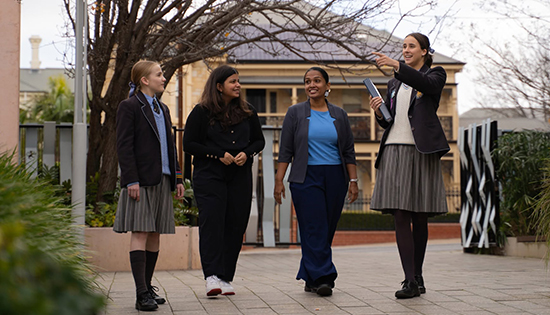
Gateway College and Wilderness School Australia Launch Teacher Exchange Programme
Students of Wilderness School were most welcoming to the teachers of Gateway Gateway College is pleased to announce the establishment of a…
Read More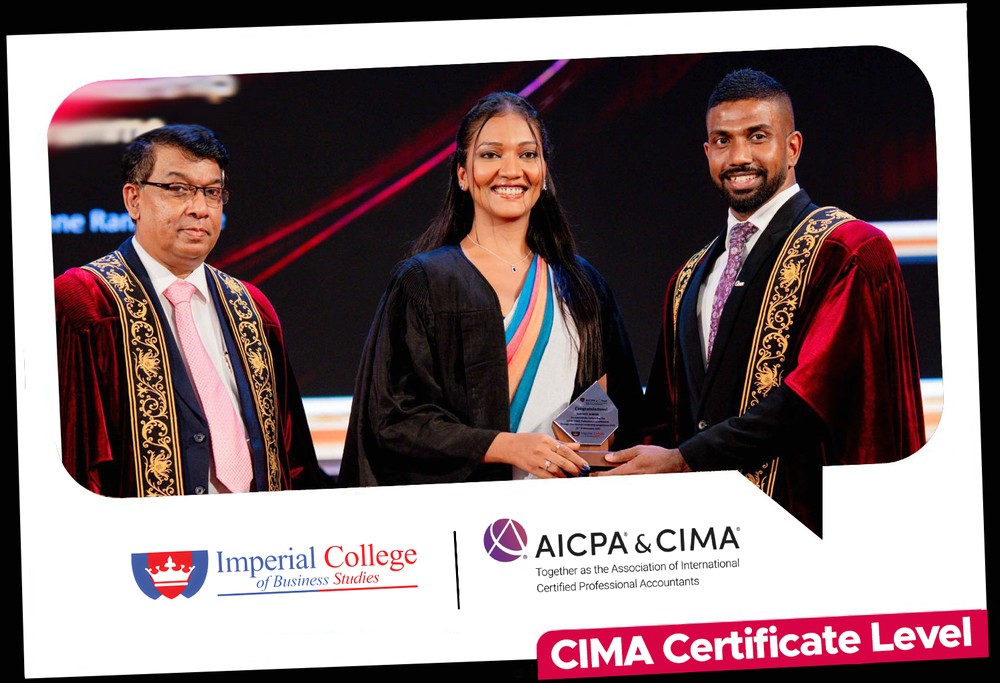
Imperial Announces CIMA Certificate Intake with 50% Off Class Fees
Imperial College of Business Studies (ICBS) will commence its latest CIMA Certificate Level intake on 19 September 2026, with weekday and weekend…
Read More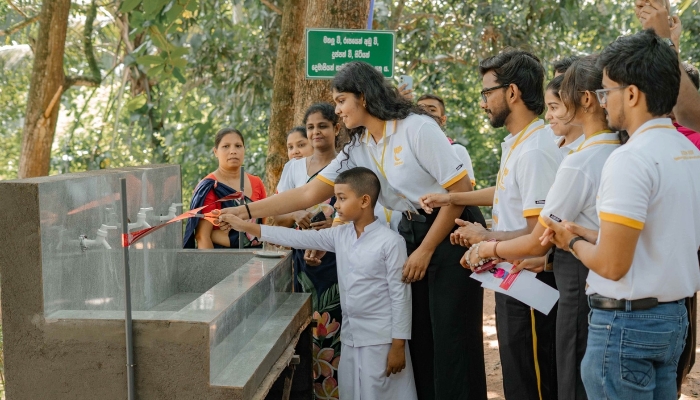
AIESEC in Colombo North and Rotaract Colombo Mid Town Introduce CSR Project: Bloom 2026
Following the success of its first chapter, Bloom returns in 2026 with a renewed vision, focusing on Galaha Divisional Hospital and the…
Read MoreCourses
-
The future of higher education tech: why industry needs purpose-built solutions
For years, Institutions and education agencies have been forced to rely on a patchwork of horizontal SaaS solutions – general tools that… -

MBA in Project Management & Artificial Intelligence – Oxford College of Business
In an era defined by rapid technological change, organizations increasingly demand leaders who not only understand traditional project management, but can also… -

Scholarships for 2025 Postgraduate Diploma in Education for SLEAS and SLTES Officers
The Ministry of Education, Higher Education and Vocational Education has announced the granting of full scholarships for the one-year weekend Postgraduate Diploma… -
Shape Your Future with a BSc in Business Management (HRM) at Horizon Campus
Human Resource Management is more than a career. It’s about growing people, building organizational culture, and leading with purpose. Every impactful journey… -
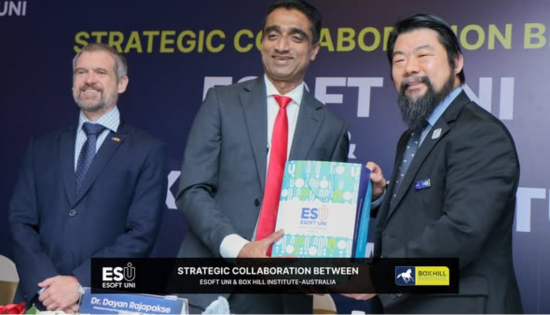
ESOFT UNI Signs MoU with Box Gill Institute, Australia
ESOFt UNI recently hosted a formal Memorandum of Understanding (MoU) signing ceremony with Box Hill Institute, Australia, signaling a significant step in… -

Ace Your University Interview in Sri Lanka: A Guide with Examples
Getting into a Sri Lankan sate or non-state university is not just about the scores. For some universities' programmes, your personality, communication… -
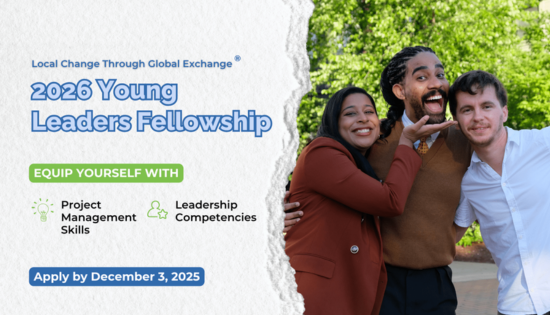
MCW Global Young Leaders Fellowship 2026
MCW Global (Miracle Corners of the World) runs a Young Leaders Fellowship, a year-long leadership program for young people (18–26) around the… -
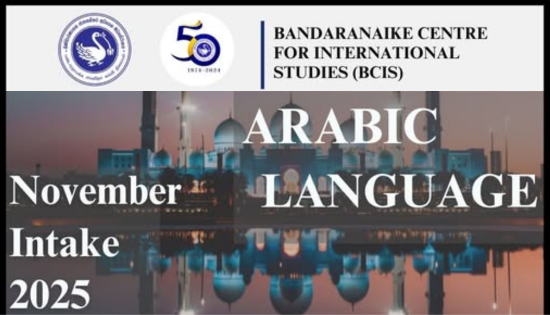
Enhance Your Arabic Skills with the Intermediate Language Course at BCIS
BCIS invites learners to join its Intermediate Arabic Language Course this November and further develop both linguistic skills and cultural understanding. Designed… -
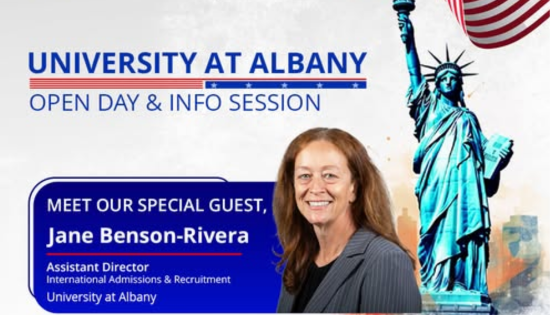
Achieve Your American Dream : NCHS Spring Intake Webinar
NCHS is paving the way for Sri Lankan students to achieve their American Dream. As Sri Lanka’s leading pathway provider to the… -
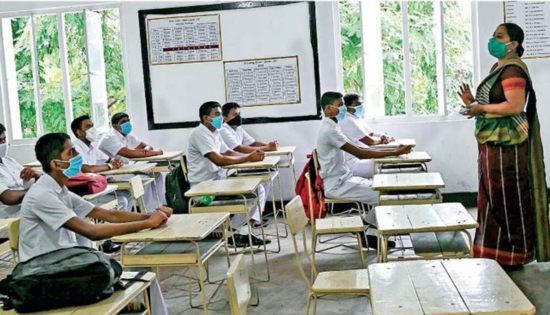
National Diploma in Teaching course : Notice
A Gazette notice has been released recently, concerning the enrollment of aspiring teachers into National Colleges of Education for the three-year pre-service… -
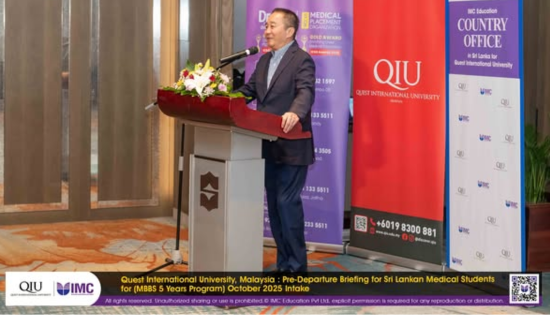
IMC Education Features Largest Student Recruitment for QIU’s October 2025 Intake
Quest International University (QIU), Malaysia recently hosted a pre-departure briefing and high tea at the Shangri-La Hotel in Colombo for its incoming… -
Global University Employability Ranking according to Times Higher Education
Attending college or university offers more than just career preparation, though selecting the right school and program can significantly enhance your job… -

Diploma in Occupational Safety & Health (DOSH) – CIPM
The Chartered Institute of Personnel Management (CIPM) is proud to announce the launch of its Diploma in Occupational Safety & Health (DOSH),… -
Small Grant Scheme for Australia Awards Alumni Sri Lanka
Australia Awards alumni are warmly invited to apply for a grant up to AUD 5,000 to support an innovative project that aim… -
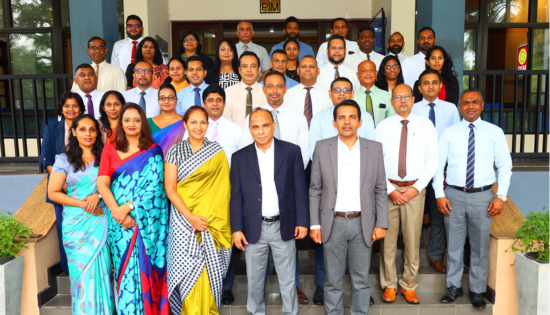
PIM Launches Special Programme for Newly Promoted SriLankan Airlines Managers
The Postgraduate Institute of Management (PIM) has launched a dedicated Newly Promoted Manager Programme designed to strengthen the leadership and management capabilities…
Newswire
-
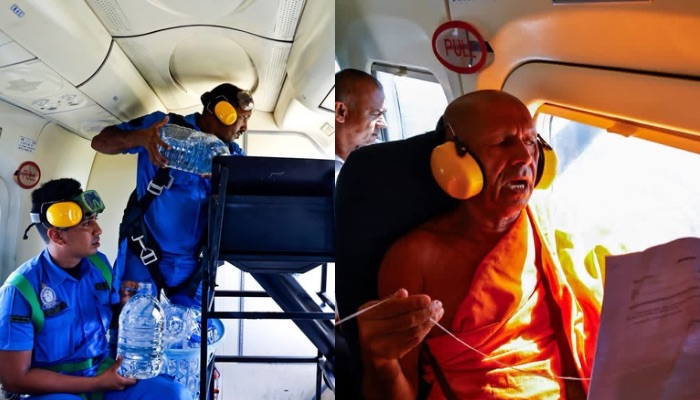
SLAF disperses Pirith water from aircraft in prayer for rain
ON: September 20, 2026 -

Severe flood warning issued for Mahaweli River in Pasbage Korale
ON: September 20, 2026 -
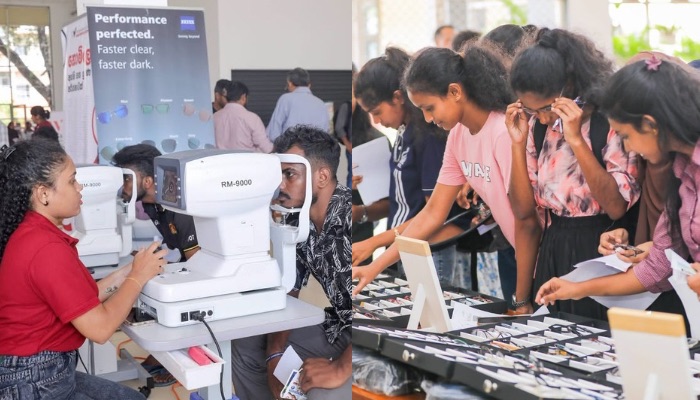
Free spectacles, hearing aids programme launched for university students
ON: September 20, 2026 -
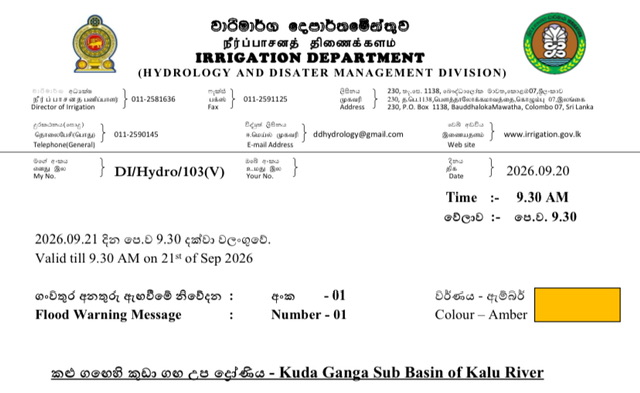
Flood warning issued for Kuda Ganga sub-basin amid heavy rain
ON: September 20, 2026 -

Norwood probe uncovers Sri Lanka’s largest Aswesuma fraud yet
ON: September 20, 2026