


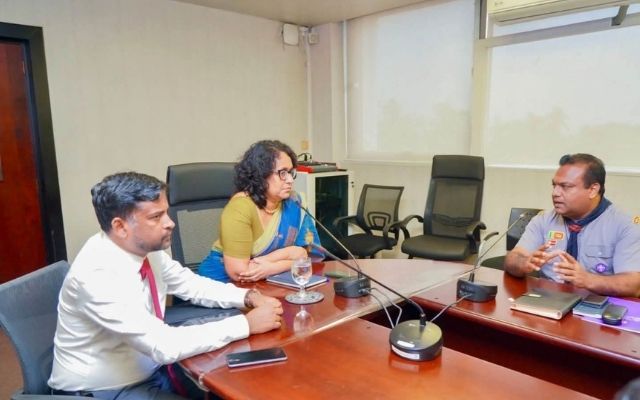


Can AI become a learning partner instead of a shortcut?

Artificial intelligence tools such as ChatGPT, Grammarly, Gemini, and Microsoft Copilot are rapidly becoming part of student life across the world, including in Sri Lanka. While concerns about plagiarism and overreliance remain strong, education researchers are increasingly exploring a different question: can AI improve learning when used responsibly?
Research published by universities and education institutes in countries including the United States, Singapore, Australia, and the United Kingdom suggests that AI tools can support brainstorming, language development, personalised revision, and research guidance. Some researchers argue that AI may support more independent learning when combined with proper digital literacy and teacher guidance.

For students learning English as a second language, AI tools may assist with grammar feedback, vocabulary development, summarising complex texts, and improving confidence in academic writing. This has particular relevance in Sri Lanka, where many students continue to face challenges adapting to English-medium academic environments.
However, educators and researchers have also raised concerns about excessive dependence on AI-generated responses. Experts warn that overreliance on such tools could reduce opportunities for students to practise independent reasoning, creativity, and academic inquiry skills.
Universities in countries such as Australia, the United Kingdom, and the United States have also begun redesigning assessments in response to generative AI technologies. Greater emphasis is increasingly being placed on oral presentations, reflective writing, classroom discussions, and project-based evaluations that are more difficult to outsource entirely to AI systems.

Another major concern is misinformation. AI systems can sometimes generate inaccurate, misleading, or fabricated information confidently. Researchers therefore stress the importance of teaching students how to verify sources, cross-check information, and identify bias when using AI-assisted tools.
Discussions surrounding AI use in education are also growing within Sri Lanka’s education sector as these technologies become more accessible through smartphones and affordable internet access. Some education experts argue that completely banning AI tools may be impractical. Instead, attention may need to focus on responsible integration, ethical use, and strengthening digital critical thinking skills among students.
The future of education may not depend on competing against AI, but on learning how to use it responsibly and effectively within the learning process.
Sources: UNESCO, “Guidance for Generative AI in Education and Research” (2023); OECD, “Trends Shaping Education 2025”; Harvard Graduate School of Education articles on AI and student learning (2024–2025); Times Higher Education coverage on AI and university assessment changes.
Related News
Education ministry allocated Rs. 328 bn in Appropriation Bill 2027
The Ministry of Education, Higher Education and Vocational Education has been allocated Rs. 328 billion under Appropriation Bill 2027, which has been…
Read MoreNew subject on entrepreneurship and financial literacy for Grade 6 from 2027: PM
Prime Minister Dr. Harini Amarasuriya has announced a new subject focusing on entrepreneurship and financial literacy will be introduced for Grade 6…
Read More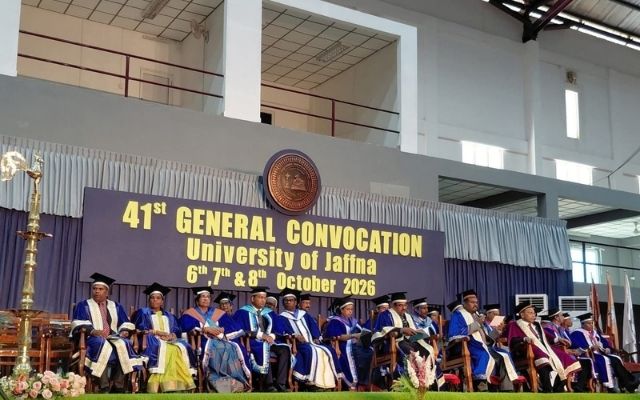
University of Jaffna commences 41st General Convocation across nine sessions
The 41st General Convocation of the University of Jaffna commenced grandly at the University Indoor Stadium on October 6 led by the…
Read MorePM pledges full education ministry support to popularise scout movement at grassroots level
Prime Minister and Minister of Education Dr. Harini Amarasuriya has agreed to extend the full support of the Education Ministry to implement…
Read MoreOver 100 Sri Lankan students receive scholarships to study in Russia
More than 100 Sri Lankan students have been selected for higher education in Russia this year under the Russian State Scholarship Programme…
Read MoreCourses
-

The future of higher education tech: why industry needs purpose-built solutions
For years, Institutions and education agencies have been forced to rely on a patchwork of horizontal SaaS solutions – general tools that… -

MBA in Project Management & Artificial Intelligence – Oxford College of Business
In an era defined by rapid technological change, organizations increasingly demand leaders who not only understand traditional project management, but can also… -

Scholarships for 2025 Postgraduate Diploma in Education for SLEAS and SLTES Officers
The Ministry of Education, Higher Education and Vocational Education has announced the granting of full scholarships for the one-year weekend Postgraduate Diploma… -

Shape Your Future with a BSc in Business Management (HRM) at Horizon Campus
Human Resource Management is more than a career. It’s about growing people, building organizational culture, and leading with purpose. Every impactful journey… -
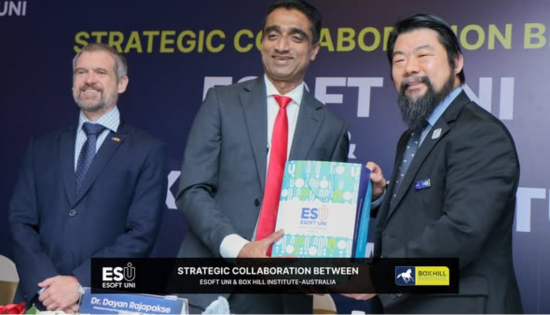
ESOFT UNI Signs MoU with Box Gill Institute, Australia
ESOFt UNI recently hosted a formal Memorandum of Understanding (MoU) signing ceremony with Box Hill Institute, Australia, signaling a significant step in… -

Ace Your University Interview in Sri Lanka: A Guide with Examples
Getting into a Sri Lankan sate or non-state university is not just about the scores. For some universities' programmes, your personality, communication… -
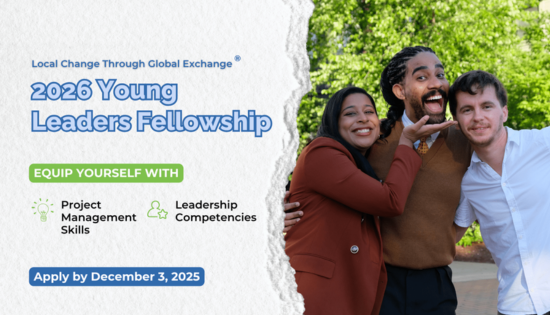
MCW Global Young Leaders Fellowship 2026
MCW Global (Miracle Corners of the World) runs a Young Leaders Fellowship, a year-long leadership program for young people (18–26) around the… -
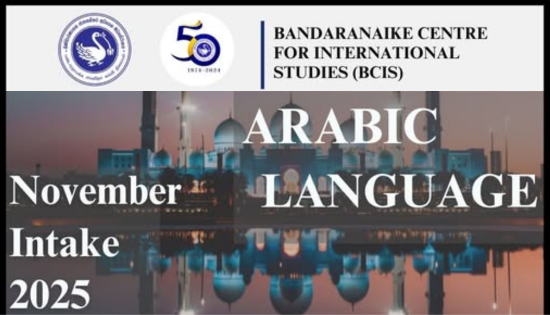
Enhance Your Arabic Skills with the Intermediate Language Course at BCIS
BCIS invites learners to join its Intermediate Arabic Language Course this November and further develop both linguistic skills and cultural understanding. Designed… -
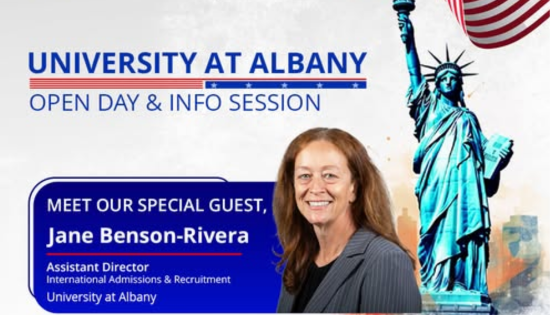
Achieve Your American Dream : NCHS Spring Intake Webinar
NCHS is paving the way for Sri Lankan students to achieve their American Dream. As Sri Lanka’s leading pathway provider to the… -
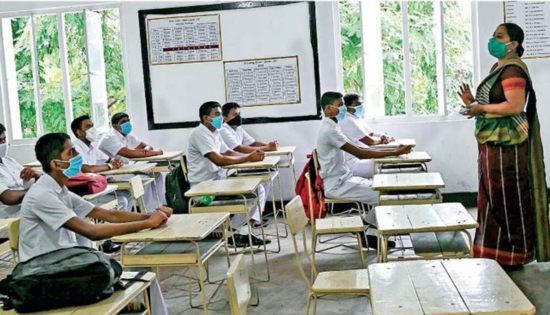
National Diploma in Teaching course : Notice
A Gazette notice has been released recently, concerning the enrollment of aspiring teachers into National Colleges of Education for the three-year pre-service… -
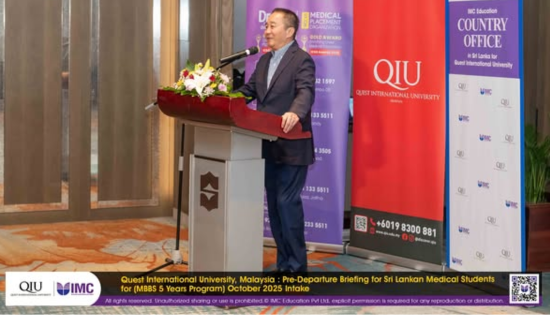
IMC Education Features Largest Student Recruitment for QIU’s October 2025 Intake
Quest International University (QIU), Malaysia recently hosted a pre-departure briefing and high tea at the Shangri-La Hotel in Colombo for its incoming… -

Global University Employability Ranking according to Times Higher Education
Attending college or university offers more than just career preparation, though selecting the right school and program can significantly enhance your job… -

Diploma in Occupational Safety & Health (DOSH) – CIPM
The Chartered Institute of Personnel Management (CIPM) is proud to announce the launch of its Diploma in Occupational Safety & Health (DOSH),… -
Small Grant Scheme for Australia Awards Alumni Sri Lanka
Australia Awards alumni are warmly invited to apply for a grant up to AUD 5,000 to support an innovative project that aim… -
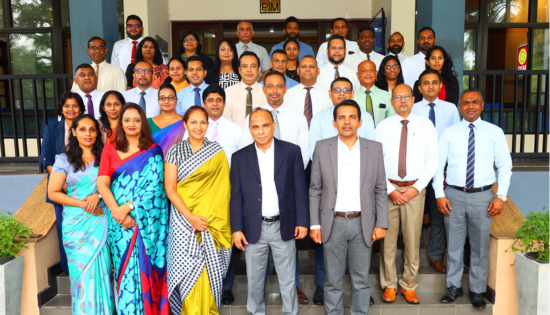
PIM Launches Special Programme for Newly Promoted SriLankan Airlines Managers
The Postgraduate Institute of Management (PIM) has launched a dedicated Newly Promoted Manager Programme designed to strengthen the leadership and management capabilities…
Newswire
-

Police freeze Rs. 35 million gym in major drug trafficking investigation
ON: October 8, 2026 -

SLS standards to be introduced for preschools across Sri Lanka in 2027
ON: October 8, 2026 -

Former Akmeemana Pradeshiya Sabha chairman sentenced to three years RI
ON: October 8, 2026