

Is Gen Z Really “Less Intelligent” Than Millennials?
What the Science Actually Says

Headlines claiming that Gen Z is the first generation to be less intelligent than Millennials have sparked concern, debate, and more than a few social media arguments. But how much truth is there behind this claim, and what do researchers actually mean when they talk about intelligence?
Let’s break it down.
Where Did This Claim Come From?
The discussion gained attention after neuroscientist Dr Jared Cooney Horvath stated that recent generations, particularly Gen Z, show lower performance on certain cognitive tests compared to Millennials at the same age. His remarks were shared widely across international media, often simplified into headlines suggesting that Gen Z is “less intelligent.”
However, experts agree that these headlines tell only part of the story.

What Do Studies Actually Show?
Several large-scale studies from countries such as Norway, the UK, and the United States suggest that average scores on some traditional IQ and cognitive tests have slightly declined since the 1990s. These drops are small, usually around 2 to 4 IQ points and are linked mainly to skills like:
- Verbal reasoning
- Mental arithmetic
- Sustained attention
This trend is sometimes referred to as the “reverse Flynn effect,” meaning that the steady rise in IQ scores seen throughout the 20th century has slowed or reversed in some regions.
Does This Mean Gen Z Is Less Intelligent?
Not necessarily.
Psychologists and cognitive scientists stress that IQ scores are not the same as intelligence itself. IQ tests measure specific skills, many of which are shaped by schooling, reading habits, and test-taking familiarity. They do not capture creativity, digital fluency, adaptability, or problem-solving in modern, real-world contexts.
In fact, some studies show that Gen Z performs better in areas like visual-spatial reasoning, which is linked to navigating digital environments, gaming, and fast-paced information processing.
The Role of Technology and Lifestyle
Researchers suggest that changes in how young people learn and think may be influencing test results. Factors often discussed include:
- Increased screen time
- Shorter attention cycles
- Reduced emphasis on memorisation
- Changes in reading habits
Importantly, experts argue that these shifts reflect changes in cognitive style, not cognitive decline.
As one researcher noted, younger generations may simply be “less trained for traditional tests” rather than less capable overall.
What Experts Want Us to Remember

- The differences in test scores are small, not dramatic
- Individual differences within generations are far greater than differences between generations
- Intelligence is multi-dimensional and evolves with society
Many educators and psychologists caution against labelling an entire generation based on narrow metrics.
So, what is the Real Takeaway?
Rather than asking whether Gen Z is “less intelligent,” a better question might be:
Are we still measuring intelligence in ways that match today’s world?
Gen Z has grown up in a digital, fast-changing environment that rewards flexibility, multitasking, and information navigation, skills that traditional IQ tests were never designed to measure.
Final Thought
Science does not support the idea that Gen Z is inherently less intelligent than Millennials. What it does suggest is that intelligence is changing shape, and education systems may need to adapt how they teach and assess young minds.
Sources
Bratsberg, B., & Rogeberg, O. (2018). Flynn effect and its reversal are both environmentally caused. Proceedings of the National Academy of Sciences (PNAS).
Dworak, E. M., Revelle, W., Doebler, P., & Condon, D. M. (2023). A review of the Flynn effect and its reversal. Intelligence Journal.
Flynn, J. R. (2007). What Is Intelligence? Beyond the Flynn Effect. Cambridge University Press.
Pietschnig, J., & Voracek, M. (2015). One century of global IQ gains: A formal meta-analysis of the Flynn effect. Perspectives on Psychological Science.
Ritchie, S. J. (2015). Intelligence: All That Matters. Hodder & Stoughton.
Horvath, J. C. (2024–2026). Public statements and testimony on generational cognitive trends and educational technology use (U.S. Senate hearing; interviews reported by international media).
Intelligence Journal; Brain Sciences Journal; Proceedings of the National Academy of Sciences (PNAS) – multiple peer-reviewed studies on generational cognitive trends.
Related News
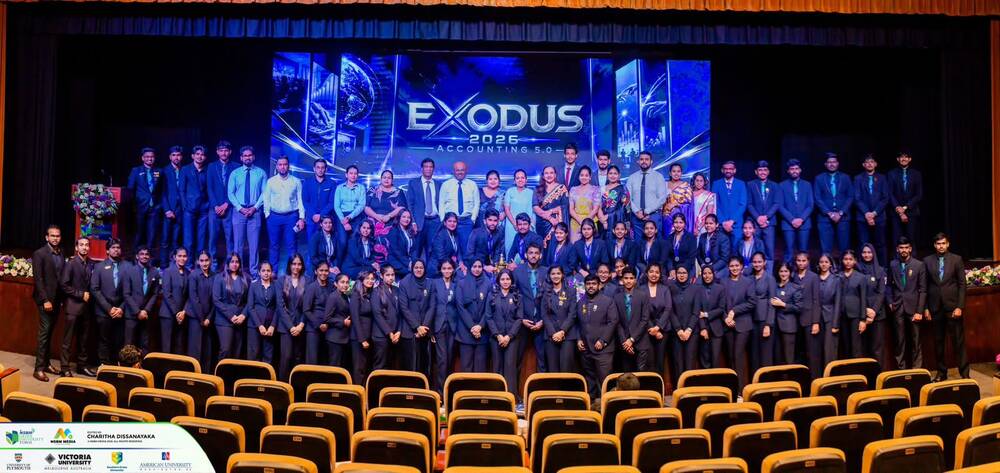
EXODUS’26 : A Remarkable Journey of Talent, Strategy and Excellence
The Students’ Circle of Accounting and Finance (SCAF) of NSBM Green University successfully concluded EXODUS’26–Annual Accounting Day on 29 September 2026, marking…
Read More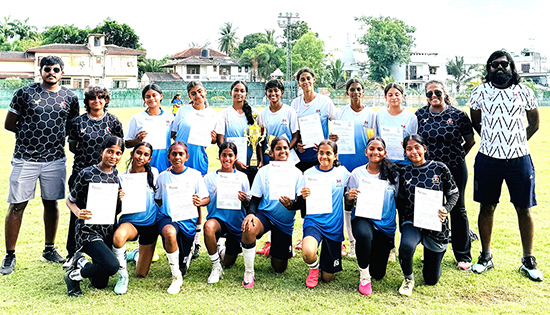
Gateway College Girls Crowned TISSL Under-18 Football Champions After Unbeaten Run
Under 18 ChampionsStanding Order Left to Right – Mr Rafaah Suhail (Coach), Ms Sahani Fernando (Coach), Brianna Perera, Tasneem Malik, KenuliAbeygunawardhane (Vice…
Read MoreGateway students win multiple medals at inaugural Commonwealth Schools Chess Championship
Three students from the Gateway Group of Colleges have won multiple individual and team medals at the inaugural Commonwealth Schools Chess Championship,…
Read More
Sri Lanka commemorates 142nd birth anniversary of C.W.W. Kannangara
The 142nd birth anniversary of Dr. Christopher William Wijekoon Kannangara, revered as the "Father of Free Education" in Sri Lanka, was commemorated…
Read MoreSLT-MOBITEL Nebula Institute showcases tech-focused degrees at EDEX mid-year expo 2026
The SLT-MOBITEL Nebula Institute of Technology showcased its comprehensive range of career oriented higher education programmes and professional training pathways at the…
Read MoreCourses
-

The future of higher education tech: why industry needs purpose-built solutions
For years, Institutions and education agencies have been forced to rely on a patchwork of horizontal SaaS solutions – general tools that… -

MBA in Project Management & Artificial Intelligence – Oxford College of Business
In an era defined by rapid technological change, organizations increasingly demand leaders who not only understand traditional project management, but can also… -

Scholarships for 2025 Postgraduate Diploma in Education for SLEAS and SLTES Officers
The Ministry of Education, Higher Education and Vocational Education has announced the granting of full scholarships for the one-year weekend Postgraduate Diploma… -

Shape Your Future with a BSc in Business Management (HRM) at Horizon Campus
Human Resource Management is more than a career. It’s about growing people, building organizational culture, and leading with purpose. Every impactful journey… -
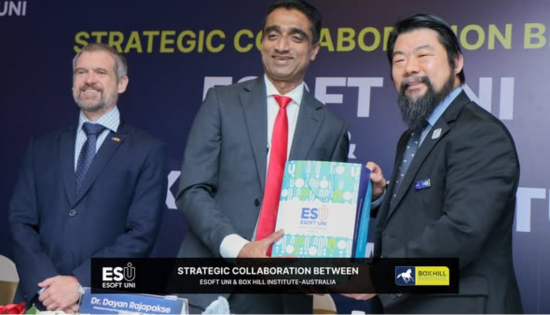
ESOFT UNI Signs MoU with Box Gill Institute, Australia
ESOFt UNI recently hosted a formal Memorandum of Understanding (MoU) signing ceremony with Box Hill Institute, Australia, signaling a significant step in… -

Ace Your University Interview in Sri Lanka: A Guide with Examples
Getting into a Sri Lankan sate or non-state university is not just about the scores. For some universities' programmes, your personality, communication… -
MCW Global Young Leaders Fellowship 2026
MCW Global (Miracle Corners of the World) runs a Young Leaders Fellowship, a year-long leadership program for young people (18–26) around the… -
Enhance Your Arabic Skills with the Intermediate Language Course at BCIS
BCIS invites learners to join its Intermediate Arabic Language Course this November and further develop both linguistic skills and cultural understanding. Designed… -
Achieve Your American Dream : NCHS Spring Intake Webinar
NCHS is paving the way for Sri Lankan students to achieve their American Dream. As Sri Lanka’s leading pathway provider to the… -
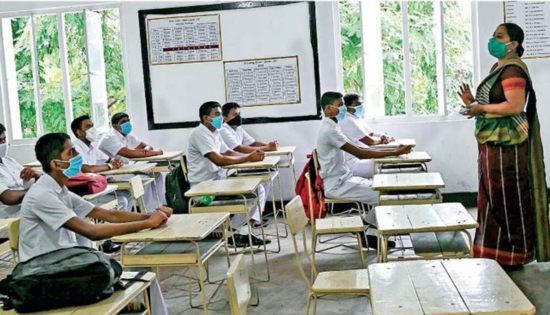
National Diploma in Teaching course : Notice
A Gazette notice has been released recently, concerning the enrollment of aspiring teachers into National Colleges of Education for the three-year pre-service… -
IMC Education Features Largest Student Recruitment for QIU’s October 2025 Intake
Quest International University (QIU), Malaysia recently hosted a pre-departure briefing and high tea at the Shangri-La Hotel in Colombo for its incoming… -

Global University Employability Ranking according to Times Higher Education
Attending college or university offers more than just career preparation, though selecting the right school and program can significantly enhance your job… -

Diploma in Occupational Safety & Health (DOSH) – CIPM
The Chartered Institute of Personnel Management (CIPM) is proud to announce the launch of its Diploma in Occupational Safety & Health (DOSH),… -
Small Grant Scheme for Australia Awards Alumni Sri Lanka
Australia Awards alumni are warmly invited to apply for a grant up to AUD 5,000 to support an innovative project that aim… -
PIM Launches Special Programme for Newly Promoted SriLankan Airlines Managers
The Postgraduate Institute of Management (PIM) has launched a dedicated Newly Promoted Manager Programme designed to strengthen the leadership and management capabilities…
Newswire
-
Sri Lanka’s Transport Minister meets Sri Lankan-born Norwegian counterpart
ON: October 17, 2026 -

Balangoda Kassapa Thero slipped and fell : Police issues statement
ON: October 17, 2026 -

Police deny assault allegations as Balangoda Kassapa Thero leaves hospital
ON: October 17, 2026