
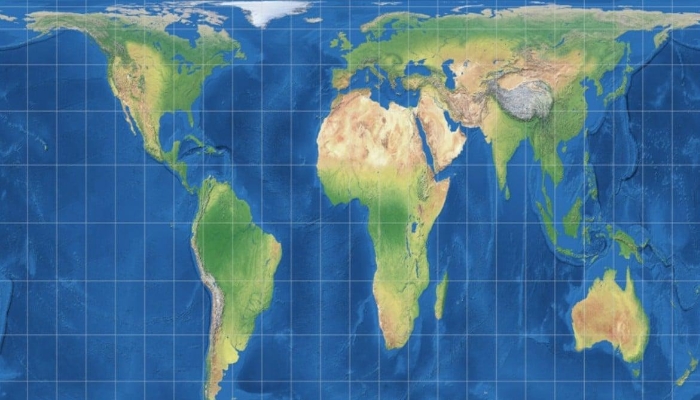




If a tree falls in a forest and no one is around to hear it, does it make a sound?
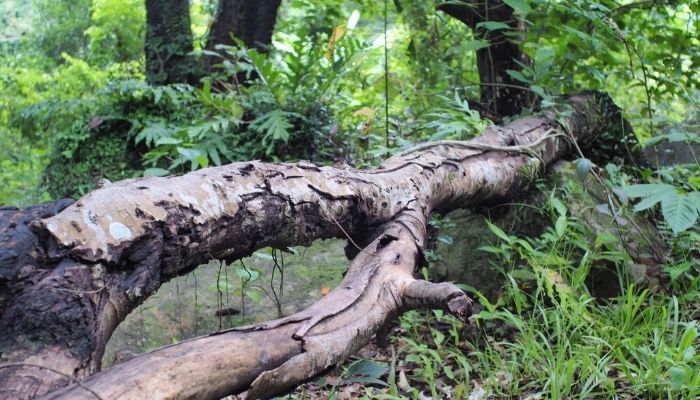
A tree falls deep within a forest. There are no hikers nearby, no birds perched on the branches, and no animals close enough to notice. The crash echoes through the woods, but no living creature is there to hear it.
Did it make a sound?
At first glance, the question seems simple. Most people instinctively answer yes. After all, the tree fell, struck the ground, and created vibrations in the air. Yet this seemingly straightforward question has puzzled philosophers, scientists, and thinkers for centuries because it forces us to confront a deeper mystery: Does reality exist independently of our perception of it?
What begins as a question about a falling tree quickly becomes a question about the nature of existence itself.
A question older than it appears
Although the phrase is often associated with modern philosophy, its roots can be traced to debates about perception and reality that stretch back hundreds of years.
In the early 18th century, the Irish philosopher George Berkeley proposed a radical idea. Berkeley argued that objects only truly exist when they are perceived. His famous principle, esse est percipi, “to be is to be perceived”, challenged the common assumption that the world exists independently of observation.
To Berkeley, perception was fundamental to reality. If nobody observed an object, could its existence be meaningfully discussed at all?
The falling tree question became a popular way of exploring this philosophical dilemma.

What science says
Modern physics and acoustics appear to offer a straightforward answer.
From a scientific perspective, when a tree falls it generates vibrations that travel through the air. These vibrations are measurable and can be detected by instruments whether or not a human is present.
Under this definition, the answer is yes: the tree produces sound waves.
However, some scientists and philosophers draw an important distinction between sound waves and the experience of sound.
Sound, as humans experience it, occurs when vibrations enter the ear, are converted into electrical signals, and are interpreted by the brain. Without a listener, there may be vibrations, but there is no conscious experience of hearing.
In this interpretation, the answer becomes less clear.
The tree undoubtedly creates physical disturbances in the environment, but whether those disturbances qualify as “sound” depends on how the word is defined.
The role of perception
The debate reveals something fascinating about human experience. Much of what people consider reality is actually a combination of external events and internal interpretation.
Colour provides a useful example. Light exists as electromagnetic waves with different wavelengths. Yet colours such as red, blue, and green are experiences created by the brain’s interpretation of those wavelengths.
Similarly, taste, smell, and sound are not properties that exist independently in the world. They are experiences generated through interaction between the external environment and our sensory systems.
This realization has led some philosophers to argue that human beings never experience reality directly. Instead, they experience a model of reality constructed by their brains.
In this sense, the falling tree question becomes a gateway into larger questions about consciousness and perception.
The observer and the universe
The issue becomes even more intriguing when viewed through the lens of modern physics.
Popular discussions often connect the falling tree question with quantum mechanics, a field that studies the behaviour of matter and energy at extremely small scales.
Quantum experiments have shown that observation can influence the behaviour of particles in certain situations. This has led to widespread speculation about the role of observers in shaping reality.
However, physicists caution against oversimplifying these findings. The observer effect in quantum mechanics does not mean that human consciousness creates reality. Rather, it refers to the fact that measurement itself can influence a system.
Nevertheless, the parallels are striking. Both the falling tree question and quantum theory invite us to consider how observation relates to the world around us.
Beyond philosophy
The question also has a powerful metaphorical dimension.
Many people encounter situations where their efforts go unnoticed. Artists create work that few people see. Scientists conduct research that receives little public attention. Teachers influence lives in ways they may never fully witness. Acts of kindness often occur without recognition.
In these situations, the falling tree becomes a symbol of a broader human concern: If nobody notices what we do, does it still matter?
Most ethical and philosophical traditions answer with a resounding yes.
The value of an action does not depend entirely on whether it is observed. A forest continues to grow whether anyone watches it. A star continues to shine whether anyone sees it. Many of the most important processes in nature occur quietly and invisibly.
The same may be true of human life.
A question with no final answer
Part of the enduring appeal of the falling tree question lies in the fact that it has no universally accepted answer.
The scientist focuses on measurable vibrations and says yes.
The philosopher examines the nature of perception and hesitates.
The psychologist reflects on how the mind constructs experience.
The poet sees a metaphor for existence itself.
Perhaps the true value of the question is not the answer it provides, but the questions it inspires.
It encourages people to think about the relationship between reality and perception, the role of consciousness, and the possibility that some of life’s deepest mysteries cannot be resolved through simple certainty.
A tree may fall in a forest with nobody around to hear it. Whether it makes a sound remains open to interpretation.
What is certain is that the question continues to echo.
Sources
- Stanford Encyclopedia of Philosophy – George Berkeley and Idealism
- Encyclopaedia Britannica – Philosophy of Perception
- American Psychological Association – Perception and Cognition Research
- MIT OpenCourseWare – Introduction to Philosophy
- Scientific American – Observer Effects and Quantum Theory
Related News

CIMA Beyond Accounting: Why Business Skills Matter for the Next Generation
For many Sri Lankan students, completing school brings one major question: what qualification should come next? A bachelor’s degree remains an important…
Read More
Gateway College and Wilderness School Australia Launch Teacher Exchange Programme
Students of Wilderness School were most welcoming to the teachers of Gateway Gateway College is pleased to announce the establishment of a…
Read More
Imperial Announces CIMA Certificate Intake with 50% Off Class Fees
Imperial College of Business Studies (ICBS) will commence its latest CIMA Certificate Level intake on 19 September 2026, with weekday and weekend…
Read More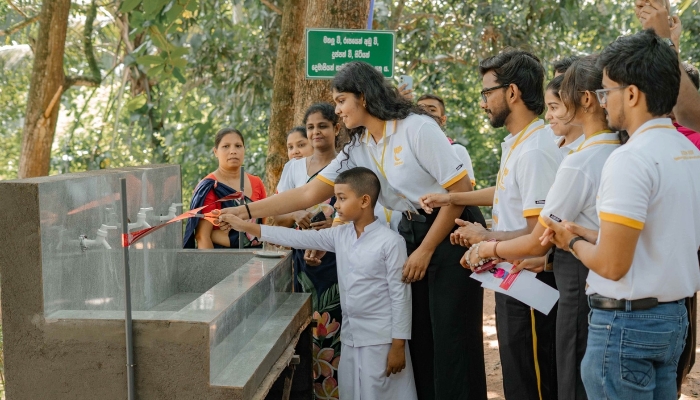
AIESEC in Colombo North and Rotaract Colombo Mid Town Introduce CSR Project: Bloom 2026
Following the success of its first chapter, Bloom returns in 2026 with a renewed vision, focusing on Galaha Divisional Hospital and the…
Read More
Gateway Students Win Record 10 Medals for Sri Lanka at International Earth Science Olympiad 2026
Gateway Colleges celebrates an outstanding international achievement by four of its students, who represented Sri Lanka at the 19th International Earth Science…
Read MoreCourses
-

The future of higher education tech: why industry needs purpose-built solutions
For years, Institutions and education agencies have been forced to rely on a patchwork of horizontal SaaS solutions – general tools that… -

MBA in Project Management & Artificial Intelligence – Oxford College of Business
In an era defined by rapid technological change, organizations increasingly demand leaders who not only understand traditional project management, but can also… -

Scholarships for 2025 Postgraduate Diploma in Education for SLEAS and SLTES Officers
The Ministry of Education, Higher Education and Vocational Education has announced the granting of full scholarships for the one-year weekend Postgraduate Diploma… -
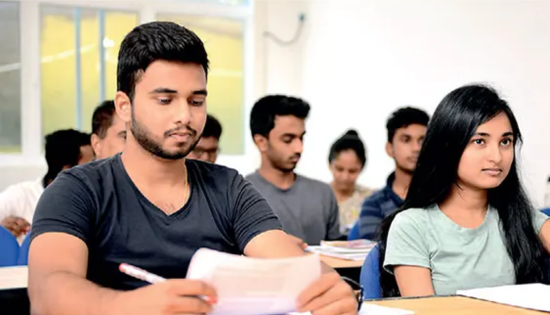
Shape Your Future with a BSc in Business Management (HRM) at Horizon Campus
Human Resource Management is more than a career. It’s about growing people, building organizational culture, and leading with purpose. Every impactful journey… -
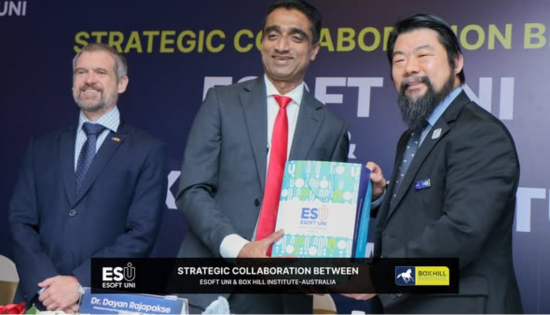
ESOFT UNI Signs MoU with Box Gill Institute, Australia
ESOFt UNI recently hosted a formal Memorandum of Understanding (MoU) signing ceremony with Box Hill Institute, Australia, signaling a significant step in… -

Ace Your University Interview in Sri Lanka: A Guide with Examples
Getting into a Sri Lankan sate or non-state university is not just about the scores. For some universities' programmes, your personality, communication… -
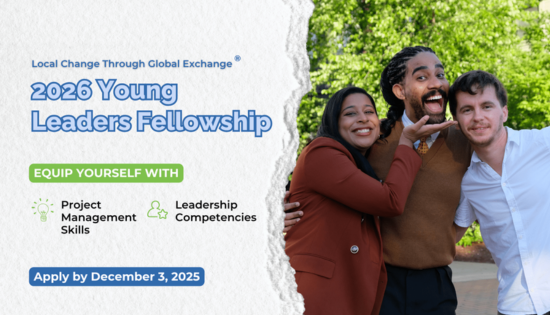
MCW Global Young Leaders Fellowship 2026
MCW Global (Miracle Corners of the World) runs a Young Leaders Fellowship, a year-long leadership program for young people (18–26) around the… -
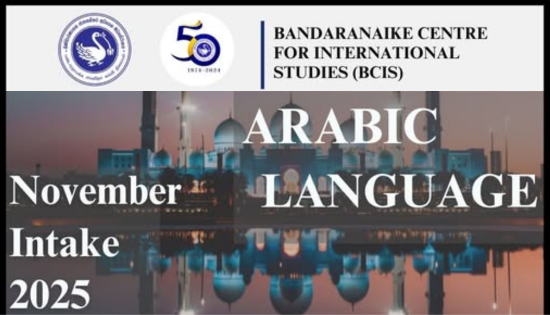
Enhance Your Arabic Skills with the Intermediate Language Course at BCIS
BCIS invites learners to join its Intermediate Arabic Language Course this November and further develop both linguistic skills and cultural understanding. Designed… -

Achieve Your American Dream : NCHS Spring Intake Webinar
NCHS is paving the way for Sri Lankan students to achieve their American Dream. As Sri Lanka’s leading pathway provider to the… -
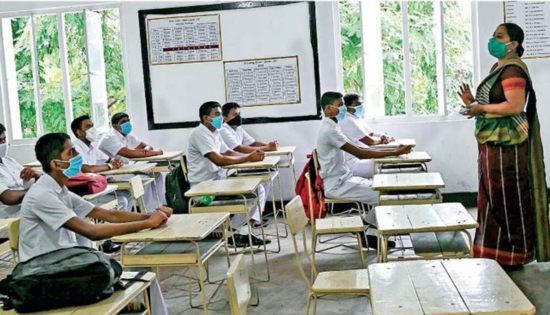
National Diploma in Teaching course : Notice
A Gazette notice has been released recently, concerning the enrollment of aspiring teachers into National Colleges of Education for the three-year pre-service… -
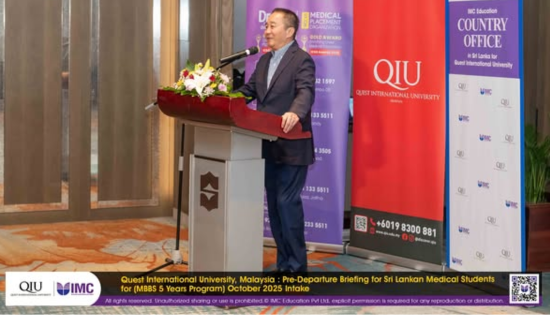
IMC Education Features Largest Student Recruitment for QIU’s October 2025 Intake
Quest International University (QIU), Malaysia recently hosted a pre-departure briefing and high tea at the Shangri-La Hotel in Colombo for its incoming… -

Global University Employability Ranking according to Times Higher Education
Attending college or university offers more than just career preparation, though selecting the right school and program can significantly enhance your job… -

Diploma in Occupational Safety & Health (DOSH) – CIPM
The Chartered Institute of Personnel Management (CIPM) is proud to announce the launch of its Diploma in Occupational Safety & Health (DOSH),… -

Small Grant Scheme for Australia Awards Alumni Sri Lanka
Australia Awards alumni are warmly invited to apply for a grant up to AUD 5,000 to support an innovative project that aim… -

PIM Launches Special Programme for Newly Promoted SriLankan Airlines Managers
The Postgraduate Institute of Management (PIM) has launched a dedicated Newly Promoted Manager Programme designed to strengthen the leadership and management capabilities…
Newswire
-
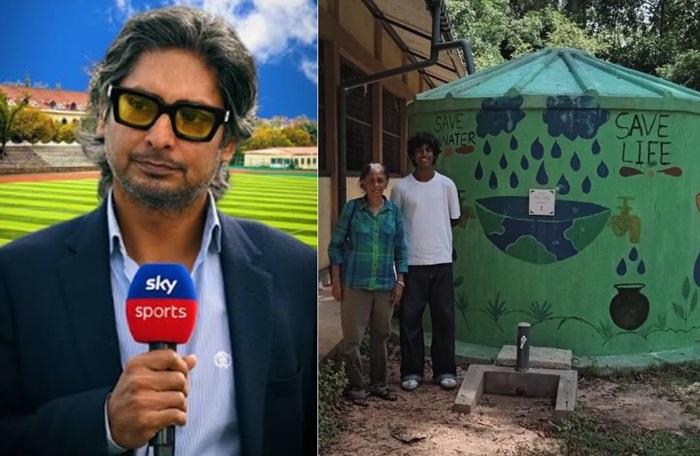
“Every drop counts” : Sangakkara calls for rainwater harvesting
ON: September 19, 2026 -

Google’s Gemini AI hacks 3 companies in security test, then stops
ON: September 19, 2026 -

FBC, Dengue and COVID Tests: CAA clarifies maximum charges
ON: September 19, 2026 -

Telegram fraud : Woman arrested over online scam case
ON: September 19, 2026 -

Sri Lanka Netball player faces ban over “Old Women” comment – Report
ON: September 19, 2026