




The hidden life of your smartphone: The journey from mine to your pocket

For many people, the first thing they reach for in the morning is their smartphone. It wakes us up, connects us with loved ones, guides us through unfamiliar streets, entertains us, and even helps us learn. In many ways, it has become an extension of modern life.
Yet few people stop to consider the remarkable journey that every smartphone undertakes before it reaches their hands. Behind its sleek glass screen lies a story that spans continents, involves thousands of workers, relies on some of the Earth’s rarest minerals, and reflects one of the most complex manufacturing systems ever created.
Every smartphone carries a hidden history—one that begins not in a factory, but deep beneath the Earth’s surface.
A device built from the planet
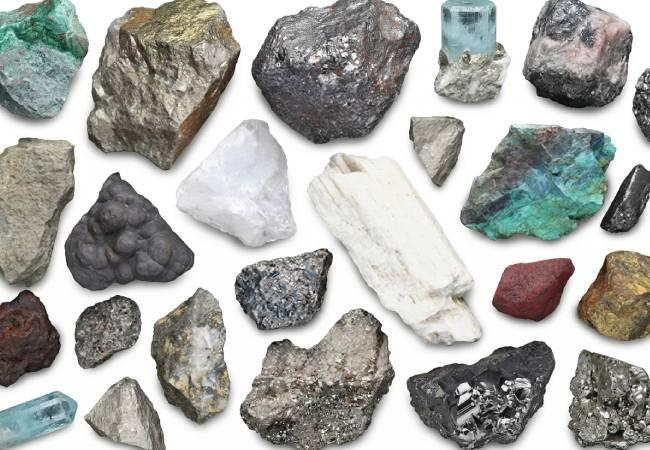
Although smartphones appear simple from the outside, they are engineering marvels containing more than 60 different chemical elements. These include familiar metals such as copper, aluminium and gold, as well as lesser-known materials like cobalt, lithium, tantalum, tungsten, indium and rare earth elements.
Each plays a unique role. Lithium powers rechargeable batteries, cobalt helps improve battery stability, copper carries electrical signals, silicon forms the foundation of computer chips, while tiny amounts of gold ensure reliable electrical connections because it resists corrosion.
These materials are sourced from mines scattered across the globe. Lithium is extracted in countries such as Australia, Chile and Argentina. Much of the world’s cobalt comes from the Democratic Republic of the Congo, while rare earth elements are primarily processed in China. Tin, tungsten and tantalum often originate from Southeast Asia, Africa and South America.
A single smartphone may therefore contain materials that have travelled tens of thousands of kilometres before reaching the assembly line.
The world’s most complex supply chain
Once raw materials are extracted, they begin another journey.
The minerals are refined, purified and transformed into specialised components. Microchips may be designed in the United States, fabricated in Taiwan or South Korea, memory chips produced elsewhere, camera sensors manufactured in Japan, batteries assembled in China or Vietnam, and displays built in different facilities altogether.
These components eventually converge at manufacturing plants where hundreds of highly automated processes—and skilled workers—assemble the finished device.
Modern smartphones contain billions of microscopic transistors packed onto processors no larger than a fingernail. Producing these chips requires extraordinary precision, with some manufacturing techniques operating at scales measured in billionths of a metre.
The result is a device powerful enough to perform calculations that once required entire rooms of computers.
The environmental cost of convenience
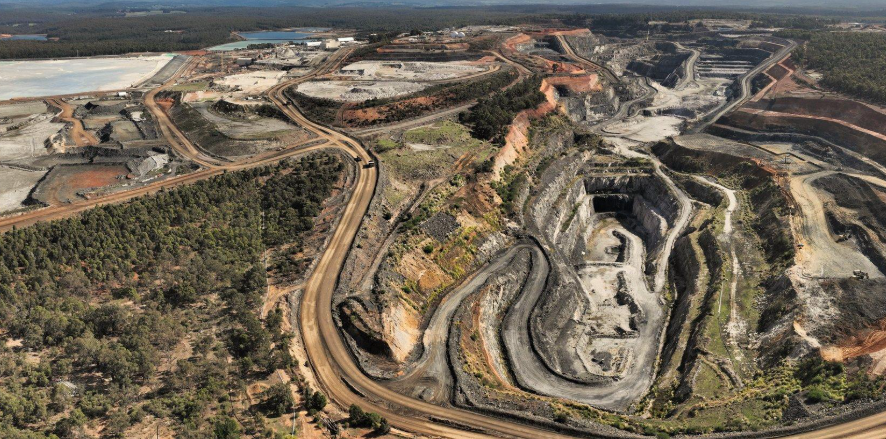
Despite their technological sophistication, smartphones come with significant environmental challenges.
Mining can disturb ecosystems, consume large quantities of water and generate pollution if not carefully managed. Battery production is energy-intensive, while transporting components across continents contributes to greenhouse gas emissions.
Researchers estimate that a large proportion of a smartphone’s total carbon footprint is created before the device is even switched on for the first time. The extraction of raw materials, manufacturing of components and assembly account for most of the emissions associated with its life cycle.
This means that keeping a phone for an extra year or two can significantly reduce its overall environmental impact.
The human side of technology
Behind every smartphone are millions of people.
Geologists locate mineral deposits. Miners extract raw materials. Engineers develop processors and cameras. Scientists design batteries. Factory workers assemble components. Software developers create operating systems and applications. Logistics teams coordinate global transport networks.
The smartphone is therefore not simply the product of one company or one country. It represents international cooperation on a remarkable scale.
At the same time, global organisations continue to highlight concerns about working conditions in parts of the mining and electronics industries. Questions surrounding responsible sourcing, worker safety and fair labour practices have encouraged many manufacturers to improve supply chain transparency and participate in independent auditing programmes.
Consumers are also becoming increasingly interested in knowing where their devices come from and how they are made.
What happens when we upgrade?
The average smartphone is replaced every two to four years, often long before it stops functioning.
Some users seek improved cameras, faster processors or longer battery life. Others replace devices because of accidental damage or declining performance.
Yet discarded smartphones contain valuable materials that can be recovered.
Gold, silver, copper, cobalt and rare earth elements can all be recycled, reducing the need for additional mining.
Unfortunately, electronic waste remains one of the fastest-growing waste streams in the world. According to the United Nations, millions of tonnes of electronic waste are generated annually, yet only a fraction is formally recycled.
Many old devices remain forgotten in drawers, while others end up in landfills where valuable resources are permanently lost.
Designing a more sustainable future
Recognising these challenges, technology companies are investing in more sustainable approaches.
Manufacturers are increasing the use of recycled aluminium, recycled rare earth elements and recycled plastics in new devices. Some have introduced repair programmes, longer software support and improved battery replacement options to extend product lifespans.
There is also growing interest in modular smartphones, where damaged components can be replaced individually rather than requiring an entirely new device.
Governments in several countries have introduced “right to repair” policies, encouraging manufacturers to make spare parts, repair manuals and diagnostic tools more widely available.
The goal is simple: reduce waste by making products last longer.
Small choices, global impact
Consumers also play an important role in the life cycle of smartphones.
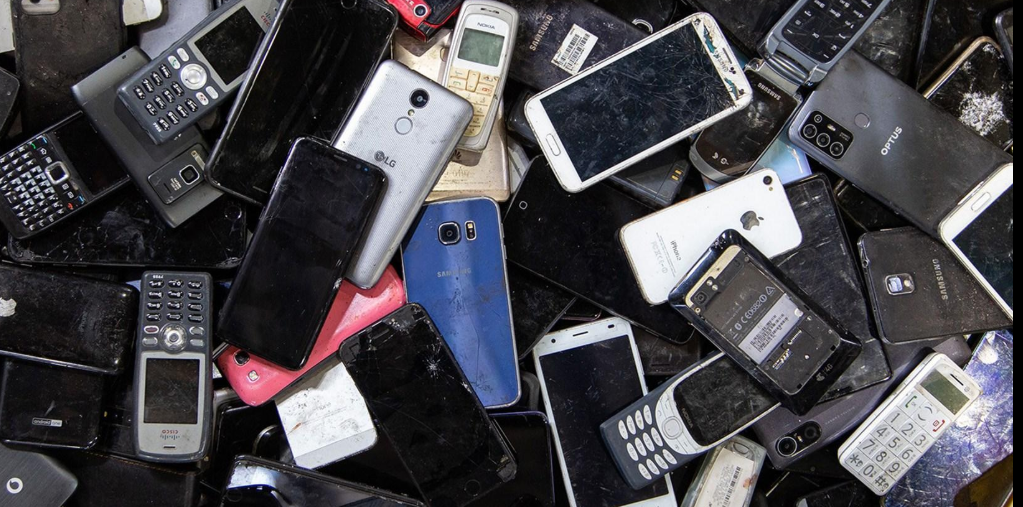
Using a protective case, replacing a battery instead of the entire phone, repairing cracked screens and recycling old devices through certified programmes can all reduce environmental impacts.
Even donating an older smartphone for reuse extends its useful life and reduces demand for newly manufactured devices.
These individual actions may seem small, but when multiplied across billions of smartphone users worldwide, they can have meaningful environmental benefits.
More than a piece of technology
A smartphone is far more than glass, metal and electronics.
It is the culmination of scientific discovery, engineering innovation, international trade and human collaboration. It connects miners, designers, factory workers, software engineers, transport specialists and consumers through one of the most sophisticated production networks ever created.
Every notification, photograph, message and video depends on this hidden journey—a journey that begins deep underground and ends in the palm of a hand.
Understanding that journey reminds us that technology is never truly invisible. Behind every device lies a story of natural resources, human ingenuity and global cooperation.
The next time you unlock your phone, you may see more than a screen. You may see one of the most extraordinary products of the modern world—and appreciate the remarkable path it travelled to reach you.
Sources
- International Energy Agency (IEA) – The Role of Critical Minerals in Clean Energy Transitions
- United Nations Institute for Training and Research (UNITAR) – Global E-waste Monitor
- United Nations Environment Programme (UNEP) – Sustainable Consumption and Electronics
- IEEE Spectrum – Semiconductor Manufacturing and Chip Design
- U.S. Geological Survey (USGS) – Mineral Commodity Summaries
- World Economic Forum – Global Supply Chains and Critical Minerals
- Nature Electronics – Sustainability in Consumer Electronics
Related News
Gateway Delegates Make Record-Breaking Haul at SLMUN 2026
SEATED (L-R) - Bilal Fazal , Navakarthikeyan Satgunaraja, Mrs Ruwini Perera (Assistant Principal & Teacher In Charge), Siddesh Ram Shankar, Mr. Anthony…
Read MoreThe forgotten science of smell
How scents shape memory, emotion and behaviour A smell can transport a person back in time within seconds. The scent of rain…
Read More
Planning to Study in Australia? Jeewa Education Roadshow 2026 Opens Doors to New Opportunities
Sri Lankan students considering higher education in Australia will have an opportunity to explore university pathways, courses and scholarship options at the…
Read MoreThe science of sleep: What happens to the brain while we rest
Sleep may appear to be a period when the body simply shuts down, but the human brain remains remarkably active throughout the…
Read More
Springfield College Kandy U10 Table Tennis Team Crowned All Island “A” Division Champions
Front row L to R - Hassa Zaman, Hussain Zaman and Muhammed ZamanBack row from L to R - Mr Rajesh Kumar…
Read MoreCourses
-

The future of higher education tech: why industry needs purpose-built solutions
For years, Institutions and education agencies have been forced to rely on a patchwork of horizontal SaaS solutions – general tools that… -

MBA in Project Management & Artificial Intelligence – Oxford College of Business
In an era defined by rapid technological change, organizations increasingly demand leaders who not only understand traditional project management, but can also… -

Scholarships for 2025 Postgraduate Diploma in Education for SLEAS and SLTES Officers
The Ministry of Education, Higher Education and Vocational Education has announced the granting of full scholarships for the one-year weekend Postgraduate Diploma… -
Shape Your Future with a BSc in Business Management (HRM) at Horizon Campus
Human Resource Management is more than a career. It’s about growing people, building organizational culture, and leading with purpose. Every impactful journey… -
ESOFT UNI Signs MoU with Box Gill Institute, Australia
ESOFt UNI recently hosted a formal Memorandum of Understanding (MoU) signing ceremony with Box Hill Institute, Australia, signaling a significant step in… -

Ace Your University Interview in Sri Lanka: A Guide with Examples
Getting into a Sri Lankan sate or non-state university is not just about the scores. For some universities' programmes, your personality, communication… -

MCW Global Young Leaders Fellowship 2026
MCW Global (Miracle Corners of the World) runs a Young Leaders Fellowship, a year-long leadership program for young people (18–26) around the… -

Enhance Your Arabic Skills with the Intermediate Language Course at BCIS
BCIS invites learners to join its Intermediate Arabic Language Course this November and further develop both linguistic skills and cultural understanding. Designed… -

Achieve Your American Dream : NCHS Spring Intake Webinar
NCHS is paving the way for Sri Lankan students to achieve their American Dream. As Sri Lanka’s leading pathway provider to the… -
National Diploma in Teaching course : Notice
A Gazette notice has been released recently, concerning the enrollment of aspiring teachers into National Colleges of Education for the three-year pre-service… -
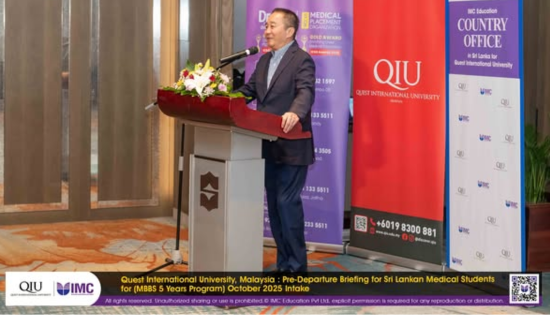
IMC Education Features Largest Student Recruitment for QIU’s October 2025 Intake
Quest International University (QIU), Malaysia recently hosted a pre-departure briefing and high tea at the Shangri-La Hotel in Colombo for its incoming… -

Global University Employability Ranking according to Times Higher Education
Attending college or university offers more than just career preparation, though selecting the right school and program can significantly enhance your job… -

Diploma in Occupational Safety & Health (DOSH) – CIPM
The Chartered Institute of Personnel Management (CIPM) is proud to announce the launch of its Diploma in Occupational Safety & Health (DOSH),… -

Small Grant Scheme for Australia Awards Alumni Sri Lanka
Australia Awards alumni are warmly invited to apply for a grant up to AUD 5,000 to support an innovative project that aim… -
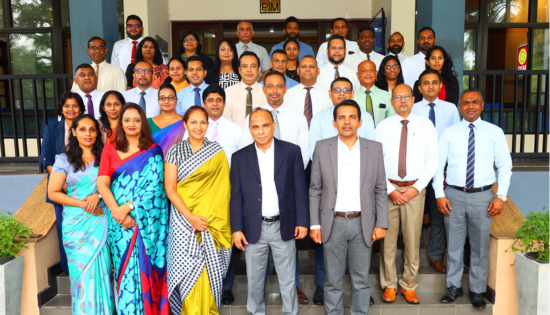
PIM Launches Special Programme for Newly Promoted SriLankan Airlines Managers
The Postgraduate Institute of Management (PIM) has launched a dedicated Newly Promoted Manager Programme designed to strengthen the leadership and management capabilities…
Newswire
-

Meta reaches $16.68 billion settlement over social media harms to children
ON: August 26, 2026 -

WhatsApp beefs up security with call context and stronger verification
ON: August 26, 2026 -

Rumesha Tharanga returns to top of world javelin rankings
ON: August 26, 2026 -

What triggered the catastrophic flood on the Nepal-Tibet border?
ON: August 26, 2026 -

Nepal Floods: Sri Lanka Expresses Solidarity, No Sri Lankans Reported Affected
ON: August 26, 2026