



Wuthering Heights: Book vs Movie – Which Resonates More?
Read • Watch • Learn
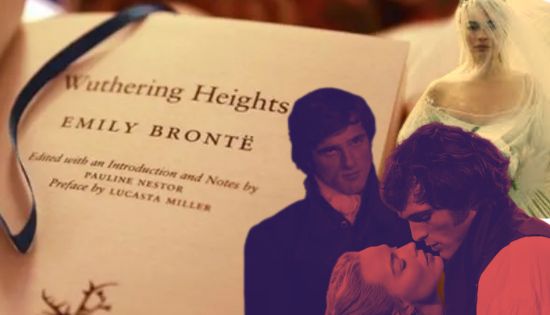
When Emily Brontë published Wuthering Heights in 1847, few expected the novel to become one of the most discussed works in English literature. Nearly two centuries later, the 2026 film adaptation directed by Emerald Fennell has reignited debates about the story’s power, its interpretation, and which version, book or movie, connects better with audiences.
The Novel That Shocked Its Time
Set on the desolate Yorkshire moors, Wuthering Heights tells the tragic and obsessive story of Catherine Earnshaw and Heathcliff. Far from a conventional romance, the novel explores violence, revenge, social class, and generational trauma through a complex, layered narrative structure.
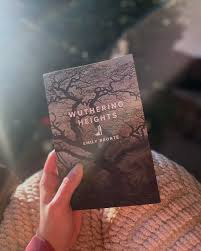
Brontë presents readers with morally ambiguous characters. Heathcliff is neither purely victim nor villain. Catherine’s declaration that her soul is bound to Heathcliff challenges Victorian ideas about love and marriage. The novel’s use of multiple narrators, including Lockwood and Nelly Dean, creates distance and complexity, forcing readers to question reliability and perspective.
For many readers, the book is demanding. Its structure is non linear, its language reflects the nineteenth century, and its emotional intensity can feel overwhelming. Yet it is precisely this depth and psychological richness that has secured its place in literary history. The novel continues to provoke strong responses from students, scholars, and general readers alike.
The 2026 Film Adaptation

The 2026 adaptation, directed and written by Emerald Fennell, stars Margot Robbie as Catherine and Jacob Elordi as Heathcliff. The film reimagines the classic story through a modern cinematic lens, placing strong emphasis on visual style and emotional intensity.
The reception has been mixed but widely discussed. Review aggregators show ratings in the mid range, reflecting divided critical opinion. Many critics praise the film’s striking cinematography, the chemistry between the lead actors, and its bold reinterpretation of the source material. Others argue that it simplifies or reshapes the darker psychological themes that define the novel.
Commercially, the film has performed strongly at the box office, surpassing significant revenue milestones early in its release. This indicates strong public interest, even among audiences who may not have previously engaged with the novel.
Key Differences Between Book and Film
One of the most noticeable differences is structural. The novel’s layered narration and generational storyline are largely streamlined in the film. The adaptation focuses heavily on Catherine and Heathcliff’s relationship, giving less attention to the second generation that plays a crucial role in the book’s resolution.
The tone also differs. Brontë’s novel is bleak, gothic, and often disturbing. The film, while intense, presents the relationship in a more visually romantic and emotionally direct way. Some viewers appreciate this accessibility, while readers of the novel argue that the adaptation softens the moral ambiguity and brutality that give the original its power.
Character portrayals have also sparked debate. Certain relationships are reinterpreted, and some events are re sequenced or altered for cinematic impact. These creative liberties have divided audiences between those who value fidelity to the text and those who appreciate artistic reinterpretation.
Readers Versus Viewers
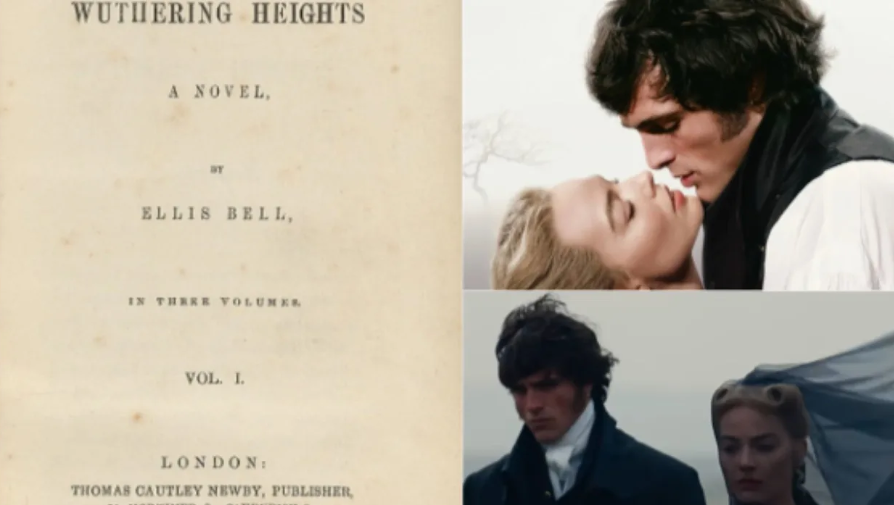
So which is better?
Readers who admire literary complexity often favour the novel. They value its psychological depth, its exploration of class and revenge, and its refusal to offer easy moral conclusions. For them, the richness of Brontë’s language and narrative structure cannot be fully captured in a two hour film.
Viewers who prefer visual storytelling may favour the adaptation. The performances, atmosphere, and modern pacing create an immediate emotional experience. For some younger audiences, the film serves as an entry point into Brontë’s world, even inspiring them to pick up the novel for the first time.
Ultimately, the answer depends on expectation. If one seeks intricate character study and thematic depth, the novel remains unmatched. If one seeks a bold cinematic interpretation with strong performances and visual drama, the 2026 film offers a compelling experience.
Rather than replacing the novel, the film reopens conversation around it. In that sense, both versions contribute to the ongoing life of Wuthering Heights in popular culture.
Sources
- Rotten Tomatoes overview and critic scores for Wuthering Heights (2026)
- Forbes analysis of the film’s Rotten Tomatoes rating and early reception
- GamesRadar report on box office performance
- Courier Mail review discussing adaptation choices
- The Guardian commentary on character portrayal and adaptation debates
- Marie Claire and Cosmopolitan features on major differences between book and film
- SlashFilm analysis of narrative and structural change
Related News

Govt Offers Fully Funded Foreign Scholarships for 2025 A/L Top Achievers
The Ministry of Education, Higher Education and Vocational Education has announced a prestigious fully funded foreign scholarship programme for high-achieving students who…
Read More
Schools told to avoid burdening parents with event expenses
The Ministry of Education has issued a directive to all principals, instructing them to minimize expenses when organizing school festivals and commemorations.…
Read More
Next Gen Boardroom session equips Buddhist Ladies’ College students for digital business future
Next Gen Boardroom was successfully conducted for the Commerce Section students at Buddhist Ladies' College in collaboration with NIBM School of Business.…
Read More
CIC partners with Macquarie University on cyber security education
Colombo International Campus (CIC) has entered into a partnership with Macquarie University’s Cyber Skills Academy (CSA), Australia, to enhance higher education opportunities…
Read More
ESOFT UNI & Kingston University UK Pre-Launch New Global Degree Programmes
In collaboration with Kingston University, UK, ESOFT UNI marked this milestone with an exclusive media briefing. The partnership highlights expanded access to…
Read MoreCourses
-

The future of higher education tech: why industry needs purpose-built solutions
For years, Institutions and education agencies have been forced to rely on a patchwork of horizontal SaaS solutions – general tools that… -

MBA in Project Management & Artificial Intelligence – Oxford College of Business
In an era defined by rapid technological change, organizations increasingly demand leaders who not only understand traditional project management, but can also… -

Scholarships for 2025 Postgraduate Diploma in Education for SLEAS and SLTES Officers
The Ministry of Education, Higher Education and Vocational Education has announced the granting of full scholarships for the one-year weekend Postgraduate Diploma… -

Shape Your Future with a BSc in Business Management (HRM) at Horizon Campus
Human Resource Management is more than a career. It’s about growing people, building organizational culture, and leading with purpose. Every impactful journey… -
ESOFT UNI Signs MoU with Box Gill Institute, Australia
ESOFt UNI recently hosted a formal Memorandum of Understanding (MoU) signing ceremony with Box Hill Institute, Australia, signaling a significant step in… -

Ace Your University Interview in Sri Lanka: A Guide with Examples
Getting into a Sri Lankan sate or non-state university is not just about the scores. For some universities' programmes, your personality, communication… -

MCW Global Young Leaders Fellowship 2026
MCW Global (Miracle Corners of the World) runs a Young Leaders Fellowship, a year-long leadership program for young people (18–26) around the… -
Enhance Your Arabic Skills with the Intermediate Language Course at BCIS
BCIS invites learners to join its Intermediate Arabic Language Course this November and further develop both linguistic skills and cultural understanding. Designed… -

Achieve Your American Dream : NCHS Spring Intake Webinar
NCHS is paving the way for Sri Lankan students to achieve their American Dream. As Sri Lanka’s leading pathway provider to the… -

National Diploma in Teaching course : Notice
A Gazette notice has been released recently, concerning the enrollment of aspiring teachers into National Colleges of Education for the three-year pre-service… -
IMC Education Features Largest Student Recruitment for QIU’s October 2025 Intake
Quest International University (QIU), Malaysia recently hosted a pre-departure briefing and high tea at the Shangri-La Hotel in Colombo for its incoming… -

Global University Employability Ranking according to Times Higher Education
Attending college or university offers more than just career preparation, though selecting the right school and program can significantly enhance your job… -

Diploma in Occupational Safety & Health (DOSH) – CIPM
The Chartered Institute of Personnel Management (CIPM) is proud to announce the launch of its Diploma in Occupational Safety & Health (DOSH),… -
Small Grant Scheme for Australia Awards Alumni Sri Lanka
Australia Awards alumni are warmly invited to apply for a grant up to AUD 5,000 to support an innovative project that aim… -

PIM Launches Special Programme for Newly Promoted SriLankan Airlines Managers
The Postgraduate Institute of Management (PIM) has launched a dedicated Newly Promoted Manager Programme designed to strengthen the leadership and management capabilities…
Newswire
-
Fairly heavy 75 mm showers expected in several areas today
ON: April 12, 2026 -

ADB slashes Bangladesh’s economic growth outlook for third time
ON: April 11, 2026