




When Apes Imagine: What a Tea Party Taught Scientists About the Mind
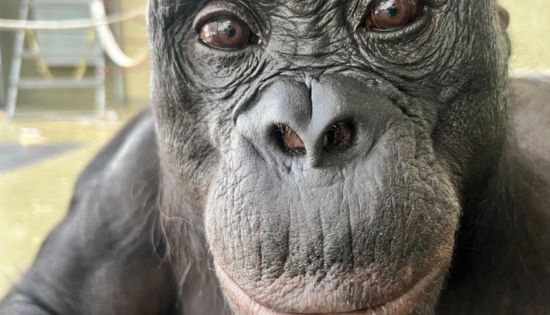
What if imagination isn’t just a human superpower?
A new study has left scientists both surprised and excited after great apes demonstrated something once believed to be uniquely human: the ability to imagine situations that don’t exist yet. The discovery came from an unusual experiment that looked less like a lab test and more like a children’s tea party.
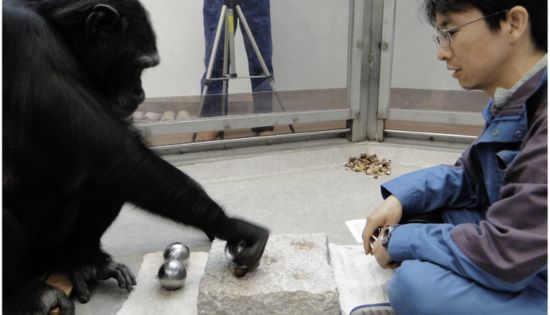
The “Tea Party” Experiment
Researchers set up a simple but clever scenario. Apes were shown tools and objects that could be used in different ways, even when those objects had no immediate purpose. Instead of reacting only to what was physically present, the apes appeared to simulate future actions mentally, choosing tools based on imagined outcomes rather than direct experience.
This ability is known as counterfactual thinking: the mental process of asking “what if?” Humans use it all the time, from planning tomorrow’s tasks to imagining alternate endings to events. Until now, scientists believed this kind of thinking required complex language and was exclusive to humans.
Why This Matters
The apes didn’t rely on trial and error. They selected tools by anticipating future needs, suggesting they could picture scenarios that had not yet occurred. This challenges long-held assumptions about animal intelligence and pushes the boundary of how we define imagination.
If apes can mentally rehearse actions before carrying them out, it means the roots of imagination may have evolved much earlier than we thought.
Rethinking Intelligence
For decades, human intelligence has been defined by traits like planning, imagination, and abstract thinking. This research adds to growing evidence that these abilities exist on a spectrum, rather than as an on-off switch separating humans from animals.
The findings don’t just reshape how we view apes; they also force us to rethink what it really means to be intelligent.
A Bigger Question
If imagination isn’t uniquely human, what other mental abilities might we be underestimating in animals? And how should this change the way we treat and study them?
Sometimes, the biggest scientific breakthroughs come from the simplest setups, even a pretend tea party.
Sources
- Good News Network. “Apes Show Ability to Imagine After Tea Party Experiments Excite Scientists.”
(Based on reporting of recent cognitive research on great apes and counterfactual thinking.) - Research referenced in the article draws on peer-reviewed studies in comparative cognition and animal psychology, including work published in journals such as Proceedings of the National Academy of Sciences (PNAS) and Current Biology on future planning and imagination in great apes.
Related News
When Apes Imagine: What a Tea Party Taught Scientists About the Mind
What if imagination isn’t just a human superpower? A new study has left scientists both surprised and excited after great apes demonstrated…
Read More
India supports 300 Sri Lankan O-Level students with scholarships
The 14th Mahatma Gandhi Scholarship Award Ceremony, held under the patronage of Prime Minister and Minister of Education, Higher Education and Vocational…
Read More
Government to regulate School Student Transport Services
A discussion on regulating school student transport services was held under the patronage of Prime Minister Harini Amarasuriya at the Prime Minister’s…
Read More
D.S. Senanayake College Old Boys Successfully Conclude Back to School & Back to Sportsmeet
The annual Back to School and Back to Sportsmeet events, organized by the Old Boys' Association of D.S.Senanayake College, was successfully concluded…
Read More
NeXora 2025: Empowering the Aura of the Next Era
The AICPA & CIMA Students’ Society (CIMASS) recently made history with the launch of NeXora 2025, a groundbreaking professional development initiative, first…
Read MoreCourses
-

The future of higher education tech: why industry needs purpose-built solutions
For years, Institutions and education agencies have been forced to rely on a patchwork of horizontal SaaS solutions – general tools that… -

MBA in Project Management & Artificial Intelligence – Oxford College of Business
In an era defined by rapid technological change, organizations increasingly demand leaders who not only understand traditional project management, but can also… -

Scholarships for 2025 Postgraduate Diploma in Education for SLEAS and SLTES Officers
The Ministry of Education, Higher Education and Vocational Education has announced the granting of full scholarships for the one-year weekend Postgraduate Diploma… -
Shape Your Future with a BSc in Business Management (HRM) at Horizon Campus
Human Resource Management is more than a career. It’s about growing people, building organizational culture, and leading with purpose. Every impactful journey… -
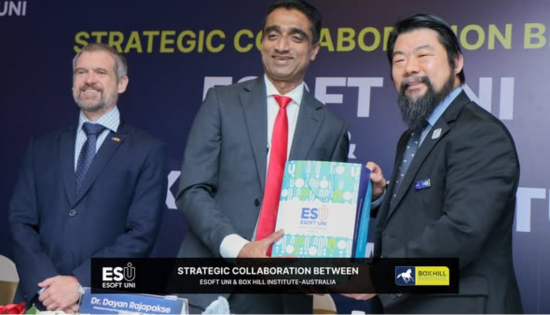
ESOFT UNI Signs MoU with Box Gill Institute, Australia
ESOFt UNI recently hosted a formal Memorandum of Understanding (MoU) signing ceremony with Box Hill Institute, Australia, signaling a significant step in… -

Ace Your University Interview in Sri Lanka: A Guide with Examples
Getting into a Sri Lankan sate or non-state university is not just about the scores. For some universities' programmes, your personality, communication… -
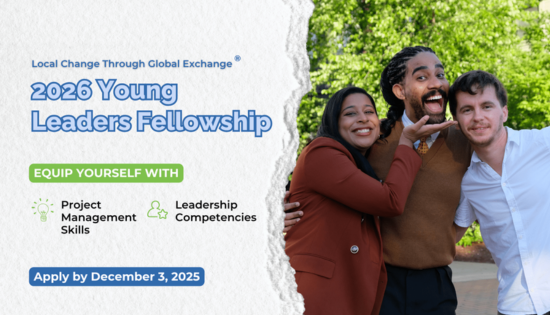
MCW Global Young Leaders Fellowship 2026
MCW Global (Miracle Corners of the World) runs a Young Leaders Fellowship, a year-long leadership program for young people (18–26) around the… -
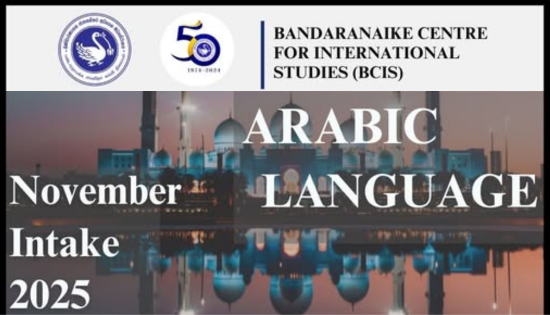
Enhance Your Arabic Skills with the Intermediate Language Course at BCIS
BCIS invites learners to join its Intermediate Arabic Language Course this November and further develop both linguistic skills and cultural understanding. Designed… -

Achieve Your American Dream : NCHS Spring Intake Webinar
NCHS is paving the way for Sri Lankan students to achieve their American Dream. As Sri Lanka’s leading pathway provider to the… -
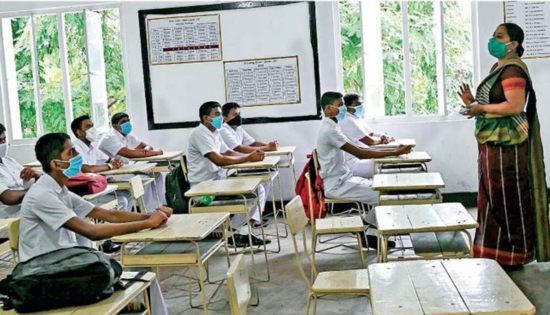
National Diploma in Teaching course : Notice
A Gazette notice has been released recently, concerning the enrollment of aspiring teachers into National Colleges of Education for the three-year pre-service… -
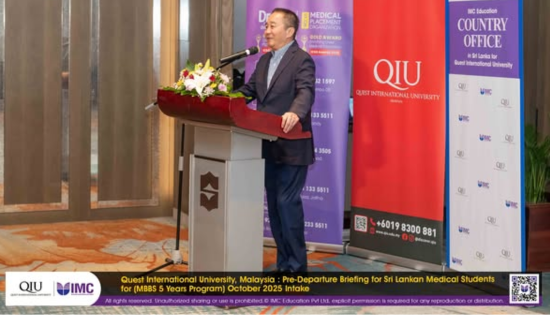
IMC Education Features Largest Student Recruitment for QIU’s October 2025 Intake
Quest International University (QIU), Malaysia recently hosted a pre-departure briefing and high tea at the Shangri-La Hotel in Colombo for its incoming… -

Global University Employability Ranking according to Times Higher Education
Attending college or university offers more than just career preparation, though selecting the right school and program can significantly enhance your job… -

Diploma in Occupational Safety & Health (DOSH) – CIPM
The Chartered Institute of Personnel Management (CIPM) is proud to announce the launch of its Diploma in Occupational Safety & Health (DOSH),… -
Small Grant Scheme for Australia Awards Alumni Sri Lanka
Australia Awards alumni are warmly invited to apply for a grant up to AUD 5,000 to support an innovative project that aim… -
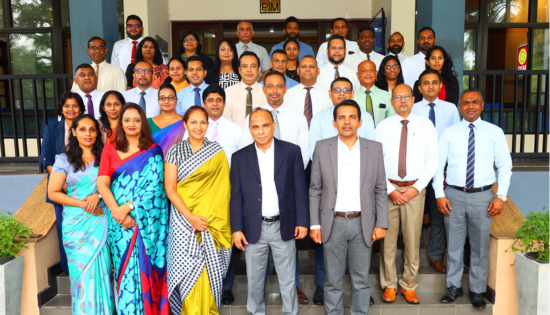
PIM Launches Special Programme for Newly Promoted SriLankan Airlines Managers
The Postgraduate Institute of Management (PIM) has launched a dedicated Newly Promoted Manager Programme designed to strengthen the leadership and management capabilities…
Newswire
-

Walapane man arrested over animal abuse video
ON: February 10, 2026 -

A cup (or 2 or 3) of coffee or tea a day helps keep dementia away
ON: February 10, 2026 -
Gota-Era decision under probe as Ex-CID Director faces charges over mass travel ban
ON: February 10, 2026 -

Applications invited for Audit Service Commission member posts
ON: February 10, 2026 -
Bills on pensions, judiciary, drugs to be debated in Parliament next week
ON: February 10, 2026