



Pen to paper: Why handwriting still matters in the digital age
In classrooms, offices, and homes around the world, keyboards have largely replaced pens. Students type lecture notes on laptops, professionals draft reports using computers, and even shopping lists are increasingly created on smartphones.

As digital technology becomes deeply woven into everyday life, handwriting is slowly becoming less common.
Yet despite the convenience of typing, researchers continue to argue that putting pen to paper offers unique benefits that technology cannot fully replicate. Studies in neuroscience, psychology, and education suggest that handwriting engages the brain in ways that improve learning, strengthen memory, support creativity, and enhance cognitive development.
Far from becoming obsolete, handwriting remains one of the most powerful tools for thinking and learning.
Writing activates the brain differently
At first glance, typing and handwriting appear to achieve the same result: recording words.
However, brain imaging studies show that the two activities involve different mental processes.
Writing by hand requires people to carefully form each letter through precise finger and hand movements. The brain must coordinate vision, motor control, language, and memory simultaneously. This complex interaction activates multiple brain regions involved in learning and information processing.
Typing, on the other hand, often becomes a repetitive movement where the same keys are pressed regardless of the shape of the letters being produced.
Researchers believe this additional mental effort during handwriting helps create stronger neural connections, making information easier to understand and remember.
The connection between handwriting and memory
Many students assume typing notes is faster and therefore more effective.
While typing certainly allows more information to be recorded, studies suggest that handwriting often leads to better long-term learning.
Researchers at Princeton University and the University of California, Los Angeles found that students who wrote notes by hand tended to understand concepts more deeply than those who typed them. Because handwriting is slower, students are less likely to copy lectures word for word. Instead, they naturally summarise ideas, identify key points, and process information as they write.
This active processing strengthens understanding and improves memory retention.
In contrast, typing can sometimes encourage passive transcription without requiring the same level of mental engagement.

Learning begins with the pencil
Handwriting plays an especially important role during childhood.
As children learn to write letters, they develop fine motor skills, hand-eye coordination, and letter recognition simultaneously. These experiences help build the neural foundations for reading and language development.
Neuroscientists have found that children who practise handwriting often recognise letters more quickly and develop stronger literacy skills than those who rely primarily on typing.
Learning to write by hand also supports patience, concentration, and perseverance, qualities that benefit learning far beyond the classroom.
Creativity flows differently
Many writers, artists, and researchers continue to draft ideas on paper even when computers are readily available.
Some describe handwriting as a slower, more reflective process that encourages deeper thinking.
Without notifications, pop-up messages, or endless browser tabs competing for attention, writing on paper creates space for uninterrupted concentration.
Sketches, arrows, diagrams, annotations, and spontaneous notes can easily be added without worrying about formatting or software limitations.
Psychologists suggest this flexibility supports creative thinking by allowing ideas to develop more naturally.
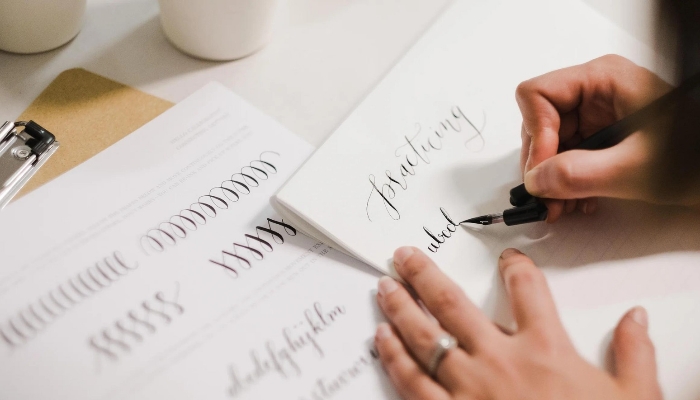
Handwriting and mental wellbeing
Writing by hand may also benefit emotional wellbeing.
Many psychologists recommend keeping handwritten journals as a way of processing emotions, managing stress, and improving self-awareness.
Unlike typing on a screen, handwriting often feels more personal and deliberate. Some researchers believe the slower pace encourages reflection, helping individuals organise thoughts more effectively.
Expressive writing has been associated with reduced stress, improved emotional regulation, and greater psychological resilience in several studies.
Although journaling can certainly be done digitally, many people report feeling more connected to handwritten reflections.
A skill that still matters
Despite rapid advances in technology, handwriting remains important in many areas of life.
People still sign legal documents, complete examination papers, write greeting cards, annotate books, sketch ideas during meetings, and take quick notes when devices are unavailable.
In many professions, handwritten diagrams, laboratory notebooks, architectural sketches, and design concepts continue to play valuable roles.
Moreover, handwriting remains an important cultural skill. Historical letters, manuscripts, diaries, and personal journals provide unique insights into the lives of previous generations.
The ability to write by hand connects people not only with knowledge but also with history.
Finding balance in the digital age
This does not mean technology should be rejected.
Digital devices have transformed communication, collaboration, and access to information. Typing is often faster, more efficient, and essential for many modern workplaces.
Rather than viewing handwriting and technology as competitors, educators increasingly argue that they should complement one another.
Typing is ideal for editing, sharing, and organising information.
Handwriting excels when learning, brainstorming, reflecting, and remembering.
Knowing when to use each method may be more valuable than choosing one over the other.
The future of handwriting
Some experts predict handwriting will become a more specialised skill as digital tools continue evolving.
Others believe it will remain an essential part of education because of its unique contribution to cognitive development.
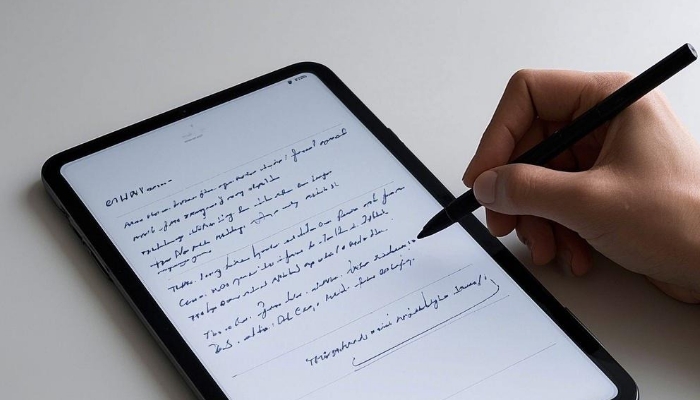
Interestingly, digital tablets and stylus technology are beginning to combine the benefits of handwriting with the convenience of digital storage, allowing users to write naturally while preserving searchable electronic notes.
These innovations suggest that handwriting is not disappearing. It is adapting.
More than putting words on paper
Handwriting is often viewed simply as a method of communication.
Research suggests it is much more than that.
It helps people organise ideas, strengthen memory, develop language, express emotions, and engage more deeply with what they are learning.
In a world that increasingly values speed and efficiency, handwriting offers something different.
It encourages people to slow down.
To think.
To reflect.
To connect thoughts with movement in ways that have shaped human learning for thousands of years.
The pen may no longer be the fastest tool for recording ideas, but science suggests it remains one of the most powerful.

Sources
- National Institutes of Health (NIH) – Research on handwriting and brain development
- American Psychological Association (APA) – Learning and cognitive psychology
- Frontiers in Psychology – Handwriting and learning research
- Journal of Educational Psychology
- Princeton University – Mueller & Oppenheimer (2014), The Pen Is Mightier Than the Keyboard
- Norwegian University of Science and Technology (NTNU) – Brain activity during handwriting studies
- Harvard Graduate School of Education – Handwriting and literacy development
Related News

Sri Lanka to introduce New School Curricula and National Preschool Education Reforms
Significant changes are set for Sri Lanka’s school curriculum from 2027, including reducing the G.C.E. Ordinary Level examination to seven core subjects…
Read MoreSchool children visit Presidential Secretariat to mark ‘Vision’ programme anniversary
Students from Pinnawala Central College and Matale Siri Seevali College visited the Presidential Secretariat on September 24 to mark the completion of…
Read More
Health Ministry stresses need for pre- school standards
The Government and relevant institutions hold a responsibility to ensure proper care for children during early childhood development, Secretary to the Ministry…
Read More
Estate-sector students celebrated at British Council NextGen ceremony
Over 100 students from three Tamil-medium estate-sector schools were recognized at the NextGen Skills Awards Ceremony and Student Showcase held at Araliya…
Read More
Applications Open for the Inaugural Upali Ratnayake Scholarship Scheme
Applications are now open for the inaugural Upali Ratnayake Scholarship Scheme, a prestigious initiative established to honour the legacy of Upali Ratnayake…
Read MoreCourses
-

The future of higher education tech: why industry needs purpose-built solutions
For years, Institutions and education agencies have been forced to rely on a patchwork of horizontal SaaS solutions – general tools that… -

MBA in Project Management & Artificial Intelligence – Oxford College of Business
In an era defined by rapid technological change, organizations increasingly demand leaders who not only understand traditional project management, but can also… -

Scholarships for 2025 Postgraduate Diploma in Education for SLEAS and SLTES Officers
The Ministry of Education, Higher Education and Vocational Education has announced the granting of full scholarships for the one-year weekend Postgraduate Diploma… -

Shape Your Future with a BSc in Business Management (HRM) at Horizon Campus
Human Resource Management is more than a career. It’s about growing people, building organizational culture, and leading with purpose. Every impactful journey… -

ESOFT UNI Signs MoU with Box Gill Institute, Australia
ESOFt UNI recently hosted a formal Memorandum of Understanding (MoU) signing ceremony with Box Hill Institute, Australia, signaling a significant step in… -

Ace Your University Interview in Sri Lanka: A Guide with Examples
Getting into a Sri Lankan sate or non-state university is not just about the scores. For some universities' programmes, your personality, communication… -

MCW Global Young Leaders Fellowship 2026
MCW Global (Miracle Corners of the World) runs a Young Leaders Fellowship, a year-long leadership program for young people (18–26) around the… -
Enhance Your Arabic Skills with the Intermediate Language Course at BCIS
BCIS invites learners to join its Intermediate Arabic Language Course this November and further develop both linguistic skills and cultural understanding. Designed… -

Achieve Your American Dream : NCHS Spring Intake Webinar
NCHS is paving the way for Sri Lankan students to achieve their American Dream. As Sri Lanka’s leading pathway provider to the… -

National Diploma in Teaching course : Notice
A Gazette notice has been released recently, concerning the enrollment of aspiring teachers into National Colleges of Education for the three-year pre-service… -

IMC Education Features Largest Student Recruitment for QIU’s October 2025 Intake
Quest International University (QIU), Malaysia recently hosted a pre-departure briefing and high tea at the Shangri-La Hotel in Colombo for its incoming… -

Global University Employability Ranking according to Times Higher Education
Attending college or university offers more than just career preparation, though selecting the right school and program can significantly enhance your job… -

Diploma in Occupational Safety & Health (DOSH) – CIPM
The Chartered Institute of Personnel Management (CIPM) is proud to announce the launch of its Diploma in Occupational Safety & Health (DOSH),… -

Small Grant Scheme for Australia Awards Alumni Sri Lanka
Australia Awards alumni are warmly invited to apply for a grant up to AUD 5,000 to support an innovative project that aim… -

PIM Launches Special Programme for Newly Promoted SriLankan Airlines Managers
The Postgraduate Institute of Management (PIM) has launched a dedicated Newly Promoted Manager Programme designed to strengthen the leadership and management capabilities…
Newswire
-
Sri Lanka to begin demerit points pilot on Oct. 1: What drivers need to know
ON: September 28, 2026 -

Sri Lanka climbs up in FIFA Rankings
ON: September 28, 2026 -

Sri Lanka announces official entry for 99th Oscars
ON: September 28, 2026 -

Yoshitha’s money laundering case fixed for pre-trial conference on Nov. 3
ON: September 28, 2026