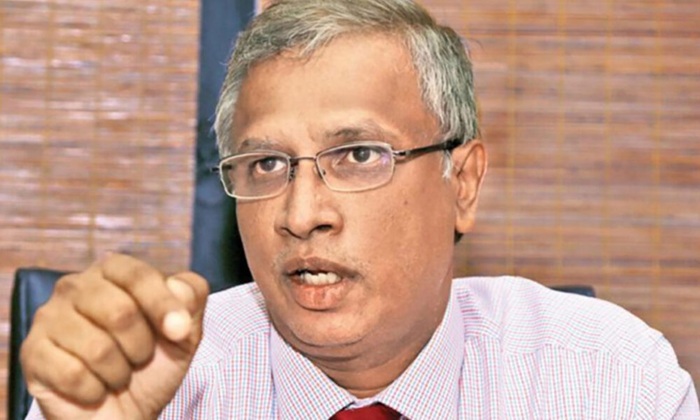





Why perfectionism and procrastination are holding you back
And here’s how to break the cycle
Perfectionism often looks like a good habit. It pushes students to aim high, care deeply about their work, and want to do well. However, in reality, perfectionism can quietly become one of the biggest reasons students fall behind. When the pressure to do something perfectly feels overwhelming, it becomes easier to delay starting at all. This is where procrastination takes over, not because students do not care, but because they care too much.

Taking Back Control: When Students Speak Up
In a striking spoken-word performance, Suzu Kitamura puts words to an experience many students know all too well. She explores the pressure to succeed, the fear of not being good enough, and the emotional weight that comes with constantly trying to meet expectations. Her performance reminds students that waiting for the “perfect moment” often keeps them stuck.
The message is simple yet powerful: progress does not require perfection. It begins the moment you decide to start, even if you are unsure or uncomfortable.
Why Do We Procrastinate Even When We Know Better?
Almost every student has experienced this moment: you sit down to work, open your laptop, and suddenly feel the urge to check your phone, watch a video, or promise yourself you will start later. This behaviour is not about laziness or lack of discipline. It is a natural response from your brain.
When a task feels stressful, overwhelming, or emotionally uncomfortable, your brain looks for immediate relief. Scrolling through social media or watching videos offers a quick escape from that discomfort. Unfortunately, this relief is temporary. Once the distraction ends, stress and guilt return, often stronger than before. This creates the familiar procrastination cycle that many students struggle to break.
Decision Fatigue: When Your Brain Is Simply Tired
Every mental task you perform throughout the day uses energy. From choosing what to wear to paying attention in class and responding to messages, your brain is constantly making decisions. Research suggests that people have a limited capacity for decision-making each day. When that limit is reached, the brain becomes exhausted, a state known as decision fatigue.
By the time students sit down to study or complete assignments, their mental energy may already be depleted. In this tired state, the brain naturally avoids tasks that require focus and effort. This makes procrastination feel almost automatic, even when deadlines are approaching.

The Psychology Behind “I’ll Do It Later”
Writer and speaker Tim Urban explains procrastination in a way that feels instantly relatable. He describes how our minds drift into YouTube binges, Wikipedia rabbit holes, or moments of staring into space while important tasks wait in the background.
Urban points out that procrastination is not really about managing time; it is about managing emotions. We delay tasks because they make us uncomfortable, anxious, or afraid of failure. Avoiding the task helps us avoid those feelings, at least for a short while.
How Students Can Break the Cycle (Without Burning Out)
Breaking the procrastination cycle does not require extreme self-discipline or endless study hours. Small, realistic changes can make a big difference. Starting imperfectly, even with a messy sentence or rough outline, helps reduce the pressure that causes avoidance. Planning study times in advance can also reduce decision fatigue, making it easier to begin without overthinking.
Short, focused work sessions often work better than long, exhausting ones. Most importantly, students benefit from lowering the stakes they place on every task. Not every assignment has to be perfect. Completing something imperfectly is far more valuable than never starting at all.
The Takeaway
Perfectionism tells students to wait until they feel ready. Procrastination convinces them to avoid discomfort. Nevertheless, real progress happens when action comes first, even before motivation or confidence appears.
Understanding how your brain works can change how you approach your work. Struggling with procrastination does not mean you are failing. It means you are human. On a final note, once you learn to work with your mind instead of against it, taking back control becomes possible.
Related News
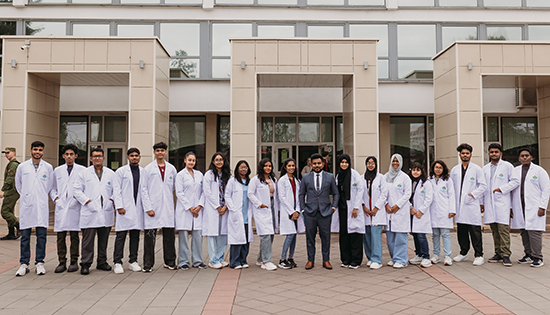
Belarusian State Medical University: A Trusted Pathway to Studying Medicine Abroad with ISC Education
For many Sri Lankan students, gaining entry to a local medical faculty remains highly competitive despite strong academic performance. As a result,…
Read More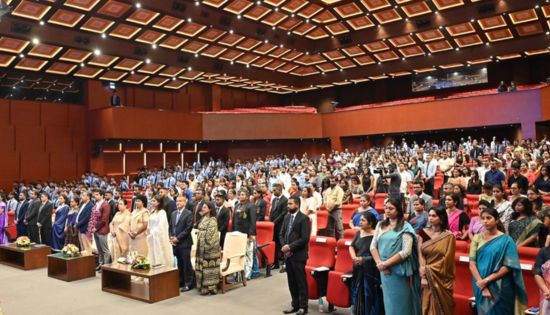
Horizon College International Sports Excellence Awards 2024 – 2025
The Horizon College International (HCI) Sports Excellence Awards 2024 - 2025 wasceremonially held on 27 th February 2026 at the NIIBS Convention…
Read More
Study Smart, Succeed Strong: Why Sri Lankan Students Are Choosing Victoria University
For many Sri Lankan students, studying in Australia is more than an academic goal. it is a dream of global exposure, quality…
Read More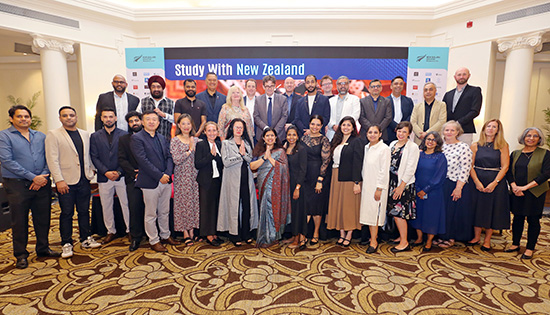
Study with New Zealand’ Roadshow Debuts in Sri Lanka, Strengthening Education Ties and Student Opportunities
Education New Zealand Manapou ki te Ao (ENZ) organised the first ever ‘Study with New Zealand’ Roadshow in Sri Lanka from 5…
Read More
School transport service fares to increase by 5%
The fares charged for transporting schoolchildren will be increased by 5% due to the increase in diesel prices, the All Island Schoolchildren…
Read MoreCourses
-

The future of higher education tech: why industry needs purpose-built solutions
For years, Institutions and education agencies have been forced to rely on a patchwork of horizontal SaaS solutions – general tools that… -

MBA in Project Management & Artificial Intelligence – Oxford College of Business
In an era defined by rapid technological change, organizations increasingly demand leaders who not only understand traditional project management, but can also… -

Scholarships for 2025 Postgraduate Diploma in Education for SLEAS and SLTES Officers
The Ministry of Education, Higher Education and Vocational Education has announced the granting of full scholarships for the one-year weekend Postgraduate Diploma… -
Shape Your Future with a BSc in Business Management (HRM) at Horizon Campus
Human Resource Management is more than a career. It’s about growing people, building organizational culture, and leading with purpose. Every impactful journey… -

ESOFT UNI Signs MoU with Box Gill Institute, Australia
ESOFt UNI recently hosted a formal Memorandum of Understanding (MoU) signing ceremony with Box Hill Institute, Australia, signaling a significant step in… -

Ace Your University Interview in Sri Lanka: A Guide with Examples
Getting into a Sri Lankan sate or non-state university is not just about the scores. For some universities' programmes, your personality, communication… -
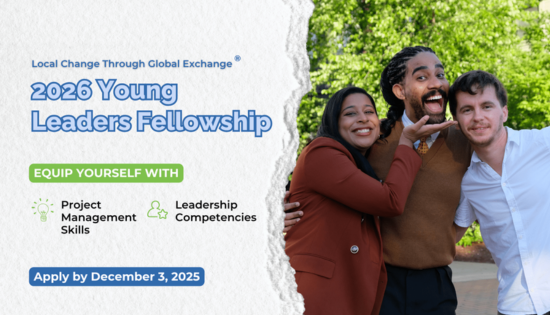
MCW Global Young Leaders Fellowship 2026
MCW Global (Miracle Corners of the World) runs a Young Leaders Fellowship, a year-long leadership program for young people (18–26) around the… -
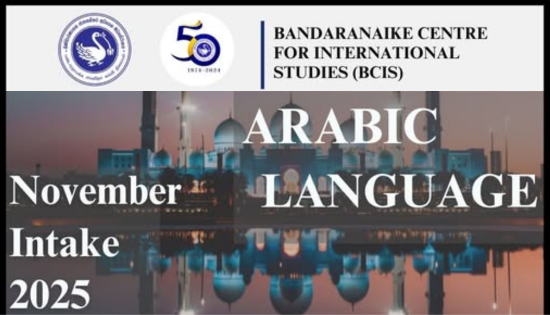
Enhance Your Arabic Skills with the Intermediate Language Course at BCIS
BCIS invites learners to join its Intermediate Arabic Language Course this November and further develop both linguistic skills and cultural understanding. Designed… -

Achieve Your American Dream : NCHS Spring Intake Webinar
NCHS is paving the way for Sri Lankan students to achieve their American Dream. As Sri Lanka’s leading pathway provider to the… -
National Diploma in Teaching course : Notice
A Gazette notice has been released recently, concerning the enrollment of aspiring teachers into National Colleges of Education for the three-year pre-service… -

IMC Education Features Largest Student Recruitment for QIU’s October 2025 Intake
Quest International University (QIU), Malaysia recently hosted a pre-departure briefing and high tea at the Shangri-La Hotel in Colombo for its incoming… -

Global University Employability Ranking according to Times Higher Education
Attending college or university offers more than just career preparation, though selecting the right school and program can significantly enhance your job… -

Diploma in Occupational Safety & Health (DOSH) – CIPM
The Chartered Institute of Personnel Management (CIPM) is proud to announce the launch of its Diploma in Occupational Safety & Health (DOSH),… -
Small Grant Scheme for Australia Awards Alumni Sri Lanka
Australia Awards alumni are warmly invited to apply for a grant up to AUD 5,000 to support an innovative project that aim… -
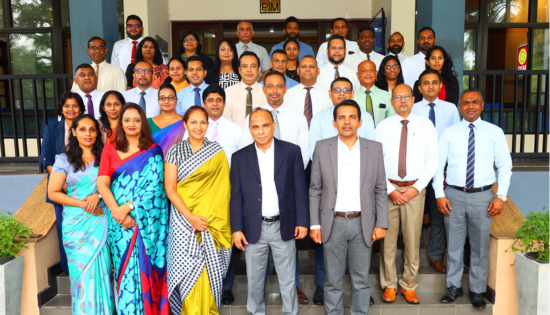
PIM Launches Special Programme for Newly Promoted SriLankan Airlines Managers
The Postgraduate Institute of Management (PIM) has launched a dedicated Newly Promoted Manager Programme designed to strengthen the leadership and management capabilities…
Newswire
-

Middle East conflict latest : Two killed in Oman by drones
ON: March 13, 2026 -

CCTV footage captures Kandy Gem heist
ON: March 13, 2026 -
Court extends enjoining orders against Amith Weerasinghe
ON: March 13, 2026 -

WATCH : Major runout controversy in Pakistan Vs Bangladesh ODI
ON: March 13, 2026