




Read • Watch • Learn
Stories often teach us more than textbooks ever could. This EduWire series explores books, films and series as spaces of learning – unpacking the ideas, questions, and life lessons they offer beyond entertainment. Because some of the most lasting education happens through the stories we read and watch.
Tradition, Change, and the Turning Tide: Why Should We Experience Gamperaliya?
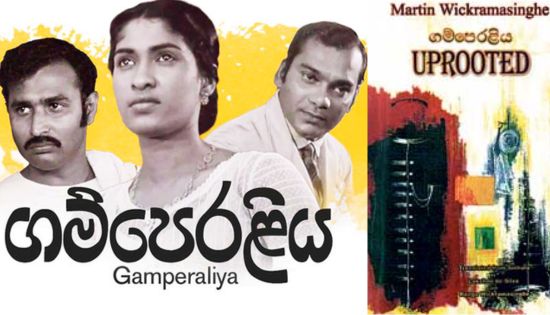
At first glance, Gamperaliya might look like a simple story about a village family in Southern Sri Lanka. But beneath its quiet exterior lies a powerful exploration of how time moves and how societies transform. Written by the “Sage of Koggala,” Martin Wickramasinghe, and later brought to life on screen by the legendary Lester James Peries, it is a masterpiece that teaches us about the inevitability of change.
It isn’t just a story about the past; it’s a mirror for anyone who has ever felt the world shifting beneath their feet.
In a Nutshell
Set in the village of Koggala, the story follows the Muhandiram family, a high-standing “Walauwa” household that is slowly losing its wealth and influence. The heart of the narrative is the silent conflict of Nanda, the daughter of the house.
She is torn between Piyal; a young, ambitious teacher from a “lower” social standing who represents the rising middle class, and the traditional expectations of her aristocratic family. As the old feudal system crumbles, we watch as Nanda and her family navigate marriages, financial ruin, and the difficult transition into a modern world where merit begins to matter more than birthright.
What Stays With Us
Change is the only constant: The title itself, Gamperaliya, translates to “The Transformation of a Village.” The story teaches us that nothing stays the same. The grand houses of today can become the ruins of tomorrow. For a young reader or viewer, this is a profound lesson in resilience. It reminds us that we cannot cling to the past; we must learn to adapt to the “changing tides” of life.
Character is not defined by a title: In the beginning, Piyal is seen as “unfit” for Nanda because he lacks a high-caste title. However, as the story progresses, Piyal’s hard work, education, and adaptability allow him to succeed while the traditionalists falter.
“The world does not stand still for those who only look backward.”
It’s a clear lesson for today: your skills and your character define your future, not the status you were born into.
The complexity of silent emotions: Unlike modern dramas full of loud arguments, Gamperaliya is a masterclass in subtlety. The characters often say more with their eyes and their silence than with their words. It teaches emotional intelligence, the ability to understand the unspoken pressures of society, family duty, and personal desire.
The “Falling Giant” syndrome: Watching the Muhandiram’s family struggle to maintain appearances while they are actually broke is a cautionary tale about pride. It asks us a tough question: Is it better to keep up a false image, or to accept the truth and move on? This is an incredibly relevant topic in the age of social media, where “appearances” often mask reality.
Why Gamperaliya Still Feels Relevant Today
While the sarongs and bullock carts might seem like a bygone era, the core of the story is timeless. We are currently living through our own “Gamperaliya” with the digital revolution. Just as the village shifted from feudalism to capitalism, we are shifting into a globalized, AI-driven world.
The film version (released in 1963) is equally important. It broke the “formula” of South Asian cinema by being realistic and poetic. Watching it is a lesson in cultural literacy, showing us how Sri Lankan identity was shaped during the 20th century.
Why We Celebrate Martin Wickramasinghe
No discussion of the Koggala Trilogy is complete without understanding the man behind the pen. Martin Wickramasinghe (1890–1976) is widely regarded as the father of modern Sinhalese literature. Born in the coastal village of Koggala, he turned his keen observations of rural life into a legacy that redefined how Sri Lankans see themselves.
By using a grounded, authentic style, he gave a voice to the common person and documented the shifting soul of a nation with the precision of a historian and the empathy of a writer. His work didn’t just tell stories; it provided a vocabulary for Sri Lankans to understand their own identity during a century of massive cultural and political upheaval.
We celebrate him today because he championed the idea that we can embrace global progress without losing our cultural roots. Through his Koggala Trilogy and works like Madol Doova, he encouraged critical thinking over blind tradition, proving that true wisdom comes from a deep observation of life and nature. To read Wickramasinghe is to understand the heart of Sri Lanka, making him an eternal guide for any generation navigating the complexities of change.
Book & Movie Details
- Author – Martin Wickramasinghe
- Director (Film) – Lester James Peries
- Genre – Realistic Fiction / Social Drama
- First Published – 1944 (Book) / 1963 (Film)
- Best For – Readers and viewers who appreciate deep character studies, history, and stories that explore how society evolves.
Related News
Belarusian State Medical University: A Trusted Pathway to Studying Medicine Abroad with ISC Education
For many Sri Lankan students, gaining entry to a local medical faculty remains highly competitive despite strong academic performance. As a result,…
Read More
Horizon College International Sports Excellence Awards 2024 – 2025
The Horizon College International (HCI) Sports Excellence Awards 2024 - 2025 wasceremonially held on 27 th February 2026 at the NIIBS Convention…
Read More
Study Smart, Succeed Strong: Why Sri Lankan Students Are Choosing Victoria University
For many Sri Lankan students, studying in Australia is more than an academic goal. it is a dream of global exposure, quality…
Read More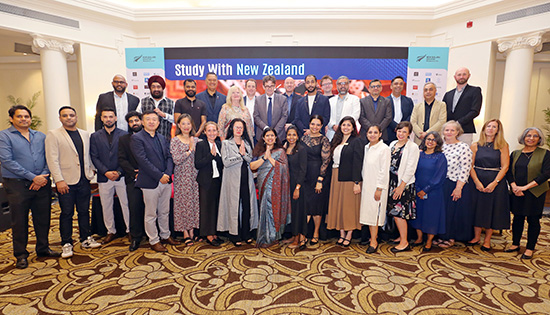
Study with New Zealand’ Roadshow Debuts in Sri Lanka, Strengthening Education Ties and Student Opportunities
Education New Zealand Manapou ki te Ao (ENZ) organised the first ever ‘Study with New Zealand’ Roadshow in Sri Lanka from 5…
Read More
School transport service fares to increase by 5%
The fares charged for transporting schoolchildren will be increased by 5% due to the increase in diesel prices, the All Island Schoolchildren…
Read MoreCourses
-

The future of higher education tech: why industry needs purpose-built solutions
For years, Institutions and education agencies have been forced to rely on a patchwork of horizontal SaaS solutions – general tools that… -

MBA in Project Management & Artificial Intelligence – Oxford College of Business
In an era defined by rapid technological change, organizations increasingly demand leaders who not only understand traditional project management, but can also… -

Scholarships for 2025 Postgraduate Diploma in Education for SLEAS and SLTES Officers
The Ministry of Education, Higher Education and Vocational Education has announced the granting of full scholarships for the one-year weekend Postgraduate Diploma… -
Shape Your Future with a BSc in Business Management (HRM) at Horizon Campus
Human Resource Management is more than a career. It’s about growing people, building organizational culture, and leading with purpose. Every impactful journey… -
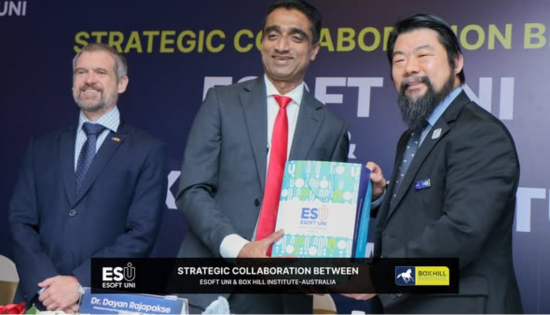
ESOFT UNI Signs MoU with Box Gill Institute, Australia
ESOFt UNI recently hosted a formal Memorandum of Understanding (MoU) signing ceremony with Box Hill Institute, Australia, signaling a significant step in… -

Ace Your University Interview in Sri Lanka: A Guide with Examples
Getting into a Sri Lankan sate or non-state university is not just about the scores. For some universities' programmes, your personality, communication… -
MCW Global Young Leaders Fellowship 2026
MCW Global (Miracle Corners of the World) runs a Young Leaders Fellowship, a year-long leadership program for young people (18–26) around the… -
Enhance Your Arabic Skills with the Intermediate Language Course at BCIS
BCIS invites learners to join its Intermediate Arabic Language Course this November and further develop both linguistic skills and cultural understanding. Designed… -

Achieve Your American Dream : NCHS Spring Intake Webinar
NCHS is paving the way for Sri Lankan students to achieve their American Dream. As Sri Lanka’s leading pathway provider to the… -
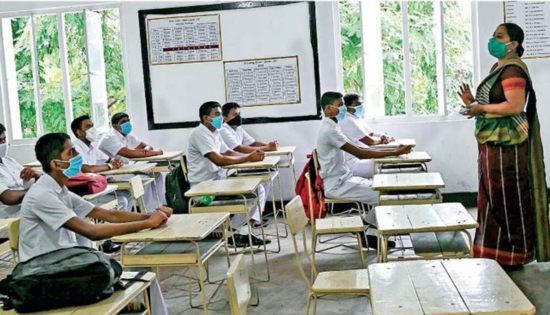
National Diploma in Teaching course : Notice
A Gazette notice has been released recently, concerning the enrollment of aspiring teachers into National Colleges of Education for the three-year pre-service… -
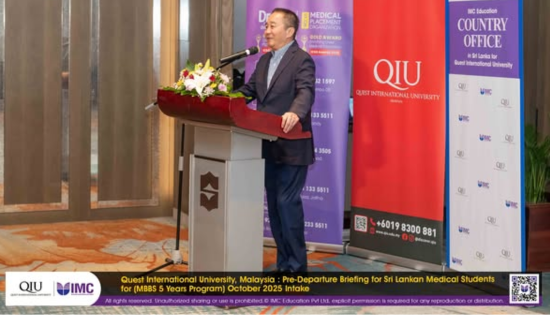
IMC Education Features Largest Student Recruitment for QIU’s October 2025 Intake
Quest International University (QIU), Malaysia recently hosted a pre-departure briefing and high tea at the Shangri-La Hotel in Colombo for its incoming… -
Global University Employability Ranking according to Times Higher Education
Attending college or university offers more than just career preparation, though selecting the right school and program can significantly enhance your job… -

Diploma in Occupational Safety & Health (DOSH) – CIPM
The Chartered Institute of Personnel Management (CIPM) is proud to announce the launch of its Diploma in Occupational Safety & Health (DOSH),… -
Small Grant Scheme for Australia Awards Alumni Sri Lanka
Australia Awards alumni are warmly invited to apply for a grant up to AUD 5,000 to support an innovative project that aim… -
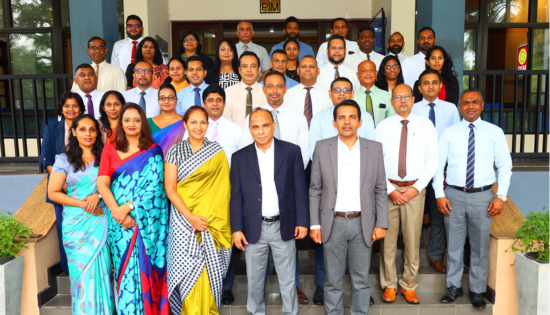
PIM Launches Special Programme for Newly Promoted SriLankan Airlines Managers
The Postgraduate Institute of Management (PIM) has launched a dedicated Newly Promoted Manager Programme designed to strengthen the leadership and management capabilities…
Newswire
-

Fuel QR Relaunch: Public Reaction and Digital Readiness
ON: March 15, 2026 -
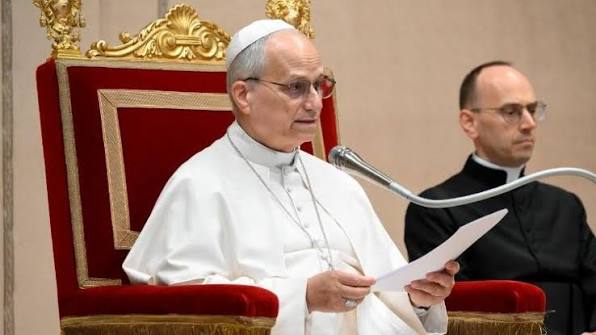
Pope calls for immediate ceasefire in Iran war
ON: March 15, 2026 -

‘Caution level’ heat alert issued for 14 districts
ON: March 15, 2026 -
PM Harini warns prolonged Middle East war could hit Sri Lanka
ON: March 15, 2026 -
Sajith criticises govt arrogance, lack of foresight amid fuel crisis
ON: March 15, 2026