





The forgotten science of smell
How scents shape memory, emotion and behaviour

A smell can transport a person back in time within seconds.
The scent of rain on dry earth may recall childhood. The smell of a particular meal can bring back memories of home. Even the fragrance of a perfume can remind someone of a person they have not seen for years.
Unlike many other senses, smell has an unusually powerful connection with memory and emotion. Scientists have spent decades investigating this relationship, and research suggests that our sense of smell influences far more than our ability to identify pleasant or unpleasant odours.
It can affect behaviour, appetite, memories and even how we perceive our surroundings.
One of our oldest senses
The ability to detect chemicals in the environment is an ancient biological survival mechanism.
Long before humans developed complex languages or sophisticated tools, smell could provide vital information. Animals use odours to locate food, detect predators, identify members of their species and recognise potential dangers.
Humans retain many of these abilities, although modern life has reduced our dependence on smell for survival.
Our noses contain specialised sensory neurons capable of detecting thousands of different chemical compounds. These signals are then transmitted to the brain, where they are interpreted as particular smells.
What makes the system especially interesting is where those signals go.
A direct connection to the brain
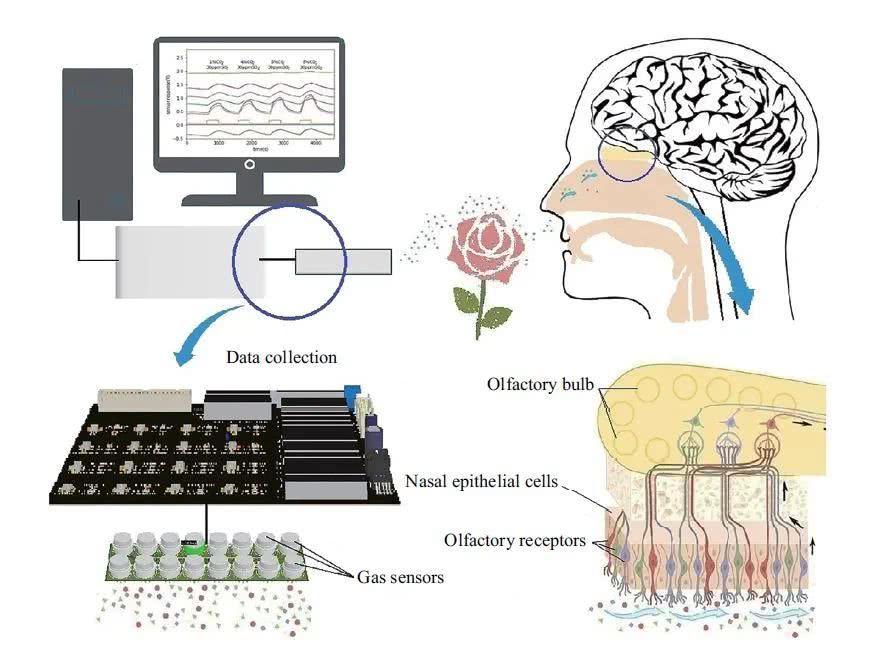
Information from most senses passes through several processing stages before reaching areas associated with emotion and memory.
Smell is different.
The neural pathways involved in olfaction have particularly close connections with brain regions involved in memory and emotion, including structures associated with the limbic system.
The hippocampus plays a major role in forming and retrieving memories, while the amygdala is heavily involved in emotional processing.
This neurological relationship may help explain why a smell can trigger a remarkably vivid memory without conscious effort.
A person may struggle to remember a particular childhood afternoon when asked directly, yet suddenly recall it after encountering a familiar smell.
The “Proust effect”
The phenomenon has become associated with French writer Marcel Proust.
In his novel In Search of Lost Time, a taste and smell associated with a madeleine cake unexpectedly triggers an extensive childhood memory.
Scientists later adopted the term “Proust phenomenon” to describe the tendency for sensory cues, particularly smells, to evoke vivid autobiographical memories.
Research suggests that memories triggered by smells can sometimes feel more emotional and vivid than memories triggered by words or other sensory cues.
This does not mean that every smell produces a perfect memory. Human memory is reconstructive and can change over time. However, odours can act as powerful retrieval cues.
Why smells can influence emotions
Smell is not simply about identifying what is around us.
Odours can influence how we feel about a place or situation.
A pleasant smell may make an environment seem more welcoming, while an unpleasant odour can create an immediate sense of discomfort.
Businesses have long recognised this connection. Hotels, restaurants and retail spaces sometimes use carefully selected scents as part of the atmosphere they create.
The scientific evidence for how strongly commercial scent affects consumer behaviour varies, but the basic psychological principle is well established: smell can influence perception and emotional responses.
Smell and food
Much of what people describe as “taste” actually depends on smell.
The tongue detects basic taste qualities such as sweet, salty, sour, bitter and umami. The nose provides much of the additional information that allows the brain to distinguish complex flavours.
This becomes obvious when someone has a blocked nose.
Food may suddenly seem bland even though the tongue continues detecting basic tastes.
As we chew, volatile molecules travel from the mouth into the nasal cavity, allowing the brain to combine taste and smell into the experience we call flavour.
In other words, enjoying a meal is partly an experience created by the nose.

Smell can also warn us
Not all important smells are pleasant.
The human ability to detect certain odours can provide early warnings about potentially dangerous substances. The smell of smoke, spoiled food or certain chemicals can trigger immediate avoidance behaviour.
However, smell is not a perfect safety system.
Some dangerous substances have little or no detectable odour, while people can also become accustomed to persistent smells and stop noticing them.
For that reason, technologies such as smoke and gas detectors remain essential.
A changing sense
Our sense of smell is not fixed throughout life.
Age, illness, environmental exposure and certain medications can affect olfactory function.
Some viral infections can also temporarily or, in some cases, persistently alter the sense of smell.
Researchers are increasingly interested in these changes because declining smell perception may sometimes accompany neurological conditions. However, loss of smell alone does not mean that someone has a particular neurological disease.
Scientists are investigating whether changes in olfactory function could eventually provide useful information for early detection of certain conditions.
The world without smell
Because smell is often taken for granted, losing it can be surprisingly disruptive.
People who experience significant loss of smell may find food less enjoyable, have difficulty detecting spoiled food or smoke, and feel disconnected from memories associated with familiar environments.
Some people also report changes in mood and quality of life.
This highlights something easily overlooked: our senses do not simply help us understand the outside world. They contribute to how we experience our personal histories and everyday lives.
The future of smell technology
Scientists are now exploring ways of measuring, reproducing and even digitally transmitting smells.
Researchers have developed electronic noses that use sensors to identify chemical patterns. Such technologies have potential applications in areas including food quality, environmental monitoring and medical research.
There is also growing interest in virtual reality systems that could incorporate smell alongside sight and sound.
A truly immersive digital environment might one day allow users not only to see and hear a virtual forest, for example, but also experience an approximation of its distinctive scents.
Whether such technology becomes mainstream remains uncertain.
An invisible sense with enormous influence

Smell is easy to overlook because it is invisible.
We cannot see the molecules entering our noses or watch the brain transform them into memories and emotions.
Yet this quiet sensory system can influence what we eat, how we respond to environments and which moments from our past suddenly return to consciousness.
Perhaps that is what makes smell so fascinating.
A single invisible molecule can sometimes open a door to a memory that seemed forgotten.
And unlike a photograph or a written sentence, the trigger may arrive without warning, carried simply on the air.
Sources
- National Institute on Deafness and Other Communication Disorders (NIDCD), National Institutes of Health
- National Center for Biotechnology Information (NCBI)
- Nature Reviews Neuroscience
- Chemical Senses
- Harvard Medical School
- American Psychological Association
- Encyclopaedia Britannica
Related News
Mrs. Nimala Perera; A Treasure Trove and the Heart of St. Joseph’s College, Colombo 10.
By : Guruji Ravindhiran Maruthai Mrs. Nimala Perera, a renowned educator of the hallowed educational institutionSt. Joseph’s College, Colombo 10, Sri Lanka,celebrates…
Read More
Online admission cards released for 2026 A/L Biosystems Technology Practical Exams
Candidates appearing for the 2026 G.C.E. Advanced Level Biosystems Technology practical examinations can download their admission cards from the official Department of…
Read MoreGovt to renew MoU with Asia Pacific Body to elevate vocational training
The Cabinet of Ministers has approved a proposal to renew the Memorandum of Understanding (MoU) between Sri Lanka’s Tertiary and Vocational Education…
Read MorePM inaugurates ‘Sittam 2026’ Art Exhibition under ‘Kolomtota Abhinandana’ initiative
In parallel with the National Literary and Arts Festival, Prime Minister Dr. Harini Amarasuriya opened the 'Sittam 2026' art exhibition on October…
Read MoreKorean Association pledges medical aid and special needs youth programme for Sri Lanka
The Korean Volunteer Association for Distinguished Service to the State is organizing an 11-day programme for next year aimed at identifying and…
Read MoreCourses
-

The future of higher education tech: why industry needs purpose-built solutions
For years, Institutions and education agencies have been forced to rely on a patchwork of horizontal SaaS solutions – general tools that… -

MBA in Project Management & Artificial Intelligence – Oxford College of Business
In an era defined by rapid technological change, organizations increasingly demand leaders who not only understand traditional project management, but can also… -

Scholarships for 2025 Postgraduate Diploma in Education for SLEAS and SLTES Officers
The Ministry of Education, Higher Education and Vocational Education has announced the granting of full scholarships for the one-year weekend Postgraduate Diploma… -

Shape Your Future with a BSc in Business Management (HRM) at Horizon Campus
Human Resource Management is more than a career. It’s about growing people, building organizational culture, and leading with purpose. Every impactful journey… -

ESOFT UNI Signs MoU with Box Gill Institute, Australia
ESOFt UNI recently hosted a formal Memorandum of Understanding (MoU) signing ceremony with Box Hill Institute, Australia, signaling a significant step in… -

Ace Your University Interview in Sri Lanka: A Guide with Examples
Getting into a Sri Lankan sate or non-state university is not just about the scores. For some universities' programmes, your personality, communication… -

MCW Global Young Leaders Fellowship 2026
MCW Global (Miracle Corners of the World) runs a Young Leaders Fellowship, a year-long leadership program for young people (18–26) around the… -
Enhance Your Arabic Skills with the Intermediate Language Course at BCIS
BCIS invites learners to join its Intermediate Arabic Language Course this November and further develop both linguistic skills and cultural understanding. Designed… -

Achieve Your American Dream : NCHS Spring Intake Webinar
NCHS is paving the way for Sri Lankan students to achieve their American Dream. As Sri Lanka’s leading pathway provider to the… -
National Diploma in Teaching course : Notice
A Gazette notice has been released recently, concerning the enrollment of aspiring teachers into National Colleges of Education for the three-year pre-service… -
IMC Education Features Largest Student Recruitment for QIU’s October 2025 Intake
Quest International University (QIU), Malaysia recently hosted a pre-departure briefing and high tea at the Shangri-La Hotel in Colombo for its incoming… -

Global University Employability Ranking according to Times Higher Education
Attending college or university offers more than just career preparation, though selecting the right school and program can significantly enhance your job… -

Diploma in Occupational Safety & Health (DOSH) – CIPM
The Chartered Institute of Personnel Management (CIPM) is proud to announce the launch of its Diploma in Occupational Safety & Health (DOSH),… -

Small Grant Scheme for Australia Awards Alumni Sri Lanka
Australia Awards alumni are warmly invited to apply for a grant up to AUD 5,000 to support an innovative project that aim… -

PIM Launches Special Programme for Newly Promoted SriLankan Airlines Managers
The Postgraduate Institute of Management (PIM) has launched a dedicated Newly Promoted Manager Programme designed to strengthen the leadership and management capabilities…
Newswire
-

Wildlife officers arrest four suspects with porcupine meat, illegal firearms
ON: October 14, 2026 -

Sri Lanka Customs reaches 2026 revenue target of Rs. 2,208 Bn by Oct.13
ON: October 14, 2026 -
St. Joseph’s College Honours Mrs Nimala Perera’s Five Decades of Service
ON: October 14, 2026 -

Taxpayers reminded to submit income tax returns by November 30
ON: October 14, 2026 -

Sri Lanka joins first BIMSTEC Home Ministers’ Meeting in India
ON: October 14, 2026