

The rise of skills-based careers: What employers are looking for now

The traditional path from education to employment is changing. For generations, the route seemed relatively straightforward: complete school, earn a qualification, apply for jobs and build a career around that qualification.
Today, that formula is becoming less predictable.
Employers are increasingly looking at what people can actually do, alongside where they studied and what qualifications they hold. At the same time, new technologies, changing business models and shortages of skilled workers are creating demand for new combinations of abilities.
This does not mean degrees are becoming irrelevant. Instead, the modern workplace is placing greater emphasis on the combination of qualifications, practical skills, experience and the ability to keep learning.
A changing definition of employability
A university degree can demonstrate knowledge and commitment, but it does not necessarily tell an employer how effectively someone can solve a real-world problem.
Can the candidate analyse information? Can they communicate clearly? Can they work with unfamiliar technology? Can they adapt when circumstances change?
These questions are becoming increasingly important.
The World Economic Forum’s Future of Jobs Report 2025 found that employers continue to rank analytical thinking among the most important core skills, while resilience, flexibility, leadership, creative thinking and curiosity are also expected to remain highly valuable.
This represents an important shift in how employability is understood.
Technical knowledge may help someone enter a profession, but adaptability can determine how successfully they remain in it.
The growth of hybrid careers
One of the most interesting developments in today’s labour market is the rise of hybrid roles.
These are jobs that combine knowledge from different fields.
A marketing professional may now need to understand data analytics and artificial intelligence. A journalist may work with data visualisation, digital publishing and social media analytics. An architect may use advanced modelling software, environmental data and artificial intelligence.
Similarly, healthcare professionals increasingly work with digital records, data systems and emerging medical technologies.
The boundaries between professions are becoming less rigid.
Someone does not necessarily have to abandon one field to enter another. Instead, adding a second area of expertise can create new opportunities.
Technology is changing ordinary jobs too

Discussions about future employment often focus on jobs that might disappear because of automation.
But technological change can also transform jobs without eliminating them.
An accountant, for example, may use software to automate routine calculations while spending more time interpreting financial information and advising clients.
A teacher can use digital tools to prepare learning materials while concentrating more heavily on discussion, mentoring and individual support.
A designer can use generative tools to produce initial concepts while applying human judgement to decide which ideas are useful.
In these situations, technology changes the nature of the job rather than simply replacing the worker.
The growing value of AI literacy
Artificial intelligence is becoming one of the clearest examples of this change.
Not everyone needs to become an AI engineer. However, people in many professions are likely to encounter AI-powered systems in some form.
Understanding how to use these tools, recognise their limitations, verify their outputs and apply them responsibly is therefore becoming an increasingly useful workplace skill.
AI literacy could eventually become as ordinary as computer literacy.
The advantage may not belong to people who know every AI tool available, but to those who understand how technology can be applied to solve problems within their particular field.
Human skills are gaining importance
It may seem contradictory, but the growth of automation could make some human abilities more valuable.
Machines can process enormous quantities of information quickly. They can generate text, analyse patterns and perform repetitive tasks.
But workplaces still require people who can understand context, negotiate with others, build relationships, exercise judgement and make ethical decisions.
Communication, empathy, leadership, creativity and critical thinking therefore remain important.
A future employee may work alongside increasingly sophisticated technology without competing directly against it.
The real advantage may come from knowing what humans should do and what machines should do.

Experience can matter as much as theory
Another significant change is the growing importance of practical experience.
Employers may value candidates who can demonstrate what they have accomplished rather than simply listing subjects they have studied.
Internships, volunteering, freelance projects, competitions, portfolios and community initiatives can all provide evidence of practical ability.
For students, this means education does not have to be limited to examinations.
A student interested in graphic design can build a portfolio. Someone interested in journalism can publish articles. A future programmer can develop small applications. A student interested in business can experiment with a small project.
These activities demonstrate initiative and provide evidence of skills that cannot always be measured through examination results.
The importance of transferable skills
Some skills remain useful even when industries change.
Being able to communicate clearly is useful in almost every profession. So are problem-solving, teamwork, research, time management and the ability to learn independently.
These are sometimes called transferable skills because they can move with a person from one job to another.
A graduate may change industries several times during a working life. A person who develops strong transferable skills can carry valuable capabilities across those transitions.
This may become increasingly important as people work longer and career paths become less predictable.
Learning does not end at graduation
Perhaps the biggest change is the gradual disappearance of the idea that education ends when formal schooling ends.
Technology can make professional knowledge outdated surprisingly quickly.
A qualification earned today may remain valuable for decades, but some of the specific tools and methods associated with that profession may change within only a few years.
This makes lifelong learning increasingly important.
Professional courses, online education, workplace training, industry certifications and independent learning can all become part of a person’s career development.
The ability to learn may therefore become one of the most important career skills of all.
What this means for young people
For students deciding what to study, the changing job market can be both exciting and confusing.
There is no reliable way to predict exactly which occupations will dominate decades from now.
Instead of trying to identify one “perfect” career, students can build a strong foundation that allows them to adapt.
A good education should provide subject knowledge, but it should also develop curiosity, communication, analytical thinking and the confidence to learn unfamiliar things.
Students can also begin developing practical experience while studying.
The goal is not to predict the future perfectly.
It is to become capable of responding to it.
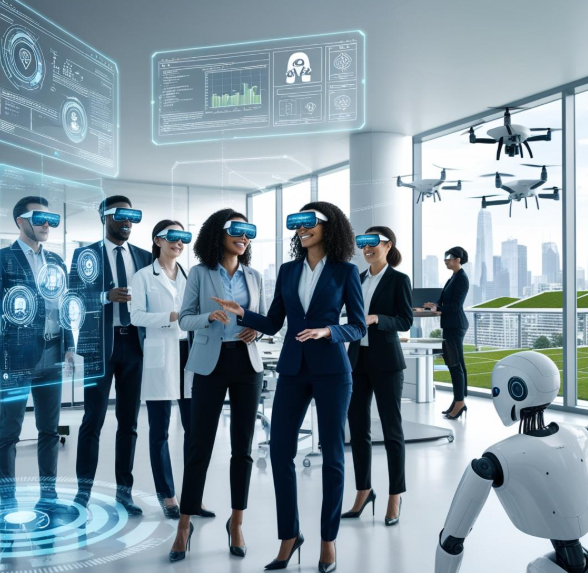
The career advantage may be adaptability
The modern labour market is not necessarily moving towards a world where qualifications no longer matter.
It is moving towards a world where qualifications alone may not be enough.
Employers need people who can combine knowledge with practical ability, technology with judgement and specialist expertise with adaptability.
The most successful careers may therefore belong to people who are willing to keep developing rather than those who assume their education has finished.
The job someone starts with may not be the job they retire from.
But the ability to learn, adapt and remain useful can travel with them throughout the journey.
Sources
- World Economic Forum, Future of Jobs Report 2025
- International Labour Organization, World Employment and Social Outlook
- OECD, research on skills, employment and the future of work
- LinkedIn Economic Graph, labour-market and skills research
- International Labour Organization, research on digitalisation and changing work
Related News
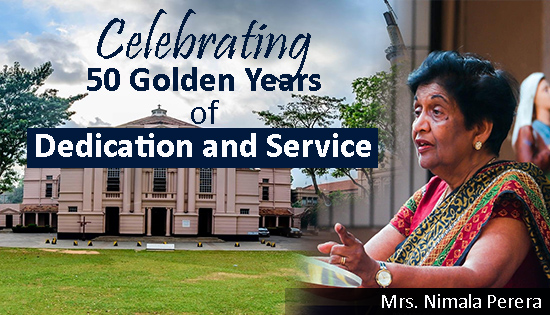
Mrs. Nimala Perera; A Treasure Trove and the Heart of St. Joseph’s College, Colombo 10.
By : Guruji Ravindhiran Maruthai Mrs. Nimala Perera, a renowned educator of the hallowed educational institutionSt. Joseph’s College, Colombo 10, Sri Lanka,celebrates…
Read More
Online admission cards released for 2026 A/L Biosystems Technology Practical Exams
Candidates appearing for the 2026 G.C.E. Advanced Level Biosystems Technology practical examinations can download their admission cards from the official Department of…
Read MoreGovt to renew MoU with Asia Pacific Body to elevate vocational training
The Cabinet of Ministers has approved a proposal to renew the Memorandum of Understanding (MoU) between Sri Lanka’s Tertiary and Vocational Education…
Read MorePM inaugurates ‘Sittam 2026’ Art Exhibition under ‘Kolomtota Abhinandana’ initiative
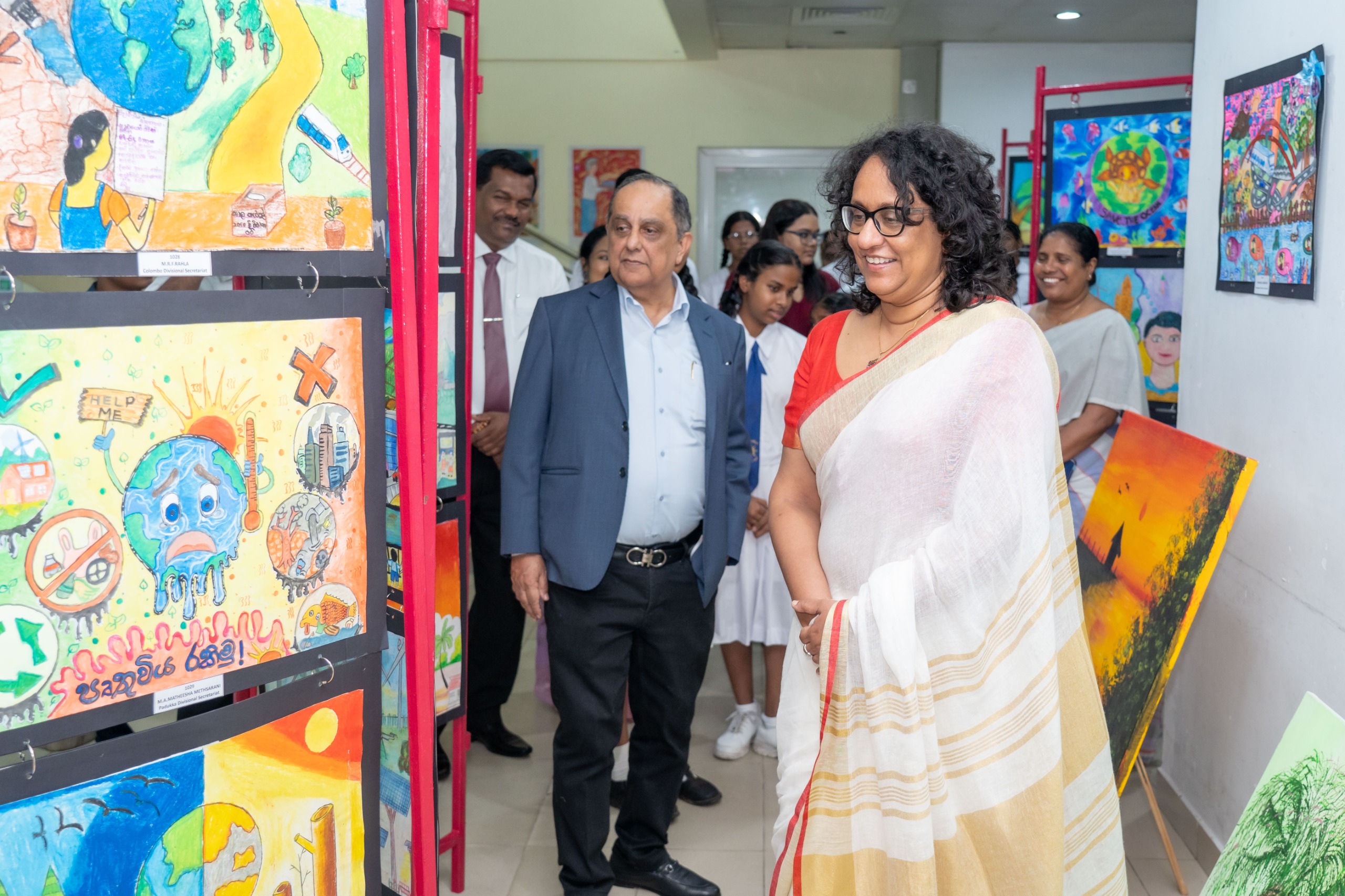
In parallel with the National Literary and Arts Festival, Prime Minister Dr. Harini Amarasuriya opened the 'Sittam 2026' art exhibition on October…
Read MoreKorean Association pledges medical aid and special needs youth programme for Sri Lanka
The Korean Volunteer Association for Distinguished Service to the State is organizing an 11-day programme for next year aimed at identifying and…
Read MoreCourses
-
The future of higher education tech: why industry needs purpose-built solutions
For years, Institutions and education agencies have been forced to rely on a patchwork of horizontal SaaS solutions – general tools that… -

MBA in Project Management & Artificial Intelligence – Oxford College of Business
In an era defined by rapid technological change, organizations increasingly demand leaders who not only understand traditional project management, but can also… -

Scholarships for 2025 Postgraduate Diploma in Education for SLEAS and SLTES Officers
The Ministry of Education, Higher Education and Vocational Education has announced the granting of full scholarships for the one-year weekend Postgraduate Diploma… -
Shape Your Future with a BSc in Business Management (HRM) at Horizon Campus
Human Resource Management is more than a career. It’s about growing people, building organizational culture, and leading with purpose. Every impactful journey… -
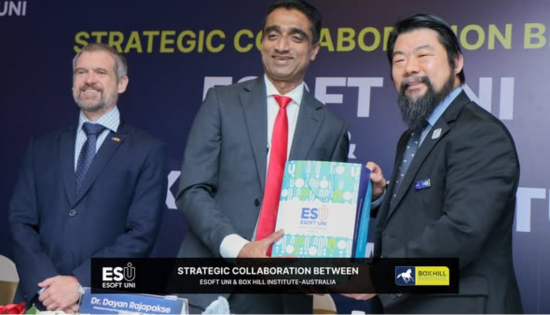
ESOFT UNI Signs MoU with Box Gill Institute, Australia
ESOFt UNI recently hosted a formal Memorandum of Understanding (MoU) signing ceremony with Box Hill Institute, Australia, signaling a significant step in… -

Ace Your University Interview in Sri Lanka: A Guide with Examples
Getting into a Sri Lankan sate or non-state university is not just about the scores. For some universities' programmes, your personality, communication… -
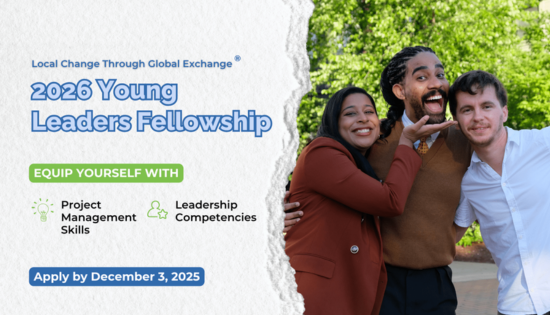
MCW Global Young Leaders Fellowship 2026
MCW Global (Miracle Corners of the World) runs a Young Leaders Fellowship, a year-long leadership program for young people (18–26) around the… -
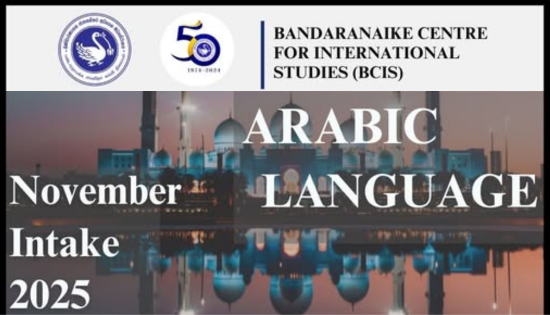
Enhance Your Arabic Skills with the Intermediate Language Course at BCIS
BCIS invites learners to join its Intermediate Arabic Language Course this November and further develop both linguistic skills and cultural understanding. Designed… -
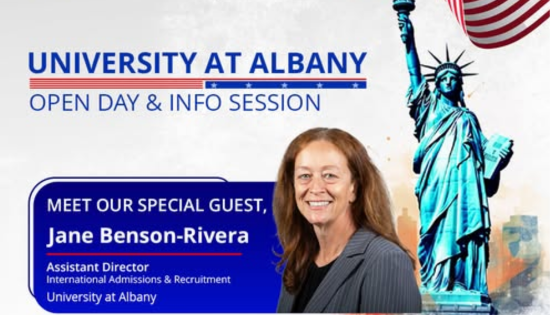
Achieve Your American Dream : NCHS Spring Intake Webinar
NCHS is paving the way for Sri Lankan students to achieve their American Dream. As Sri Lanka’s leading pathway provider to the… -
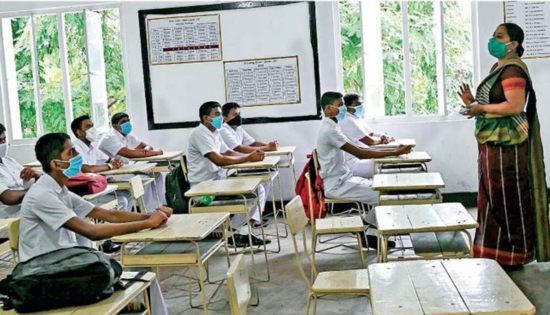
National Diploma in Teaching course : Notice
A Gazette notice has been released recently, concerning the enrollment of aspiring teachers into National Colleges of Education for the three-year pre-service… -
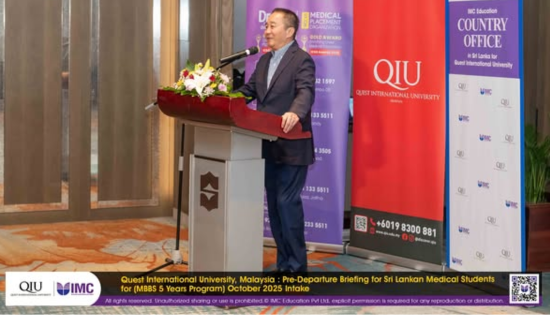
IMC Education Features Largest Student Recruitment for QIU’s October 2025 Intake
Quest International University (QIU), Malaysia recently hosted a pre-departure briefing and high tea at the Shangri-La Hotel in Colombo for its incoming… -

Global University Employability Ranking according to Times Higher Education
Attending college or university offers more than just career preparation, though selecting the right school and program can significantly enhance your job… -

Diploma in Occupational Safety & Health (DOSH) – CIPM
The Chartered Institute of Personnel Management (CIPM) is proud to announce the launch of its Diploma in Occupational Safety & Health (DOSH),… -
Small Grant Scheme for Australia Awards Alumni Sri Lanka
Australia Awards alumni are warmly invited to apply for a grant up to AUD 5,000 to support an innovative project that aim… -
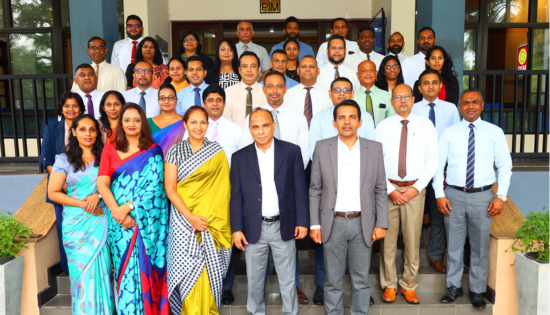
PIM Launches Special Programme for Newly Promoted SriLankan Airlines Managers
The Postgraduate Institute of Management (PIM) has launched a dedicated Newly Promoted Manager Programme designed to strengthen the leadership and management capabilities…
Newswire
-

Wildlife officers arrest four suspects with porcupine meat, illegal firearms
ON: October 14, 2026 -
Sri Lanka Customs reaches 2026 revenue target of Rs. 2,208 Bn by Oct.13
ON: October 14, 2026 -
St. Joseph’s College Honours Mrs Nimala Perera’s Five Decades of Service
ON: October 14, 2026 -
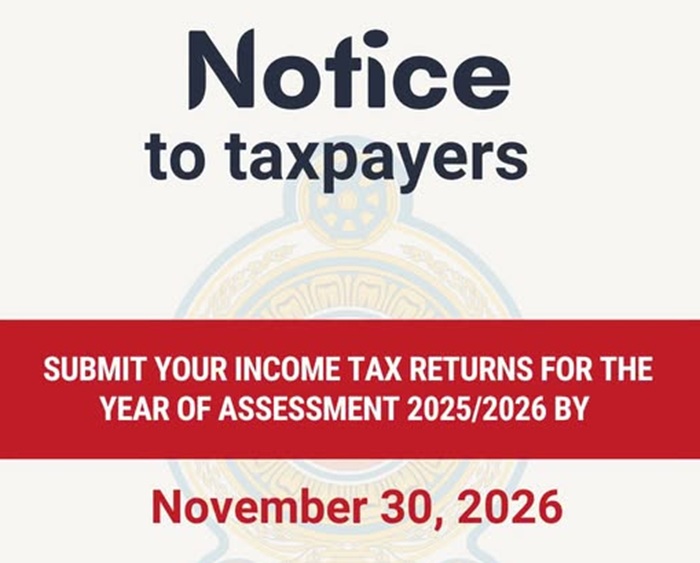
Taxpayers reminded to submit income tax returns by November 30
ON: October 14, 2026 -

Sri Lanka joins first BIMSTEC Home Ministers’ Meeting in India
ON: October 14, 2026