




The science of sleep: What happens to the brain while we rest

Sleep may appear to be a period when the body simply shuts down, but the human brain remains remarkably active throughout the night. While we sleep, the brain processes information, regulates emotions, consolidates memories and carries out biological processes that are essential for physical and mental health.
Scientists now understand that sleep is not a single state. It consists of several stages, each associated with different patterns of brain activity and different functions. The transition between these stages occurs repeatedly during a normal night’s sleep.
Understanding what happens during these hours has changed the way researchers think about learning, memory and wellbeing.
The brain does not simply switch off
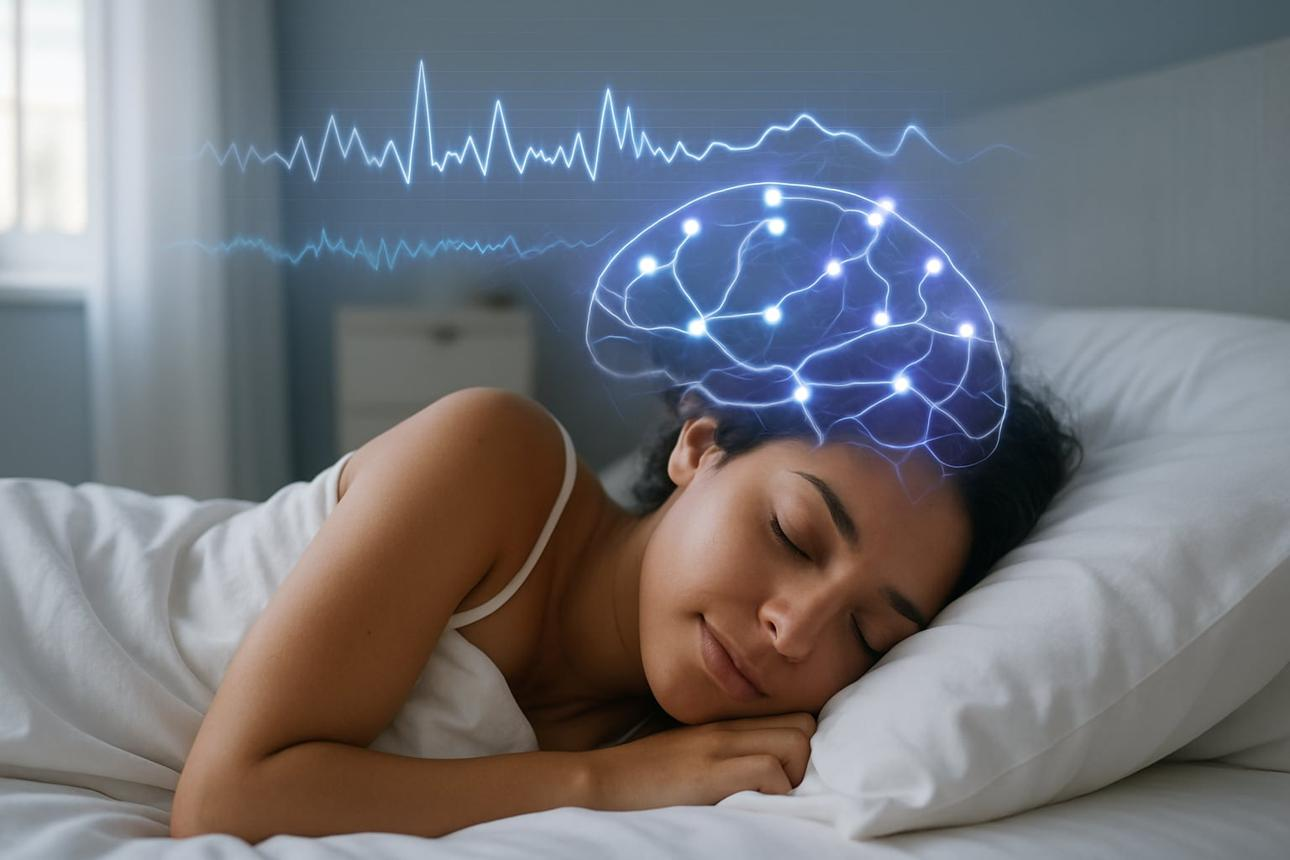
During sleep, the brain continues to communicate through complex patterns of electrical activity. These patterns change as a person moves through different stages of sleep.
Sleep is broadly divided into non-rapid eye movement, or NREM, sleep and rapid eye movement, or REM, sleep. NREM sleep includes several stages ranging from light sleep to deep sleep. REM sleep is associated with heightened brain activity, vivid dreaming and temporary paralysis of most skeletal muscles.
A typical night involves several cycles between NREM and REM sleep. The proportion of each stage changes as the night progresses, with longer periods of REM sleep generally occurring toward morning.
This cycling appears to be important because different stages contribute to different aspects of physical and mental restoration.
Deep sleep and physical restoration
The deepest stage of NREM sleep is often referred to as slow-wave sleep because the brain produces slow, high-amplitude electrical waves.
This stage is particularly important for physical restoration. During deep sleep, the body carries out processes associated with tissue repair, immune function and energy regulation.
Growth hormone is also released in significant amounts during deep sleep, particularly in children and adolescents.
This helps explain why sleep is especially important during periods of physical development.
The sleeping brain and memory
One of the most fascinating areas of sleep research concerns memory.
During the day, people encounter enormous amounts of information. Much of it is temporary. The brain must determine what should be retained and what can be discarded.
Research suggests that sleep helps consolidate memories by strengthening some neural connections while reorganising others.
This is one reason researchers often advise students not to sacrifice sleep in an attempt to study throughout the night. Learning does not necessarily end when a person closes a textbook. Some of the processing required to retain newly learned information continues during sleep.
Experiments have shown that sleep can improve performance on certain memory and learning tasks, although the precise effects depend on the type of information being learned.
Why dreams remain mysterious
Dreams have fascinated humans for thousands of years, but scientists still do not have a complete explanation for why they occur.
Dreaming can occur during several stages of sleep, although vivid and elaborate dreams are particularly common during REM sleep.
One possibility is that dreaming reflects the brain’s attempt to process memories, emotions and experiences. Another view is that dreams may emerge partly from the brain interpreting internally generated neural activity.
The reality may be more complicated.
Dreams can incorporate recent experiences, older memories, emotions and completely unfamiliar combinations of ideas. Despite extensive research, there is still no universally accepted explanation for why the brain creates the particular stories experienced during dreams.
The brain’s nighttime cleaning system
Another important discovery has changed scientists’ understanding of sleep.
Research suggests that sleep is associated with increased movement of fluid through spaces surrounding brain cells. This process is linked to the brain’s ability to remove certain metabolic waste products.
The system has been described in relation to the glymphatic system, a network involved in fluid exchange and waste clearance within the central nervous system.
Scientists are still investigating exactly how this system operates in humans and how it relates to neurological health. Nevertheless, the research provides another possible explanation for why adequate sleep is biologically important.
Sleep may not simply restore energy. It may also help maintain the brain itself.
Losing sleep affects more than tiredness
Sleep deprivation can affect attention, reaction time, mood, memory and decision-making.
When people are severely sleep deprived, their ability to concentrate can deteriorate and they may become more vulnerable to mistakes and accidents.
Long-term insufficient sleep has also been associated with increased risks of several health problems, including cardiovascular disease, metabolic disorders and mental health difficulties.
The effects can be particularly important for young people because sleep patterns interact with physical development, learning and emotional regulation.
Modern life has changed the way we sleep
Artificial lighting, smartphones, irregular work schedules and round-the-clock entertainment have made it possible to remain active at almost any hour.
This has created a conflict between modern lifestyles and the biological processes that regulate sleep.
The body’s internal circadian clock helps coordinate sleep and wakefulness according to roughly 24-hour cycles. Light is one of the strongest signals influencing this system.
Exposure to bright light at night can delay the body’s preparation for sleep, particularly when it occurs close to bedtime.
This does not mean that every use of a smartphone before bed will cause serious sleep problems. However, excessive screen use, stimulating content and irregular sleeping schedules can contribute to poor sleep habits.

Sleep is part of learning
For educators, parents and students, one of the most important lessons from sleep research is that rest and learning are not competing activities.
They are connected.
A person may spend hours studying, but if inadequate sleep interferes with memory consolidation and attention, some of that effort may become less effective.
This is why sleep should not be viewed simply as time taken away from productive activity.
It is part of the biological process that allows the brain to function effectively the following day.
A mystery that scientists are still exploring
Despite decades of research, sleep remains surprisingly mysterious.
Scientists still debate exactly why dreaming occurs, how different stages contribute to specific forms of memory, and how the brain coordinates its many nighttime processes.
What is increasingly clear, however, is that sleep is an active biological state rather than a period of inactivity.
While the outside world becomes quiet, the brain continues working.
It sorts, strengthens, regulates and restores.
And every morning, when we wake up, we may be experiencing the results of several hours of work that happened entirely while we were unaware of it.
Sources
- National Institute of Neurological Disorders and Stroke (NINDS), National Institutes of Health
- National Heart, Lung, and Blood Institute (NHLBI), National Institutes of Health
- Harvard Medical School, Division of Sleep Medicine
- Sleep Foundation
- American Academy of Sleep Medicine
- Nature Reviews Neuroscience
- Journal of Neuroscience
- Science
Related News

CA Sri Lanka inaugurates 47th National Conference of Chartered Accountants tomorrow
The Institute of Chartered Accountants of Sri Lanka (CA Sri Lanka) will inaugurate its 47th National Conference of Chartered Accountants tomorrow (7).…
Read MoreEducation ministry to enforce single unified curriculum for all preschools next year
The Ministry of Education, Higher Education and Vocational Education will introduce new education reforms for Sri Lankan preschools starting next year, according…
Read MorePM commends teachers’ support for modern technology driven education reforms
Prime Minister Dr. Harini Amarasuriya commended teachers for their commitment to adapting to changing global trends and guiding children along new educational…
Read MoreGeneral Sir John Kotelawala Defence University welcomes new chancellor
President Anura Kumara Dissanayake has appointed Air Chief Marshal Kolitha A. Gunathilake (Retd.) as the new Chancellor of General Sir John Kotelawala…
Read MorePM Amarasuriya holds talks with unions on Teacher Service Minute amendments
A special discussion was presided by Prime Minister Harini Amarasuriya and relevant officials with representatives of teacher and principal trade unions to…
Read MoreCourses
-

The future of higher education tech: why industry needs purpose-built solutions
For years, Institutions and education agencies have been forced to rely on a patchwork of horizontal SaaS solutions – general tools that… -

MBA in Project Management & Artificial Intelligence – Oxford College of Business
In an era defined by rapid technological change, organizations increasingly demand leaders who not only understand traditional project management, but can also… -

Scholarships for 2025 Postgraduate Diploma in Education for SLEAS and SLTES Officers
The Ministry of Education, Higher Education and Vocational Education has announced the granting of full scholarships for the one-year weekend Postgraduate Diploma… -

Shape Your Future with a BSc in Business Management (HRM) at Horizon Campus
Human Resource Management is more than a career. It’s about growing people, building organizational culture, and leading with purpose. Every impactful journey… -

ESOFT UNI Signs MoU with Box Gill Institute, Australia
ESOFt UNI recently hosted a formal Memorandum of Understanding (MoU) signing ceremony with Box Hill Institute, Australia, signaling a significant step in… -

Ace Your University Interview in Sri Lanka: A Guide with Examples
Getting into a Sri Lankan sate or non-state university is not just about the scores. For some universities' programmes, your personality, communication… -

MCW Global Young Leaders Fellowship 2026
MCW Global (Miracle Corners of the World) runs a Young Leaders Fellowship, a year-long leadership program for young people (18–26) around the… -
Enhance Your Arabic Skills with the Intermediate Language Course at BCIS
BCIS invites learners to join its Intermediate Arabic Language Course this November and further develop both linguistic skills and cultural understanding. Designed… -

Achieve Your American Dream : NCHS Spring Intake Webinar
NCHS is paving the way for Sri Lankan students to achieve their American Dream. As Sri Lanka’s leading pathway provider to the… -
National Diploma in Teaching course : Notice
A Gazette notice has been released recently, concerning the enrollment of aspiring teachers into National Colleges of Education for the three-year pre-service… -

IMC Education Features Largest Student Recruitment for QIU’s October 2025 Intake
Quest International University (QIU), Malaysia recently hosted a pre-departure briefing and high tea at the Shangri-La Hotel in Colombo for its incoming… -

Global University Employability Ranking according to Times Higher Education
Attending college or university offers more than just career preparation, though selecting the right school and program can significantly enhance your job… -

Diploma in Occupational Safety & Health (DOSH) – CIPM
The Chartered Institute of Personnel Management (CIPM) is proud to announce the launch of its Diploma in Occupational Safety & Health (DOSH),… -

Small Grant Scheme for Australia Awards Alumni Sri Lanka
Australia Awards alumni are warmly invited to apply for a grant up to AUD 5,000 to support an innovative project that aim… -
PIM Launches Special Programme for Newly Promoted SriLankan Airlines Managers
The Postgraduate Institute of Management (PIM) has launched a dedicated Newly Promoted Manager Programme designed to strengthen the leadership and management capabilities…
Newswire
-

“Aren’t you ashamed?” Hakeem questions Govt over Iranian ships
ON: October 6, 2026 -
Russia quarantines about 200 after lab worker dies in suspected plague case
ON: October 6, 2026 -

Police reveal more details on raid video circulating on social media
ON: October 6, 2026 -

Prisons spokesman clarifies rules on prisoners’ attire when produced in court
ON: October 6, 2026