



Deepfakes and Ways to Outsmart Them
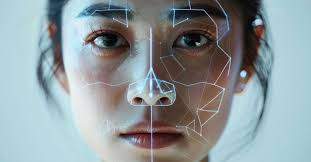
Today, AI is not a new concept, particularly among Gen-Zs. However, what is unknown is how AI fraud and deepfakes may occasionally wreck people’s lives, sometimes without them realizing it. Therefore, it is imperative to make sure that AI users truly know what they are using, not just for awareness but also for making the best use of it.
What is deepfake?
Deepfake technology, generated by AI, is not very famous among people in general though it has been a hot topic among tech enthusiasts because it is well known for creating fake personalities, images, videos or audio recordings to impersonate or represent something or someone doing something they didn’t do in real life.
Deepfakes can realistically create content that appears to come from trusted sources. Thus, their ability to spread false information and evidence has a greater impact on people’s lives because even though people know that AI is not human, they tend to trust what is unfolded by AI to be true. There is ample evidence of deepfake usages for notorious reasons such as blackmail, reputational harm, and fraud. This can confuse and harness profiles of celebrities, politicians, entrepreneurs, and even ordinary citizens.
How to spot them?
Spotting “AI or real” is not as easy as people think.
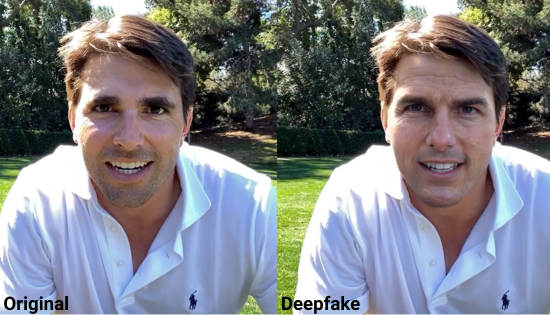
Years ago, when AI was new, images and videos it made were easier to spot because of poor quality and bad lip synching. Studies also discovered that the majority of faces created by deepfakes were not blinking. Yet, technology evolves considerably day by day, and as a result, with its weaknesses getting revealed, they get fixed instantly. So, today, people can find deepfake faces with blinking.
However, when looking closely, people still can find quality-wise issues related to deepfake content where the skin tone seems to be patchy and some fine details such as hair, facial expressions, jewellery, teeth, shadows, and eye movements are visibly inconsistent.
One key tip not to get fooled by deepfakes is the “SIFT” method, introduced by information researcher Mike Caulfield, from the University of Washington. According to this method, you need to,
- Stop
- Investigate the source
- Find better coverage
- Trace claims, quotes and media back to the original context.
People can also use tools such as INVID, DEEPFAKE-O-METER and WINSTONAI to determine if whatever information users obtain from AI is credible and reliable.
People can play games to detect AI and deepfakes to gain analytical and critical thinking on their content because in today’s world, the differences between AI’s ‘real or fake’ are so subtle that they require proper experience and knowledge. This only proves that it will get more and more advanced in the future.
Nonetheless, it is always important to remember that these tools and methods that can spot the differences are there not to stop people from ever using AI but to make sure that they first analyze the content and then responsibly share it.
People might wonder, if deepfakes endanger people this much, why can’t they be banned? The answer is, even when such content has no origin or clarity, it can still be protected by the First Amendment. The First Amendment gives people the “freedom of speech”. The contradictory view regarding this is that deepfake is AI and not real people, and therefore, it does not apply to technology. But this seemingly can again be discredited because just like people’s usage of newspapers, printing presses, photography, radio, and television to distribute speech is justifiable, AI users’ manipulation of information can also be defended.
AI and deepfakes are dangerous, and the speed at which they spread also contributes to this danger but it should not let people completely stay away from using AI because the world is evolving and people need to evolve with it. AI can educate and entertain people, raise awareness and enhance art, music and film industries. So, people should be educated enough to get all these positive and helpful uses of AI.
Related News

Education Ministry briefs officials on proposed National Curriculum Framework
Education officials at the provincial and zonal levels have been briefed on proposed education reforms and the new National Curriculum Framework during…
Read MoreEastern University teachers address ongoing higher education crisis
State universities in Sri Lanka are facing a severe crisis due to an acute shortage of human resources, inadequate infrastructure facilities, Eastern…
Read More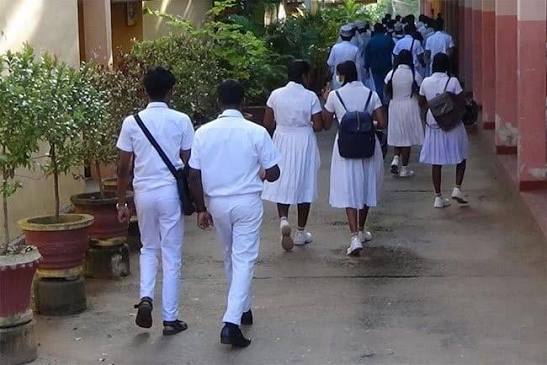
Poverty drives Central Province school dropouts
Around 24% of children enrolled in Grade 1 in the Central Province drop out before completing 13 years of school, Central Province…
Read MorePresident’s Fund honours A/L top achievers
The first district level recognition ceremony under the President’s Fund for high achievers of the 2025 G.C.E. Advanced Level Examination took place…
Read More
Sri Lanka to introduce New School Curricula and National Preschool Education Reforms
Significant changes are set for Sri Lanka’s school curriculum from 2027, including reducing the G.C.E. Ordinary Level examination to seven core subjects…
Read MoreCourses
-

The future of higher education tech: why industry needs purpose-built solutions
For years, Institutions and education agencies have been forced to rely on a patchwork of horizontal SaaS solutions – general tools that… -

MBA in Project Management & Artificial Intelligence – Oxford College of Business
In an era defined by rapid technological change, organizations increasingly demand leaders who not only understand traditional project management, but can also… -

Scholarships for 2025 Postgraduate Diploma in Education for SLEAS and SLTES Officers
The Ministry of Education, Higher Education and Vocational Education has announced the granting of full scholarships for the one-year weekend Postgraduate Diploma… -

Shape Your Future with a BSc in Business Management (HRM) at Horizon Campus
Human Resource Management is more than a career. It’s about growing people, building organizational culture, and leading with purpose. Every impactful journey… -
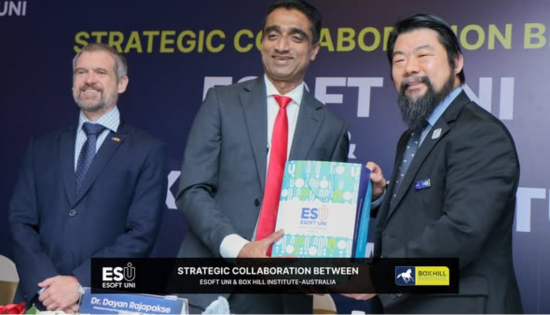
ESOFT UNI Signs MoU with Box Gill Institute, Australia
ESOFt UNI recently hosted a formal Memorandum of Understanding (MoU) signing ceremony with Box Hill Institute, Australia, signaling a significant step in… -

Ace Your University Interview in Sri Lanka: A Guide with Examples
Getting into a Sri Lankan sate or non-state university is not just about the scores. For some universities' programmes, your personality, communication… -
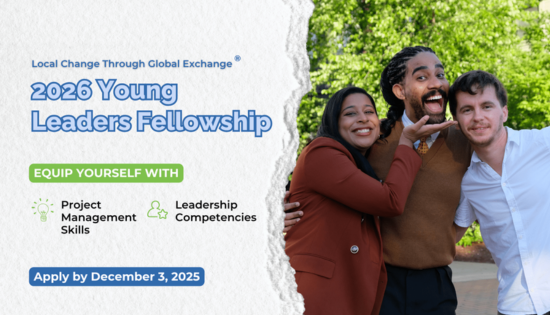
MCW Global Young Leaders Fellowship 2026
MCW Global (Miracle Corners of the World) runs a Young Leaders Fellowship, a year-long leadership program for young people (18–26) around the… -
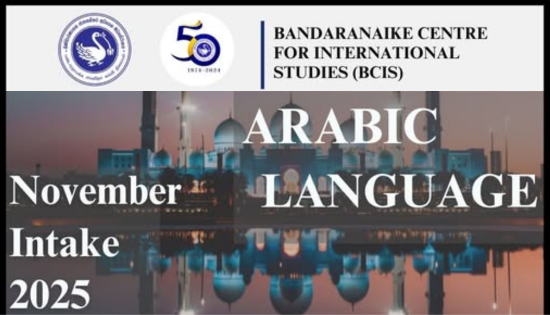
Enhance Your Arabic Skills with the Intermediate Language Course at BCIS
BCIS invites learners to join its Intermediate Arabic Language Course this November and further develop both linguistic skills and cultural understanding. Designed… -
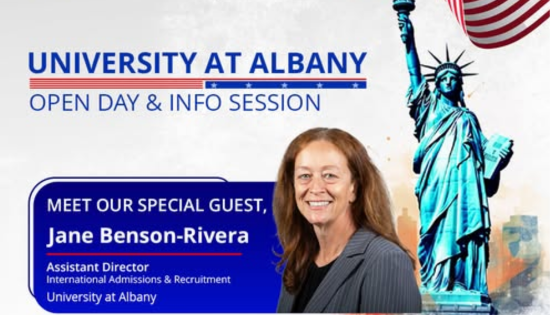
Achieve Your American Dream : NCHS Spring Intake Webinar
NCHS is paving the way for Sri Lankan students to achieve their American Dream. As Sri Lanka’s leading pathway provider to the… -
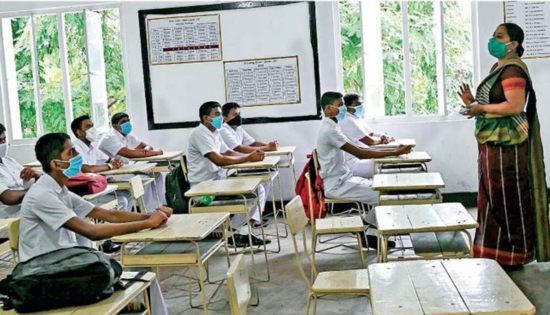
National Diploma in Teaching course : Notice
A Gazette notice has been released recently, concerning the enrollment of aspiring teachers into National Colleges of Education for the three-year pre-service… -
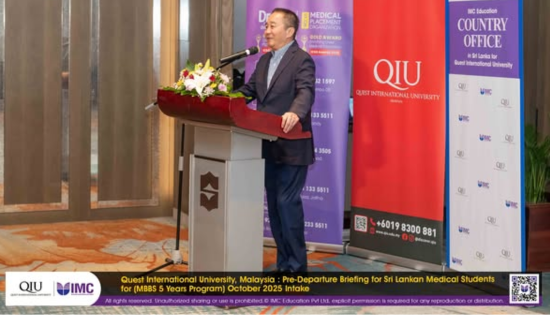
IMC Education Features Largest Student Recruitment for QIU’s October 2025 Intake
Quest International University (QIU), Malaysia recently hosted a pre-departure briefing and high tea at the Shangri-La Hotel in Colombo for its incoming… -

Global University Employability Ranking according to Times Higher Education
Attending college or university offers more than just career preparation, though selecting the right school and program can significantly enhance your job… -

Diploma in Occupational Safety & Health (DOSH) – CIPM
The Chartered Institute of Personnel Management (CIPM) is proud to announce the launch of its Diploma in Occupational Safety & Health (DOSH),… -
Small Grant Scheme for Australia Awards Alumni Sri Lanka
Australia Awards alumni are warmly invited to apply for a grant up to AUD 5,000 to support an innovative project that aim… -
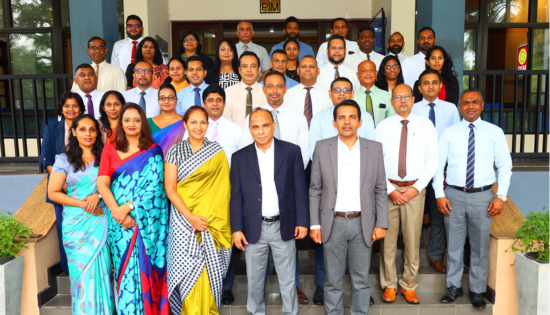
PIM Launches Special Programme for Newly Promoted SriLankan Airlines Managers
The Postgraduate Institute of Management (PIM) has launched a dedicated Newly Promoted Manager Programme designed to strengthen the leadership and management capabilities…
Newswire
-
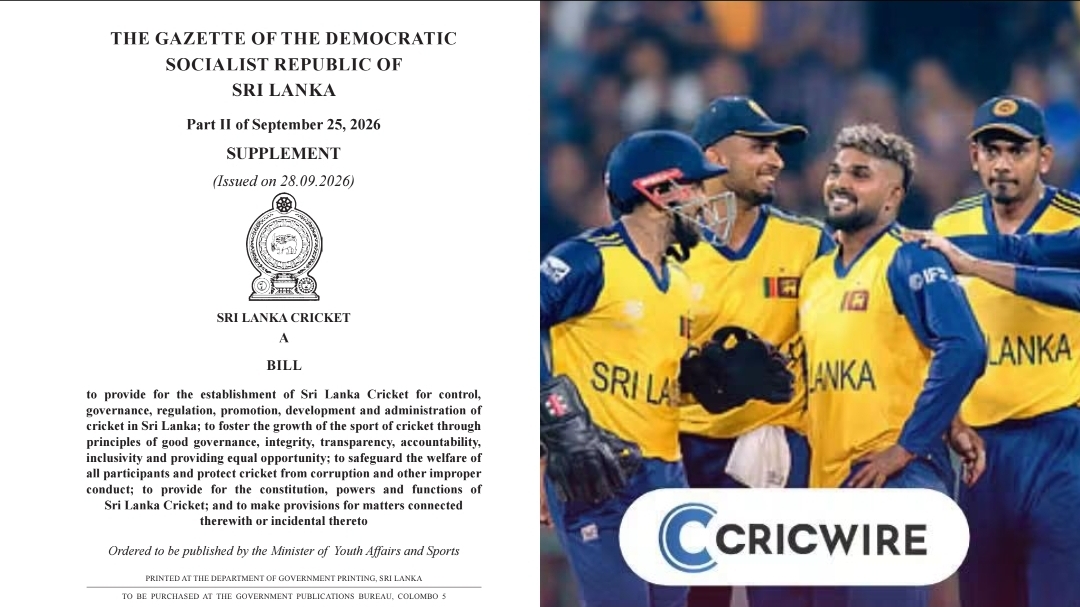
Who can become Sri Lanka Cricket’s next chairman — and who is barred?
ON: September 29, 2026 -

‘Desperate Lies’: Tilvin laughs off Prime Minister Poisoning Rumors
ON: September 29, 2026 -

Government moves to resolve Batticaloa dairy farmers’ grazing land dispute
ON: September 29, 2026 -

“I don’t remember”: Gotabaya questioned over Keith Noyahr abduction and disappearances
ON: September 29, 2026 -

Three films a day: Concerns raised over state TV schedule
ON: September 29, 2026