


City School of Architecture Students Take Proactive Stance Against Polythene Pollution
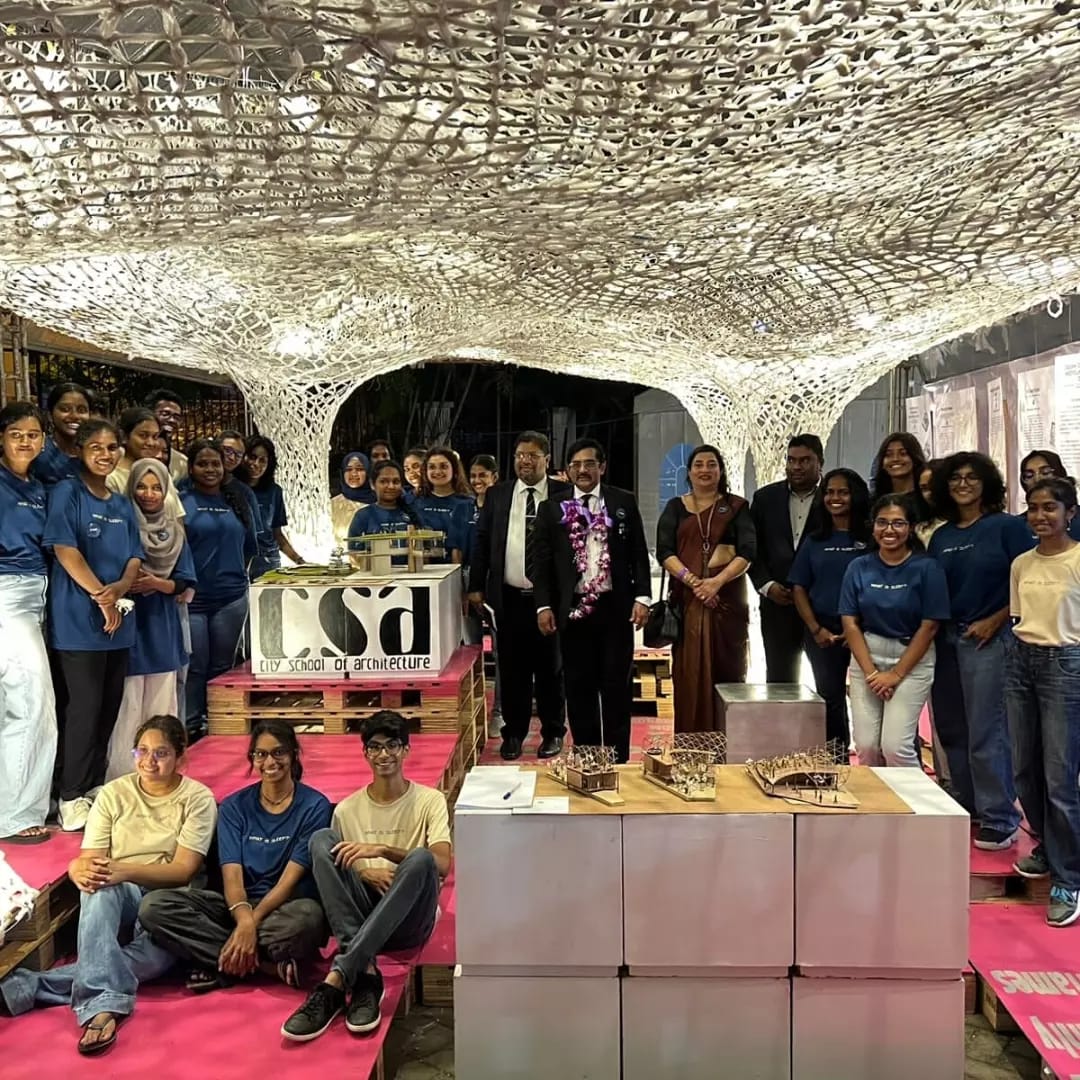
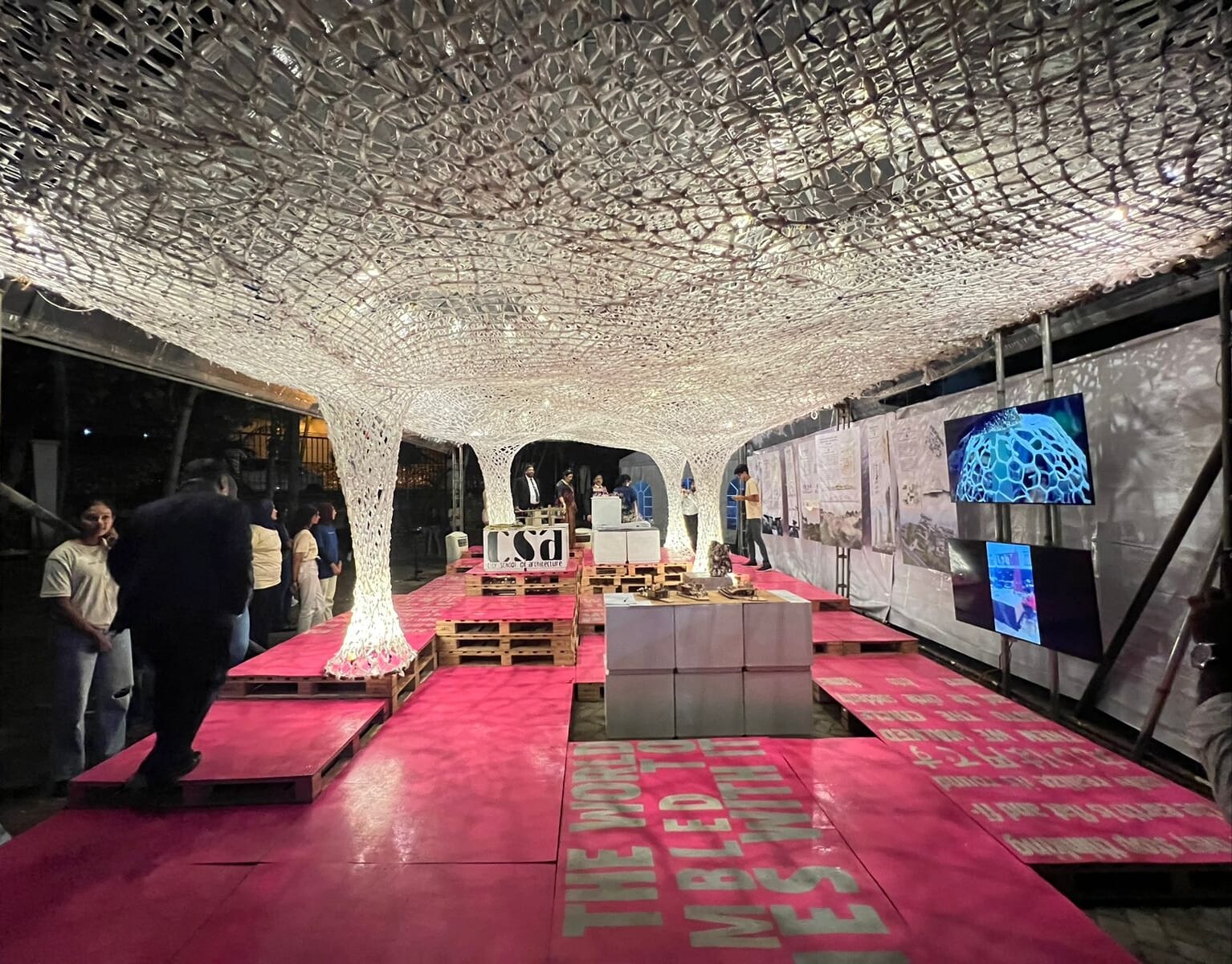
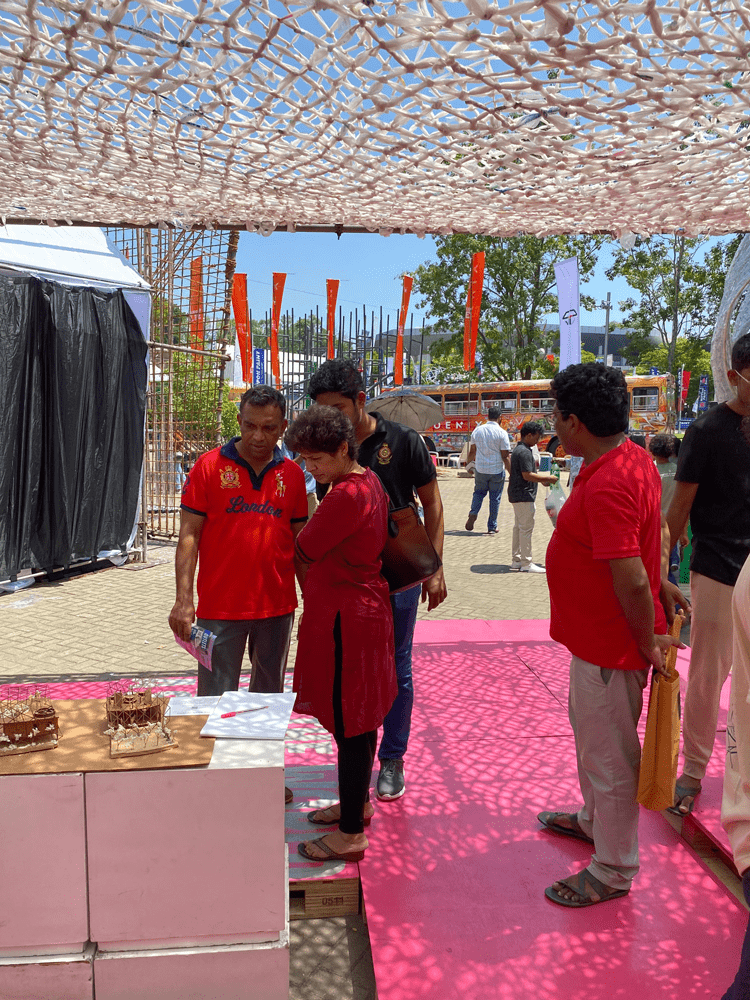
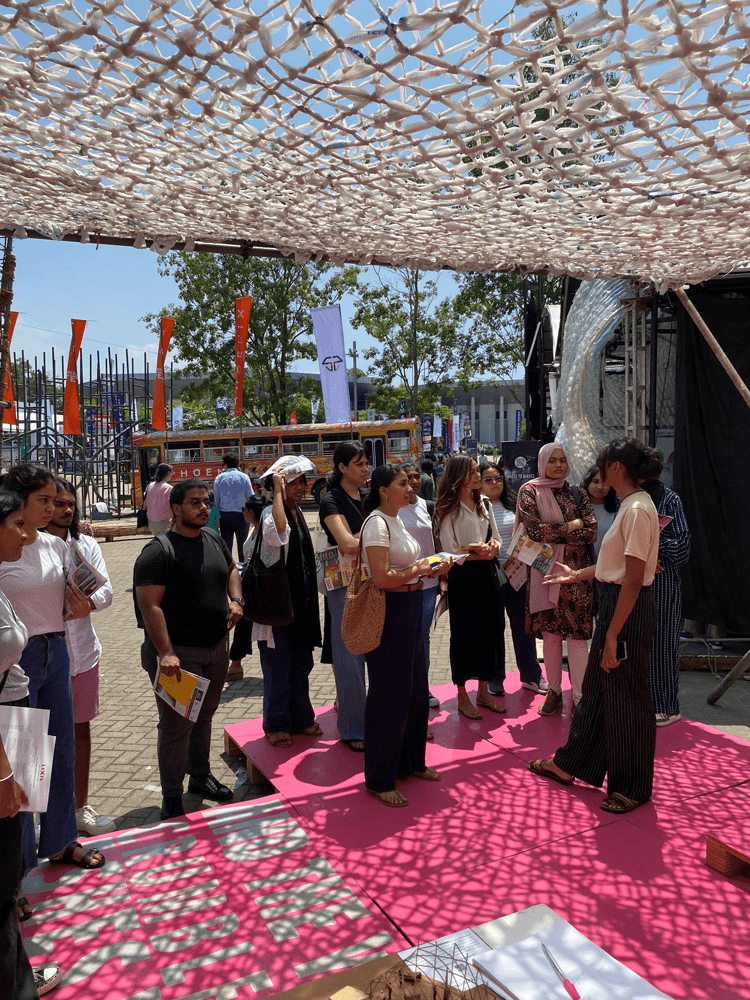
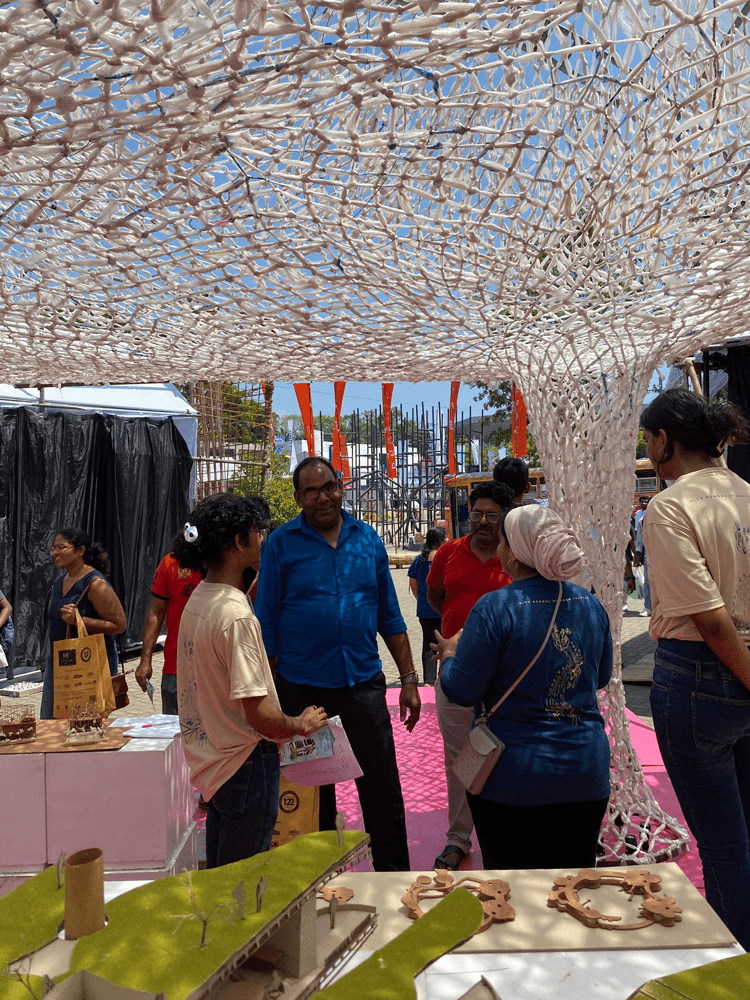
In a compelling display of environmental consciousness and creative innovation, second-year students from the City School of Architecture made waves at the recent SLIA Architecture & Trade Exhibition held at BMICH from February 23rd to 25th. Standing proudly amidst the array of stalls presented by the country’s four architecture universities, their pavilion-like structure captured attention and admiration. Yet, beyond its aesthetic appeal, the pavilion symbolized a bold statement against polythene pollution and a celebration of sustainable design solutions.
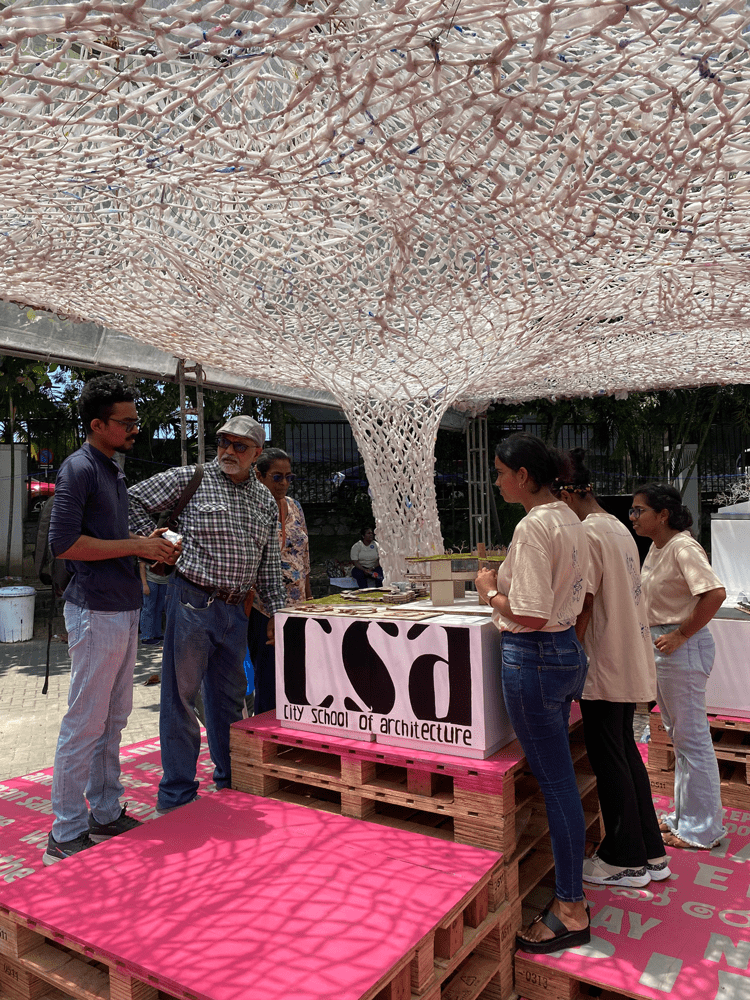
Designed to transcend the conventional boundaries of exhibition spaces, the structure presented itself as an immersive experience. Initially resembling a simple webby cocoon from a distance, closer inspection revealed its hidden complexity. Featuring two layers of netting interconnected by metal rings and cables, the design blurred the lines between the ceiling, columns, and floor, presenting a unified whole.
However, the true star of this innovative display was the material used for the nets – 35,000 polythene bags, meticulously collected and repurposed into loops forming the fundamental building unit of the weave. This ingenious use of polythene bags served a dual purpose: bidding farewell to single-use plastic while heralding the adoption of more sustainable alternatives in design practices. The weaving process itself was a testament to the project’s significance. By transforming a material often perceived as flimsy and weak into a robust and resilient structure, the pavilion underscored the power of unity and collaboration. Much like the woven loops, strength emerged from the fusion of individual elements.
Adding a touch of vibrancy and narrative, the pavilion featured brightly colored pink walkways adorned with personal narratives penned by the students. These pathways not only guided patrons through the exhibit but also infused the space with the charm and character of the second-year students. Unique spaces such as a sunken courtyard and a viewing gallery further enriched the visitor experience within the vibrant structure.
In embracing Robert Swan’s poignant assertion that “The greatest threat to our planet is the belief that someone else will save it,” the students of the City School of Architecture have demonstrated their commitment to proactive environmental stewardship. Through their innovative design and sustainable practices, they have not only raised awareness but also inspired action towards a greener and more sustainable future.

Related News
Education Ministry warns public against fake circulars shared online
The Ministry of Education, Higher Education and Vocational Education has issued a warning to the public regarding distorted official circulars and false…
Read MoreMinistry of Education authorises provincial officials to decide on school closures amid inclement weather
The Ministry of Education has granted authority to Provincial Education Secretaries and Provincial Directors of Education to determine temporary school closures in…
Read MorePM Amarasuriya: New school curriculum to expand to Grades 2 and 6 in 2027
Prime Minister Dr. Harini Amarasuriya announced that the new school curriculum introduced for Grade 1 in 2026 will be expanded to Grades…
Read More
Springfield College, Kandy, Wins All-Island Western Music and Dance Championship
Front Row ( Left to Right ): Helika Weerasinghe, Adeepa Perera, Sineru Gallassage, Sethuni Kodippili, Vinara Godagama, AnukiIndrajith, Omindu Bandara, Leena Rizman,…
Read More
Gateway Graduate School Research Symposium 2026 to Bring Together Researchers, Educators and Young Innovators
Gateway Graduate School is set to host its Research Symposium 2026 on Saturday, 31 October 2026, at the Bandaranaike Memorial International Conference…
Read MoreCourses
-

The future of higher education tech: why industry needs purpose-built solutions
For years, Institutions and education agencies have been forced to rely on a patchwork of horizontal SaaS solutions – general tools that… -

MBA in Project Management & Artificial Intelligence – Oxford College of Business
In an era defined by rapid technological change, organizations increasingly demand leaders who not only understand traditional project management, but can also… -

Scholarships for 2025 Postgraduate Diploma in Education for SLEAS and SLTES Officers
The Ministry of Education, Higher Education and Vocational Education has announced the granting of full scholarships for the one-year weekend Postgraduate Diploma… -
Shape Your Future with a BSc in Business Management (HRM) at Horizon Campus
Human Resource Management is more than a career. It’s about growing people, building organizational culture, and leading with purpose. Every impactful journey… -
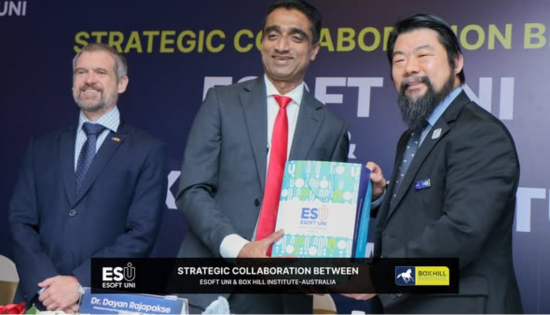
ESOFT UNI Signs MoU with Box Gill Institute, Australia
ESOFt UNI recently hosted a formal Memorandum of Understanding (MoU) signing ceremony with Box Hill Institute, Australia, signaling a significant step in… -

Ace Your University Interview in Sri Lanka: A Guide with Examples
Getting into a Sri Lankan sate or non-state university is not just about the scores. For some universities' programmes, your personality, communication… -
MCW Global Young Leaders Fellowship 2026
MCW Global (Miracle Corners of the World) runs a Young Leaders Fellowship, a year-long leadership program for young people (18–26) around the… -
Enhance Your Arabic Skills with the Intermediate Language Course at BCIS
BCIS invites learners to join its Intermediate Arabic Language Course this November and further develop both linguistic skills and cultural understanding. Designed… -

Achieve Your American Dream : NCHS Spring Intake Webinar
NCHS is paving the way for Sri Lankan students to achieve their American Dream. As Sri Lanka’s leading pathway provider to the… -
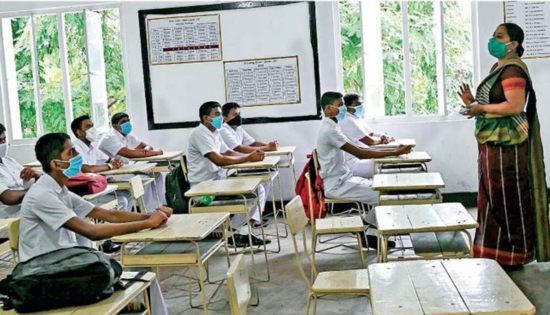
National Diploma in Teaching course : Notice
A Gazette notice has been released recently, concerning the enrollment of aspiring teachers into National Colleges of Education for the three-year pre-service… -
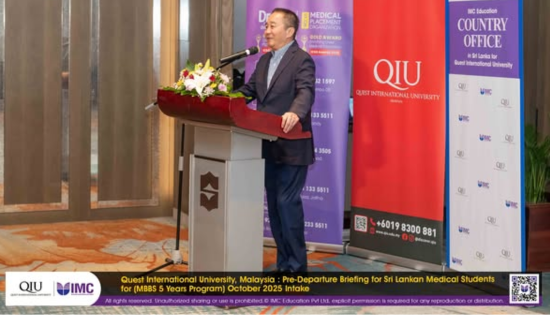
IMC Education Features Largest Student Recruitment for QIU’s October 2025 Intake
Quest International University (QIU), Malaysia recently hosted a pre-departure briefing and high tea at the Shangri-La Hotel in Colombo for its incoming… -

Global University Employability Ranking according to Times Higher Education
Attending college or university offers more than just career preparation, though selecting the right school and program can significantly enhance your job… -

Diploma in Occupational Safety & Health (DOSH) – CIPM
The Chartered Institute of Personnel Management (CIPM) is proud to announce the launch of its Diploma in Occupational Safety & Health (DOSH),… -
Small Grant Scheme for Australia Awards Alumni Sri Lanka
Australia Awards alumni are warmly invited to apply for a grant up to AUD 5,000 to support an innovative project that aim… -
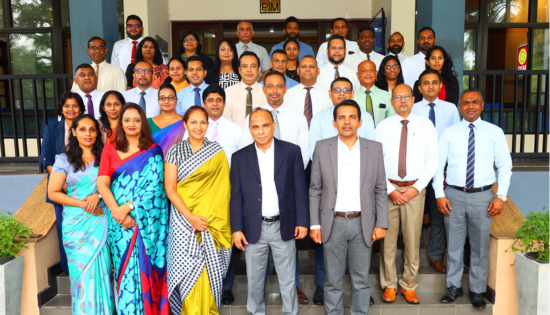
PIM Launches Special Programme for Newly Promoted SriLankan Airlines Managers
The Postgraduate Institute of Management (PIM) has launched a dedicated Newly Promoted Manager Programme designed to strengthen the leadership and management capabilities…
Newswire
-

Sri Lanka seeks stronger UK trade and investment ties ahead of EXPO 2027
ON: October 27, 2026 -

UK issues fresh security update for Middle East travellers
ON: October 27, 2026 -

Man arrested over killing of two wild elephants in Rambewa
ON: October 27, 2026 -

Namal’s lawyer seeks bail citing parents’ serious health conditions
ON: October 27, 2026