




Alexander Graham Bell: The Inventor of the Telephone and His Legacy
Alexander Graham Bell, born on March 3, 1847, in Edinburgh, Scotland, was a pioneering inventor and scientist, best known for his groundbreaking work in telecommunications. His invention of the telephone revolutionized global communication and laid the foundation for the modern interconnected world.

Early Life and Influences
Bell was born into a family deeply rooted in the study of speech and elocution. His father, Alexander Melville Bell, was renowned for his work in elocution and speech disorders, while his grandfather, Alexander Bell, was an accomplished speech teacher. This familial background profoundly influenced Bell’s interests and future endeavors.
In 1870, seeking a healthier environment after the deaths of his brothers from tuberculosis, Bell and his family relocated to Canada. Shortly thereafter, Bell moved to Boston, where he began teaching at the Boston School for Deaf Mutes. His work with the deaf community not only showcased his dedication to helping others but also fueled his fascination with the mechanics of speech and sound transmission.
The Drive to Transmit Speech Electrically
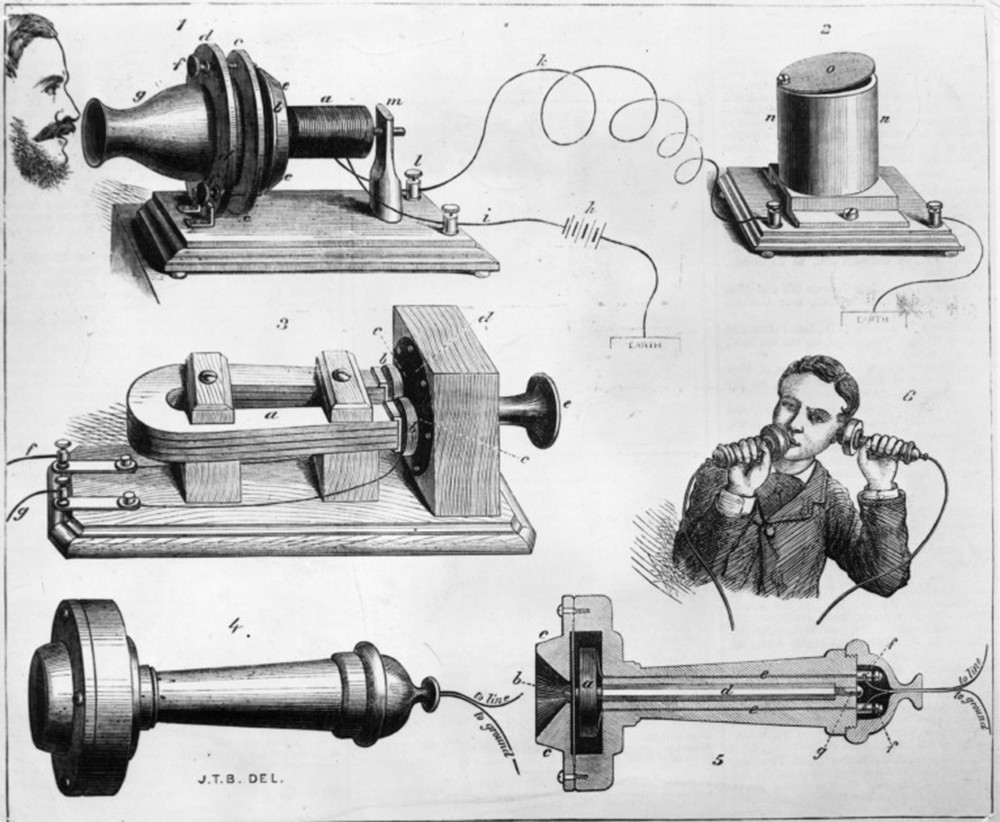
Bell’s deep-seated interest in sound and speech led him to explore the possibility of transmitting voice electronically. He envisioned a device that could convert sound waves into electrical signals, transmit them over a wire, and then reconvert them into sound at the receiving end. This ambition was driven by the desire to improve long-distance communication, which, at the time, was limited to written correspondence and telegraphy.
Collaborating with his assistant, Thomas Watson, Bell embarked on numerous experiments to bring this vision to fruition. Their relentless efforts culminated on March 10, 1876, when Bell successfully transmitted a clear voice message to Watson, stating, “Mr. Watson, come here I want to see you.” This monumental achievement marked the birth of the telephone.
Challenges and Triumphs
The journey to inventing the telephone was fraught with challenges. Bell faced intense competition from contemporaries like Elisha Gray, who was also working on similar technologies. Notably, Bell filed his patent for the telephone on February 14, 1876, just hours before Gray submitted his own design. This narrow time margin played a pivotal role in securing Bell’s place in history as the inventor of the telephone.
Following the patent approval, Bell showcased his invention at the Centennial Exhibition in Philadelphia in June 1876. The demonstration captivated audiences, including Emperor Pedro II of Brazil and the eminent scientist Sir William Thomson. Thomson lauded the telephone as “the greatest by far of all the marvels of the electric telegraph.”
Legacy and Impact
In 1877, Bell co-founded the Bell Telephone Company, which later evolved into the American Telephone and Telegraph Company (AT&T), becoming a dominant force in the telecommunications industry. By 1886, over 150,000 people in the United States owned telephones, underscoring the rapid adoption and significance of Bell’s invention.
Bell’s work extended beyond the telephone. He made significant contributions to other fields, including aeronautics, hydrofoils, and optical telecommunications. However, it is the telephone that stands as a testament to his ingenuity and vision, fundamentally transforming how people connect across distances.

Alexander Graham Bell Day
To honor Bell’s monumental contributions, Alexander Graham Bell Day is celebrated annually on March 7th. This day commemorates his legacy and the profound impact of his inventions on modern society. It serves as a reminder of the importance of innovation and the enduring influence of those who dare to challenge the boundaries of possibility.
Alexander Graham Bell’s life and work exemplify the spirit of curiosity and determination. His invention of the telephone not only revolutionized communication but also paved the way for the myriad technologies that keep us connected today. His legacy continues to inspire future generations of inventors and innovators.
Related News

Poverty drives Central Province school dropouts
Around 24% of children enrolled in Grade 1 in the Central Province drop out before completing 13 years of school, Central Province…
Read MorePresident’s Fund honours A/L top achievers
The first district level recognition ceremony under the President’s Fund for high achievers of the 2025 G.C.E. Advanced Level Examination took place…
Read More
Sri Lanka to introduce New School Curricula and National Preschool Education Reforms
Significant changes are set for Sri Lanka’s school curriculum from 2027, including reducing the G.C.E. Ordinary Level examination to seven core subjects…
Read MoreSchool children visit Presidential Secretariat to mark ‘Vision’ programme anniversary
Students from Pinnawala Central College and Matale Siri Seevali College visited the Presidential Secretariat on September 24 to mark the completion of…
Read More
Health Ministry stresses need for pre- school standards
The Government and relevant institutions hold a responsibility to ensure proper care for children during early childhood development, Secretary to the Ministry…
Read MoreCourses
-

The future of higher education tech: why industry needs purpose-built solutions
For years, Institutions and education agencies have been forced to rely on a patchwork of horizontal SaaS solutions – general tools that… -

MBA in Project Management & Artificial Intelligence – Oxford College of Business
In an era defined by rapid technological change, organizations increasingly demand leaders who not only understand traditional project management, but can also… -

Scholarships for 2025 Postgraduate Diploma in Education for SLEAS and SLTES Officers
The Ministry of Education, Higher Education and Vocational Education has announced the granting of full scholarships for the one-year weekend Postgraduate Diploma… -

Shape Your Future with a BSc in Business Management (HRM) at Horizon Campus
Human Resource Management is more than a career. It’s about growing people, building organizational culture, and leading with purpose. Every impactful journey… -
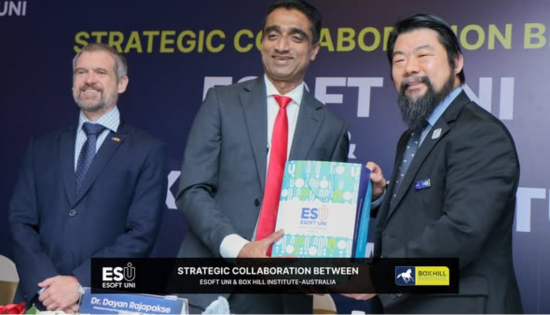
ESOFT UNI Signs MoU with Box Gill Institute, Australia
ESOFt UNI recently hosted a formal Memorandum of Understanding (MoU) signing ceremony with Box Hill Institute, Australia, signaling a significant step in… -

Ace Your University Interview in Sri Lanka: A Guide with Examples
Getting into a Sri Lankan sate or non-state university is not just about the scores. For some universities' programmes, your personality, communication… -
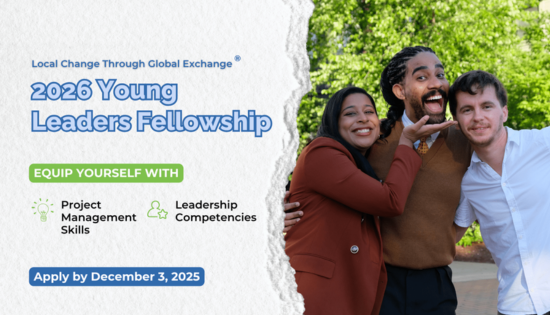
MCW Global Young Leaders Fellowship 2026
MCW Global (Miracle Corners of the World) runs a Young Leaders Fellowship, a year-long leadership program for young people (18–26) around the… -
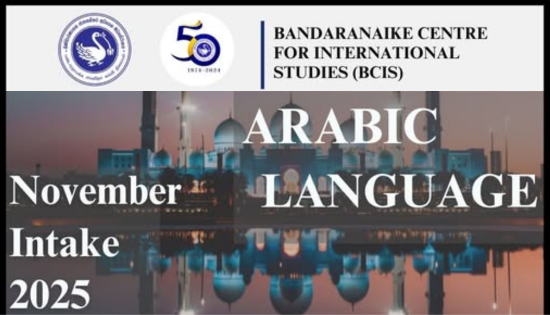
Enhance Your Arabic Skills with the Intermediate Language Course at BCIS
BCIS invites learners to join its Intermediate Arabic Language Course this November and further develop both linguistic skills and cultural understanding. Designed… -

Achieve Your American Dream : NCHS Spring Intake Webinar
NCHS is paving the way for Sri Lankan students to achieve their American Dream. As Sri Lanka’s leading pathway provider to the… -

National Diploma in Teaching course : Notice
A Gazette notice has been released recently, concerning the enrollment of aspiring teachers into National Colleges of Education for the three-year pre-service… -
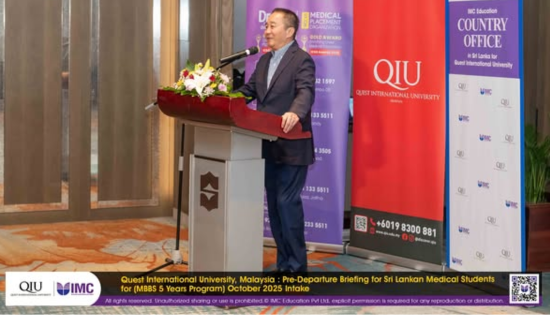
IMC Education Features Largest Student Recruitment for QIU’s October 2025 Intake
Quest International University (QIU), Malaysia recently hosted a pre-departure briefing and high tea at the Shangri-La Hotel in Colombo for its incoming… -

Global University Employability Ranking according to Times Higher Education
Attending college or university offers more than just career preparation, though selecting the right school and program can significantly enhance your job… -

Diploma in Occupational Safety & Health (DOSH) – CIPM
The Chartered Institute of Personnel Management (CIPM) is proud to announce the launch of its Diploma in Occupational Safety & Health (DOSH),… -

Small Grant Scheme for Australia Awards Alumni Sri Lanka
Australia Awards alumni are warmly invited to apply for a grant up to AUD 5,000 to support an innovative project that aim… -
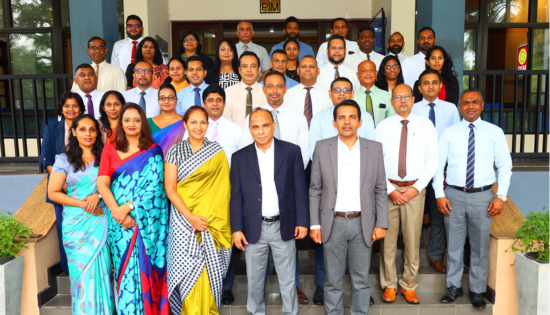
PIM Launches Special Programme for Newly Promoted SriLankan Airlines Managers
The Postgraduate Institute of Management (PIM) has launched a dedicated Newly Promoted Manager Programme designed to strengthen the leadership and management capabilities…
Newswire
-
Sri Lanka AI Expo and Conference opens in Colombo
ON: September 29, 2026 -

Dollar rate today: US Dollar selling rate increases to Rs. 335
ON: September 29, 2026 -

Top US Army Pacific Commander arrives in Sri Lanka
ON: September 29, 2026 -

Woman arrested at BIA with 916g of gold smuggled from Dubai
ON: September 29, 2026 -

23-year-old arrested with four locally made firearms in Dematagoda
ON: September 29, 2026